On this page
Short answer: choose the delivery and assembly model first
In this guide, fixed means the adjustable bed's lifting structure is supplied substantially assembled; split means a disassemblable or knock-down structure that is joined at the destination. Neither label describes whether the bed can move. “Split” here also does not mean a split-king system with two independently controlled sleeping positions. If you are comparing that user feature, use the split-king guide and request the exact control configuration.
A buyer should choose using the approved model revision, sealed-carton set, destination assembly plan and service-parts map. There is no universal winner on freight, damage, strength or customer experience.
What changes between the structures?
| Decision factor | Fixed-structure direction | Knock-down direction | Evidence to request |
|---|---|---|---|
| Shipment | May have a larger handling unit | May use shorter or multiple cartons | Every sealed carton, weight, pack revision and route quote |
| Destination work | May require fewer frame-joining steps | Requires documented assembly | Instructions and observed assembly trial |
| Structural verification | Test the delivered assembly | Test the correctly assembled final revision | Drawings, joint and load/durability records |
| Parts and repairs | Depends on actual service design | Depends on actual part access and spares | Part IDs and replacement instructions |
| Receiving | Confirm carton identity | Keep all cartons of a set together | Carton sequence and parts manifest |
This is a comparison framework. A smaller component carton can be offset by a second parcel, more protection, assembly cost or missing-part exposure. Use the flat-pack comparison and current carrier or forwarder quotes for the actual lane.
KCAI catalogue examples, with a revision boundary
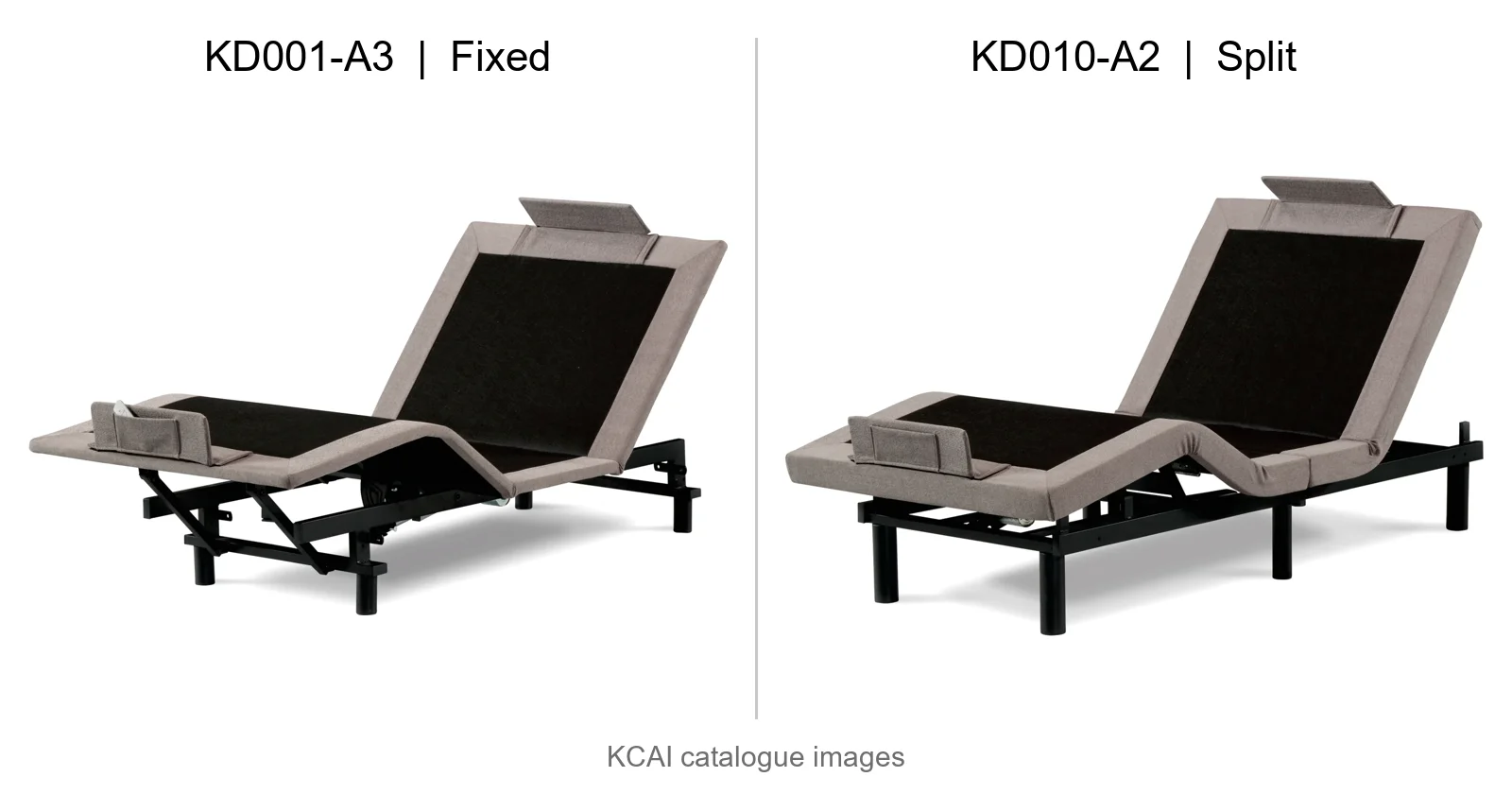
The KCAI catalogue identifies KD001-A3 as a fixed-structure direction and KD010-A2 as a disassemblable direction. Earlier project material uses different structure wording for KD001-A3, so the public label is a starting point for inquiry, not a substitute for the drawing and packing sheet attached to your quotation.
Do not transfer an angle, motor count, load rating, carton quantity or assembly time from one model to the other. Ask KCAI to identify the size and current revision, show the configured product and list which documents support each proposed claim. The KD001-A3 and KD010-A2 guides outline model-specific questions.
Four buyer decisions before placing the order
1. Delivery route. Will the pack move as a pallet, container load or individual parcels? Record the handling unit and destination access constraints. The per-set carton volume is not a load count; the CBM guide explains the calculation and loading check.
2. Assembly owner. Decide whether the supplier, dealer, installer or end customer assembles the product. Request the exact revision's manual, tools, torque values where specified, hardware count and a trial with the intended user profile. Record time and errors rather than assuming one structure is easy.
3. Service route. Identify which parts can be replaced in the field, how they are diagnosed, and whether a technician needs to disassemble the frame. Part availability and instructions matter more than the structural label.
4. Release evidence. Link the drawing, specification, packed sample, test reports, instructions and spare-parts list by model and revision. If a shipment differs from the approved sample, request a change record and assess what must be revalidated.
Pre-order evidence checklist
- Quotation with model, size, structure and controlled revision
- Product drawing and current specification for the quoted configuration
- Every carton’s sealed dimensions, gross weight and carton-per-set identity
- Assembly and safe-use instructions matching the delivered parts
- Joint, load and durability evidence appropriate to the final assembly
- Replaceable-part IDs, support route and warranty responsibility
- Approved sample and acceptance criteria
Send this checklist with your target market, destination and delivery channel through the OEM/ODM team or quote request. Ask for gaps to be marked openly before choosing between the two structures.