On this page
An adjustable bed trade show inspection checklist should answer two questions: what can the buyer observe from the physical display, and what still requires model-specific evidence? At the booth, inspect the motion concept, visible frame, clearances, upholstery and control interaction. After the show, verify dimensions, components, performance conditions, packaging and document scope in writing.
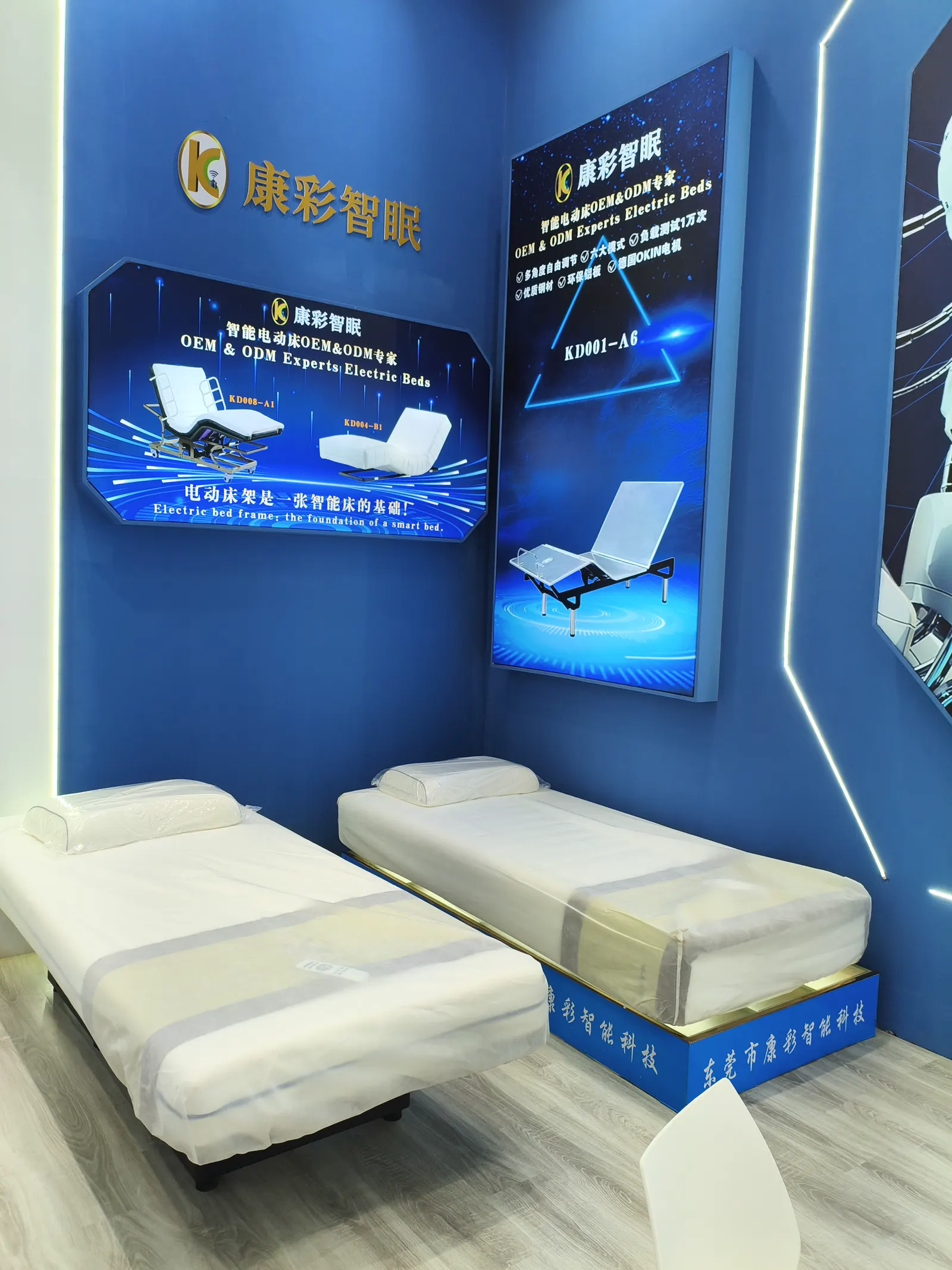
This guide uses original photographs from KCAI's Booth 4.2A08 at the 2025 Canton Fair. The images document the exhibition sample and product presentation. They are not substitutes for controlled drawings, an approved sample or production inspection criteria.
Quick inspection matrix
| Inspection area | What to observe at the booth | What to verify later |
|---|---|---|
| Product identity | Model reference shown and overall format | Current revision and final configuration |
| Motion | Demonstrated sections, sequence and visible clearances | Angles, operating conditions, controls and acceptance criteria |
| Structure | Visible frame layout, legs, deck and accessible connections | Materials, dimensions, tolerances and declared load conditions |
| Upholstery | Seams, panels, corners and surface appearance | Approved material, color standard, durability requirement and workmanship limits |
| User interface | Handset or control concept demonstrated | Included functions, pairing, labeling and destination requirements |
| Packaging | Any pack-down features that can be seen | Carton count, dimensions, weights, protection and test plan |
| Evidence | Documents or labels the supplier can identify | Applicability to the exact model, component and destination |
Start by identifying the exact display sample
Write down the booth, supplier, model reference and the date of inspection. If a model number appears on a display board, photograph it together with the relevant product where permitted. Ask whether the physical sample matches the board and whether it represents a current platform, a concept, or a special exhibition configuration.
This first step prevents a common problem: a buyer remembers a product visually, while the supplier later quotes a different configuration under a similar name. A traceable model reference is the bridge between the booth conversation and the follow-up documents.
Observe a complete motion cycle
If operation is permitted, ask for a complete demonstration rather than one raised position. Watch the product move from flat to the demonstrated elevated position and back. Record observations without turning them into unsupported ratings.
Check the following visible points:
- Which deck sections move and which remain fixed?
- Is the transition visually smooth on this sample?
- Are there visible pinch or interference areas that need clarification?
- How does the moving deck relate to the legs, upholstery or surrounding frame?
- What control input is demonstrated?
- What happens when direction changes during the demonstration?
- Does the supplier identify any required mattress or installation condition?
A quiet demonstration does not prove a production sound limit. A successful cycle does not establish durability. Those conclusions require declared conditions and an agreed test or inspection method.
Inspect visible construction without guessing hidden specifications
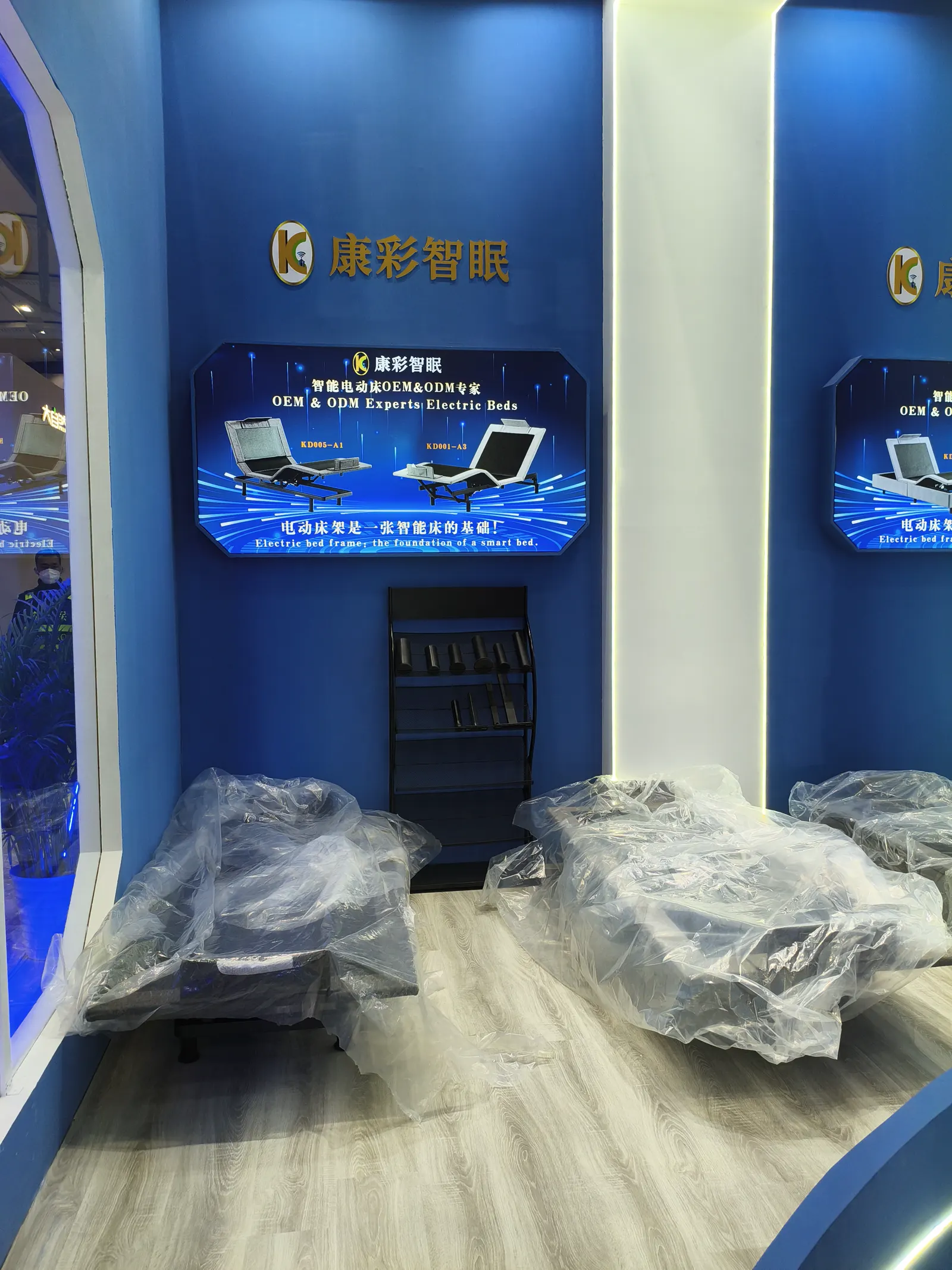
A model board helps connect an observed form factor to the follow-up discussion. Hidden materials and components must be confirmed separately.
An exposed base gives a buyer more access to visible construction than a fully upholstered bed, but the inspection still has limits. Look at accessible weld areas, fasteners, leg attachment, cable routing, moving-section clearances and how visible parts are finished. Note any area that should be photographed in a sample review or factory audit.
Do not identify steel grade, material thickness, actuator source or load capacity from appearance. Ask the supplier to state these in a current specification and to explain how they will be controlled for the quoted model. If a branded component matters to the project, require that component to be identified in the bill of materials or approved reference rather than relying on a verbal mention.
Compare compact and paired formats carefully
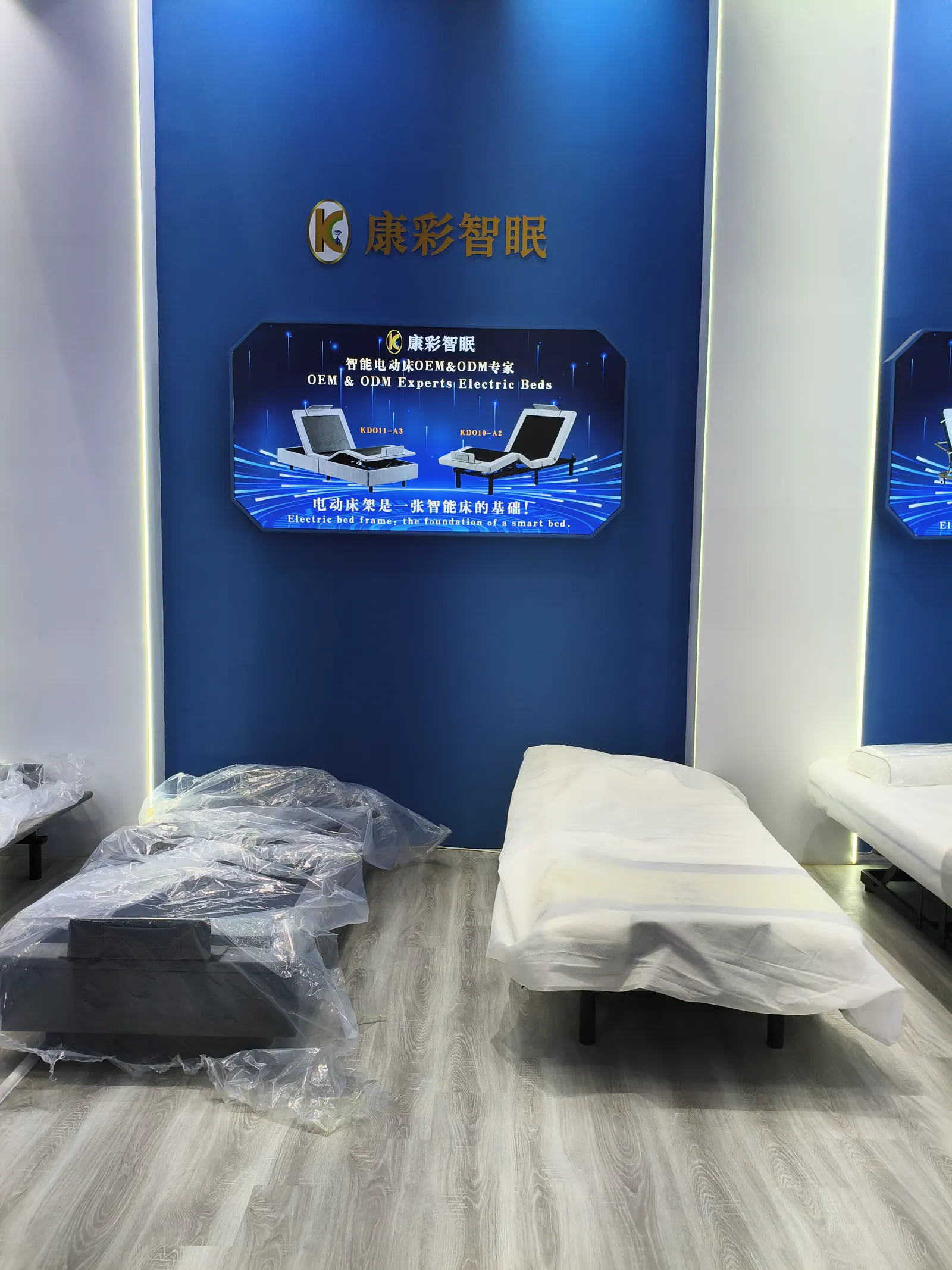
Compact displays can begin a conversation about room layout or paired configurations, but size, independent control and synchronization must be confirmed.
Two products placed together do not automatically form a synchronized split system. If paired use is relevant, ask:
- What is the exact size of each unit?
- Does each side operate independently?
- Is any synchronization function proposed?
- Which controls and accessories are included?
- How are the units aligned or retained in the intended installation?
- Are mattresses, retainers or surrounding furniture part of the quotation?
- How will cartons and labels distinguish left, right or matched units, if applicable?
The split adjustable bed OEM specification guide provides a deeper brief for projects that require paired sleep surfaces.
Review upholstery as a controlled system
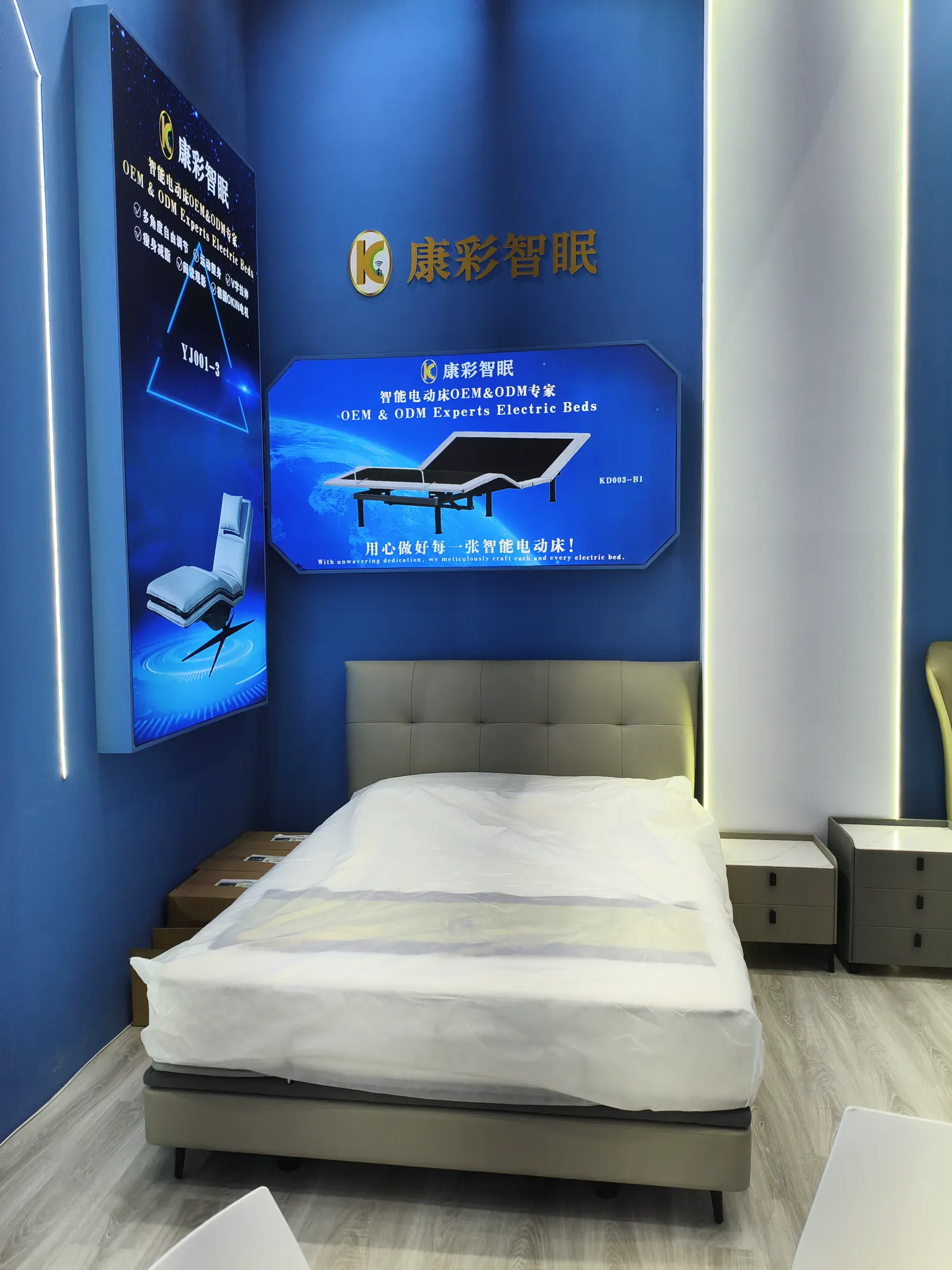
Exhibition lighting can change the apparent color and texture of upholstery. Final approval should use an identified material and controlled reference.
For an upholstered or integrated bed, inspect seam direction, corner treatment, panel alignment, surface tension and the relationship between upholstery and moving sections. Photograph both the overall form and close details where permitted.
Then ask what the final approval will reference. A color name such as gray is not precise enough. The project may need an identified swatch, supplier code, approved sample and defined acceptable variation. Also confirm which upholstered pieces detach for packing, what the customer assembles and how hardware is organized.
The adjustable bed upholstery specification guide explains how to turn visible design intent into a controlled OEM requirement.
Use a red-amber-green note system
A simple status code helps the sourcing team avoid treating every observation as confirmed:
- Green — verified: directly visible or demonstrated on the identified sample, or supported by a reviewed current document for that model. Record which kind of evidence supports the note.
- Amber — stated, evidence pending: explained verbally but still awaiting a drawing, specification, report or quotation.
- Red — unresolved: inconsistent, unclear or not yet evaluated.
Add the status beside every important note. When the supplier sends evidence, record the document name, revision and applicable model before changing amber to green. Keep a document-backed claim distinct from a direct booth observation; neither proves an untested production batch. This provides a cleaner handoff between sourcing, engineering and quality teams.
Do not approve production from the booth
A trade-show sample is useful for discovery and early comparison. It is not automatically the project's golden sample. Production approval should follow a controlled path:
- issue a written requirement or RFQ;
- receive a model-specific proposal and assumptions;
- review drawings, specifications and applicable evidence;
- build or select the agreed sample configuration;
- document deviations and corrections;
- approve an identified baseline;
- define production inspection criteria.
Use the golden sample approval checklist when the project reaches that stage, and keep the trade-show record as supporting context.
Request evidence for the product you actually intend to buy
The strongest result of a booth inspection is not a large photo folder. It is a short list of observations, unresolved questions and evidence requests tied to a named product route.
Review KCAI's 2025 Canton Fair display overview or the current electric adjustable bed base range. Then request a quote with the market, size basis, required functions, photographs or model references, and the items that still require verification.