On this page
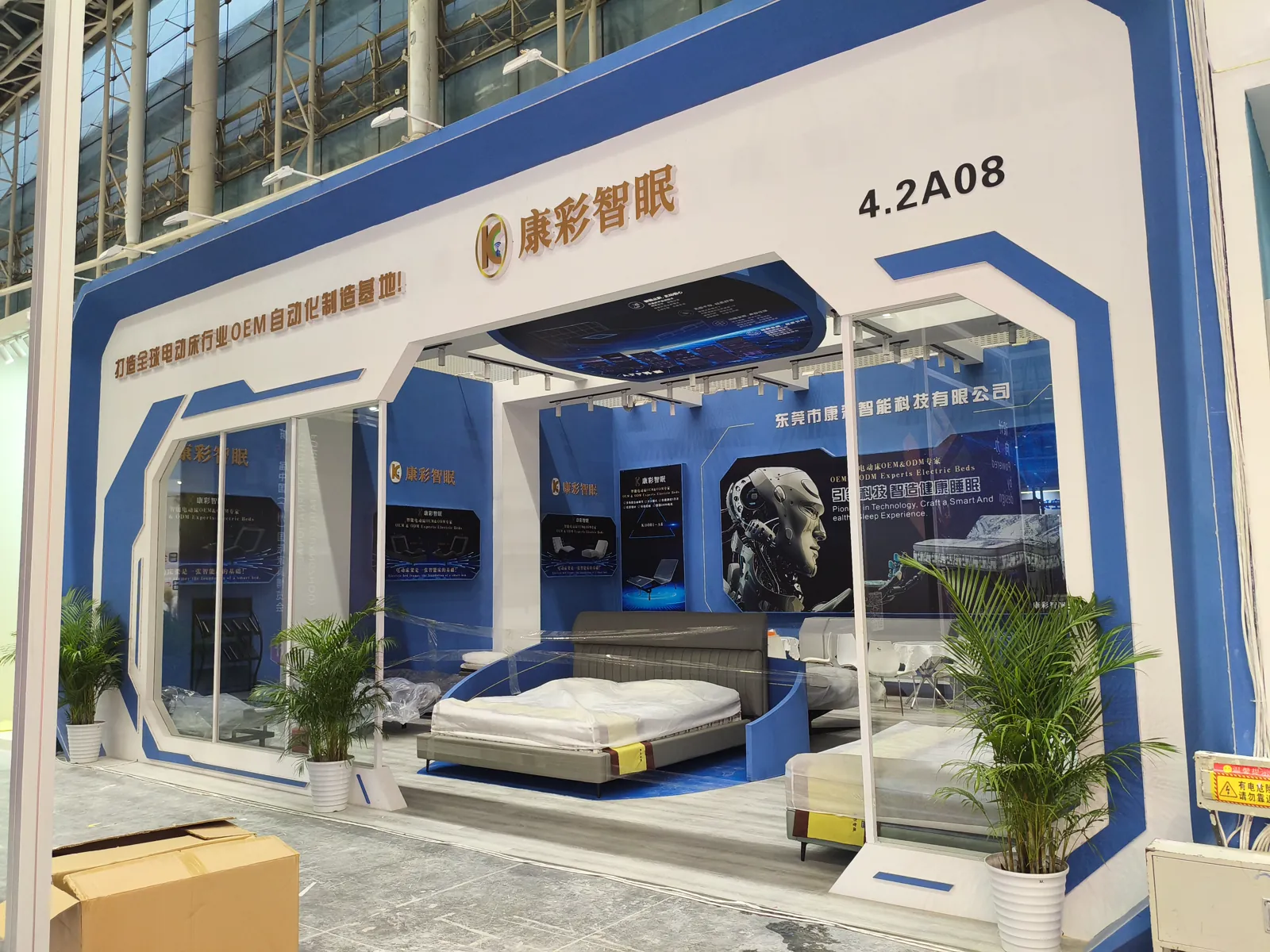
KCAI presented adjustable bed bases and integrated sleep-product formats at Booth 4.2A08 during the 2025 Canton Fair. The original booth photographs show a physical display where buyers could compare several frame formats, upholstered bed presentations and paired adjustable products in one place. For an OEM or ODM buyer, that first inspection is useful—but it should begin a controlled sourcing process rather than replace technical verification.
This exhibition review documents what can be seen in KCAI's own photographs and explains what a procurement team should confirm after a trade-show conversation. It does not treat booth graphics as final specifications or make claims about orders, customer results, certifications or product performance.
Quick answer: what could buyers inspect at Booth 4.2A08?
The KCAI booth gave visitors a direct view of adjustable bases in different positions, upholstered whole-bed formats and compact or paired configurations. Product boards also referenced multiple model families. Buyers could therefore discuss the visible form factor, intended use scenario, upholstery direction and possible OEM presentation before moving into drawings, samples and quotations.
The next step is to request model-specific evidence. Dimensions, motion functions, controls, actuator configuration, packaging, market documents and commercial terms can vary by project and should be confirmed in writing.
| Exhibition evidence | What a buyer can learn | What still requires verification |
|---|---|---|
| Physical adjustable bases | Overall format, articulation concept and visible construction | Dimensions, load conditions, motion range, components and test plan |
| Upholstered whole-bed displays | Design language, surround format and potential retail presentation | Materials, colors, removable parts, packing method and approved sample |
| Product boards with model references | Starting points for a model discussion | Current revision, included features and market availability |
| KCAI team at Booth 4.2A08 | A direct contact point for follow-up | Project owner, response scope, schedule and written quotation |
A physical display for adjustable-bed sourcing conversations
Trade shows are most useful when a buyer arrives with a decision framework. A photograph or brochure can introduce a product, but a physical display allows the team to compare proportions, inspect visible interfaces and discuss how a concept may fit a particular retail or distribution program.
The KCAI stand combined product exhibits with model boards and company branding. The wide view below shows several adjustable-bed presentations within the booth rather than a single isolated sample. That range supports an early conversation about whether a project needs a base-only product, an upholstered integrated format or a coordinated product family.
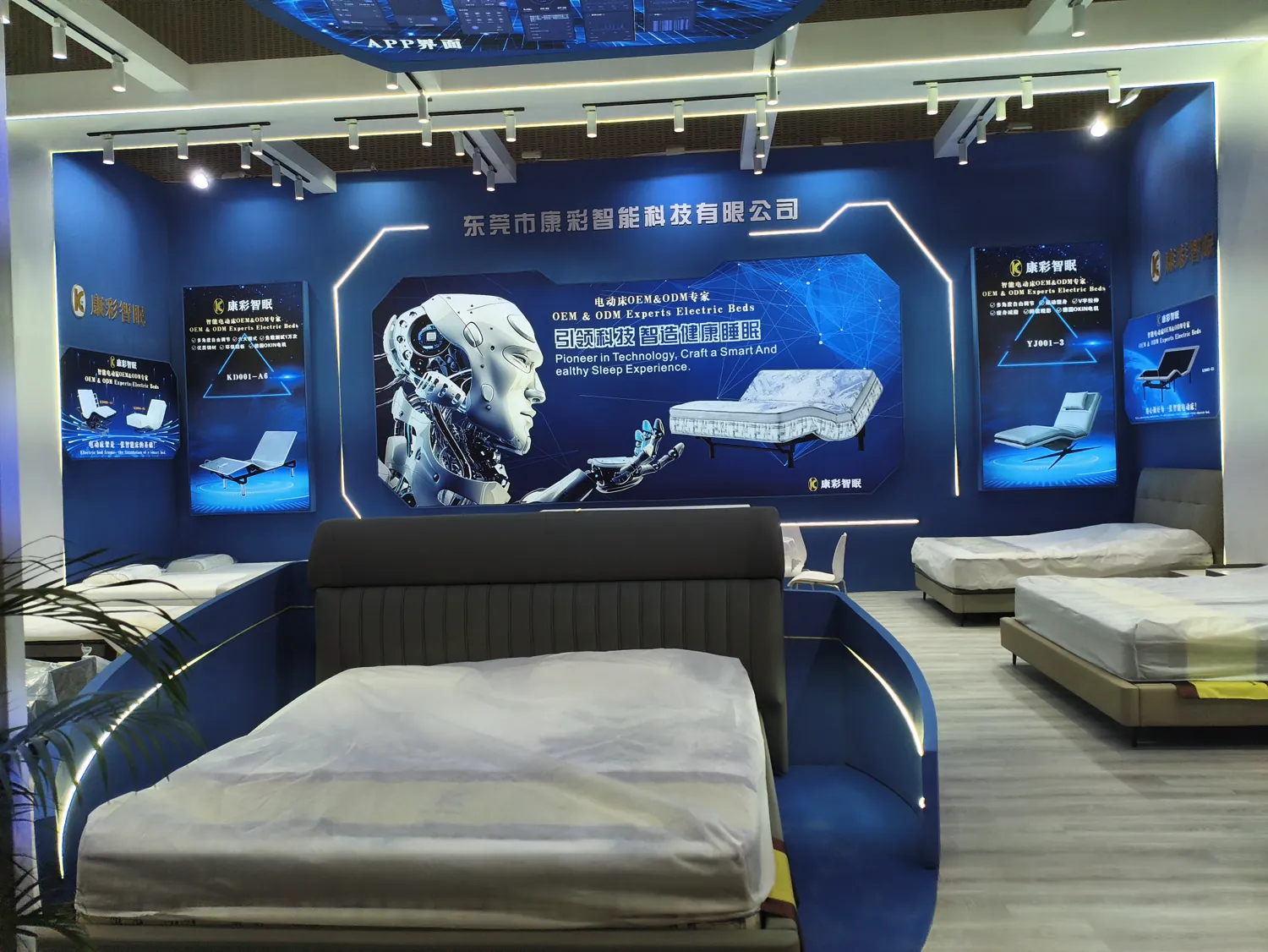
Multiple adjustable-bed and upholstered formats displayed inside the KCAI booth. Original photograph supplied by KCAI.
The display should not be read as a catalogue of fixed, universally available specifications. Instead, use the visible products to identify the format you want to discuss, then connect that request to the relevant adjustable bed manufacturer or electric adjustable bed base page before requesting the current project documents.
Product formats visible in the exhibition photographs
Adjustable bases in raised positions
Several photographs show bases positioned with the back or leg section elevated. For a sourcing team, this is a useful opportunity to examine the basic articulation concept and the relationship between the moving deck, legs and surrounding furniture.
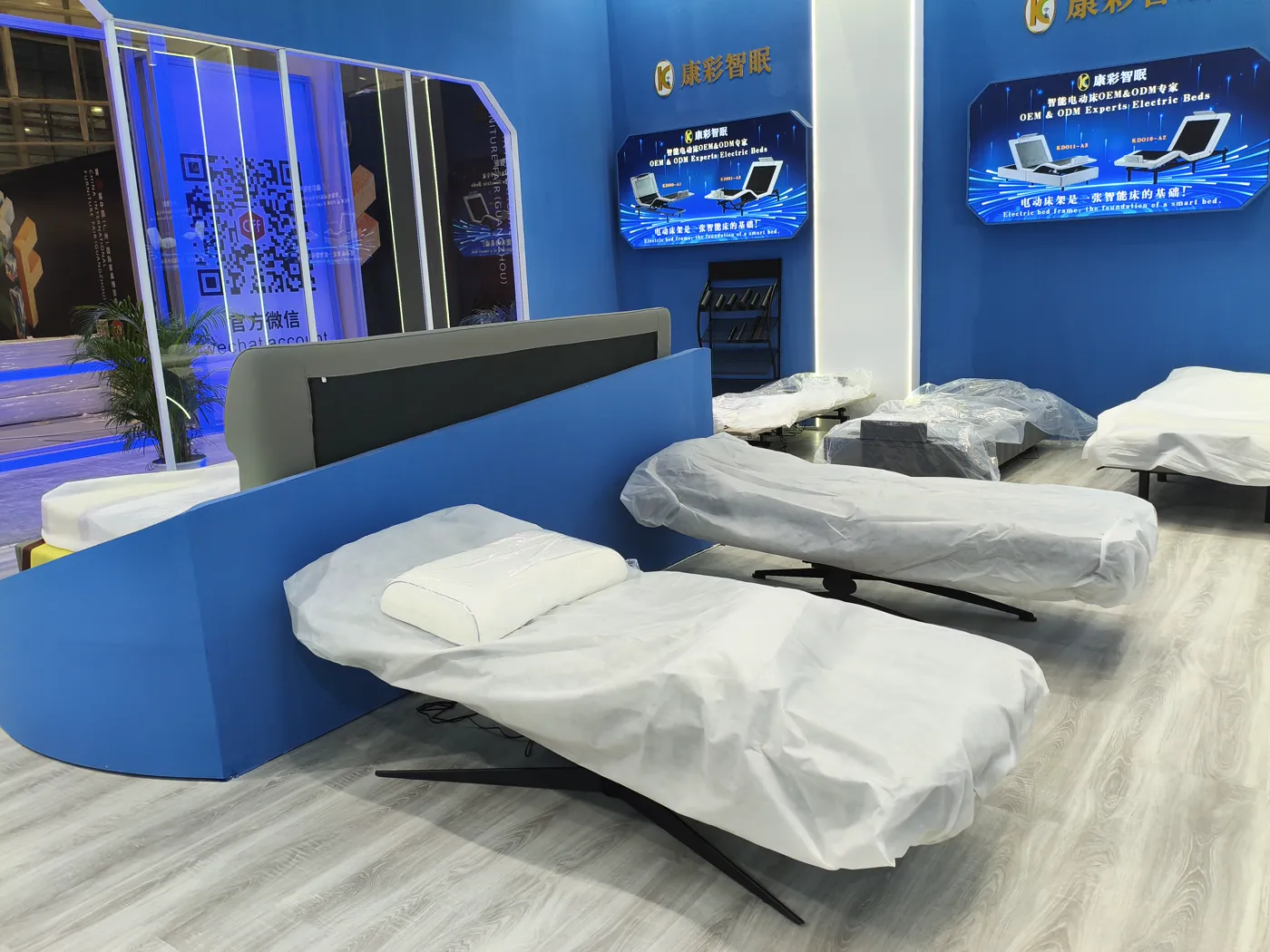
Adjustable-base formats presented in raised positions at the exhibition. The image documents the display; it is not a specification sheet.
After the visual review, ask the supplier to identify the exact model and revision. The buyer should then confirm the motion functions, control method, required accessories, component list and intended operating conditions. If a destination market requires particular documents or labeling, request the applicable records by model and component rather than relying on a general statement.
Upholstered and integrated bed presentations
The booth also included beds presented with upholstered surrounds, headboards and mattress systems. This format is relevant to brands that want the adjustable mechanism to appear as part of a complete bedroom product rather than as an exposed base.
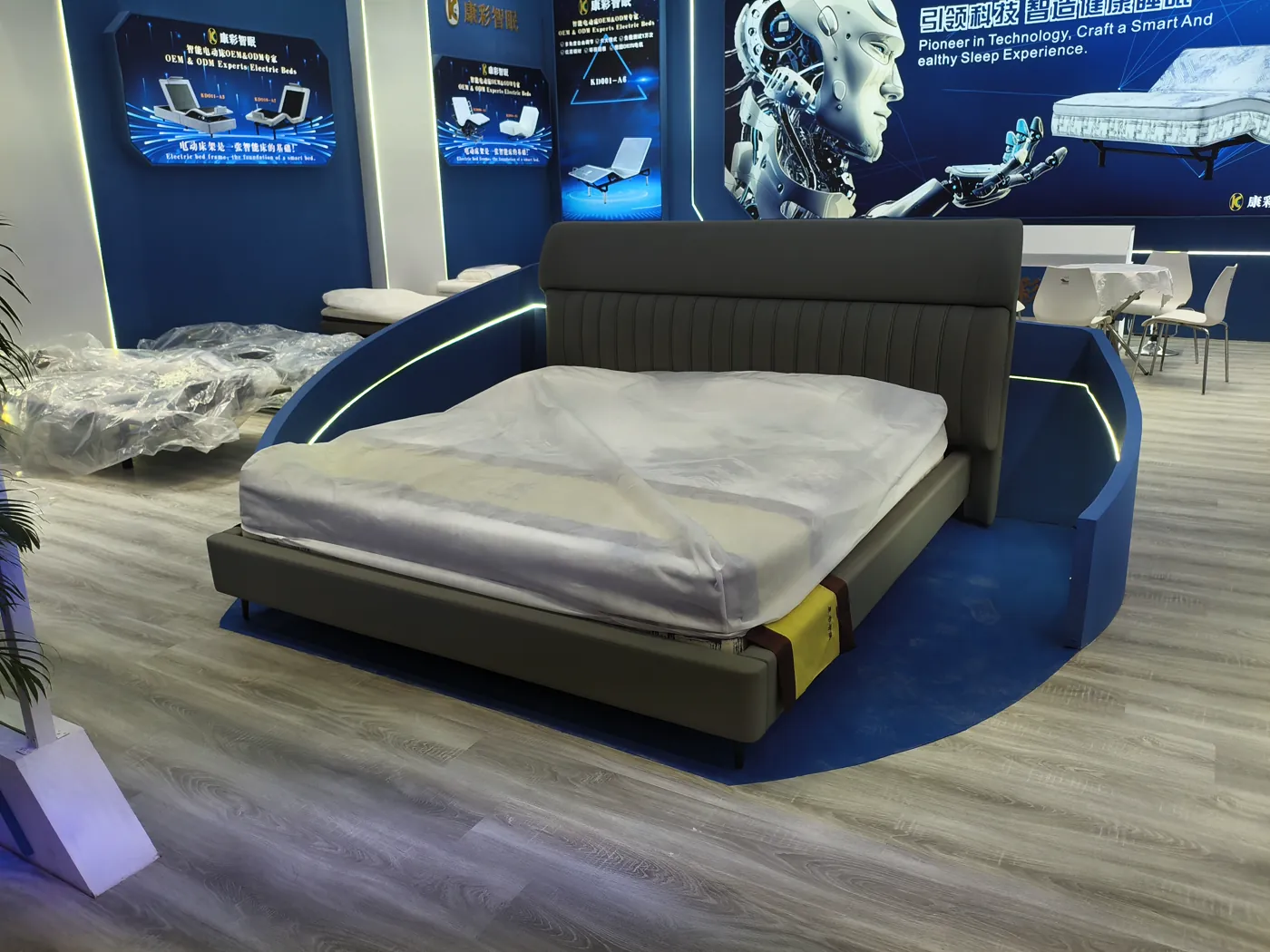
An upholstered whole-bed presentation inside the KCAI booth. Original photograph supplied by KCAI.
For OEM development, separate the visible design from the technical baseline. Confirm upholstery references, seam and panel details, removable parts, bed and mattress compatibility, carton count and assembly sequence. Any color or material approval should be tied to an identified sample or controlled reference, not to the appearance of a trade-show photograph under exhibition lighting.
Paired and compact formats
Another display area showed two narrower sleep surfaces and related adjustable-bed graphics. Paired formats can start discussions about independent adjustment, room layout or coordinated product families, but the photograph alone does not confirm synchronization, size standards or included controls.
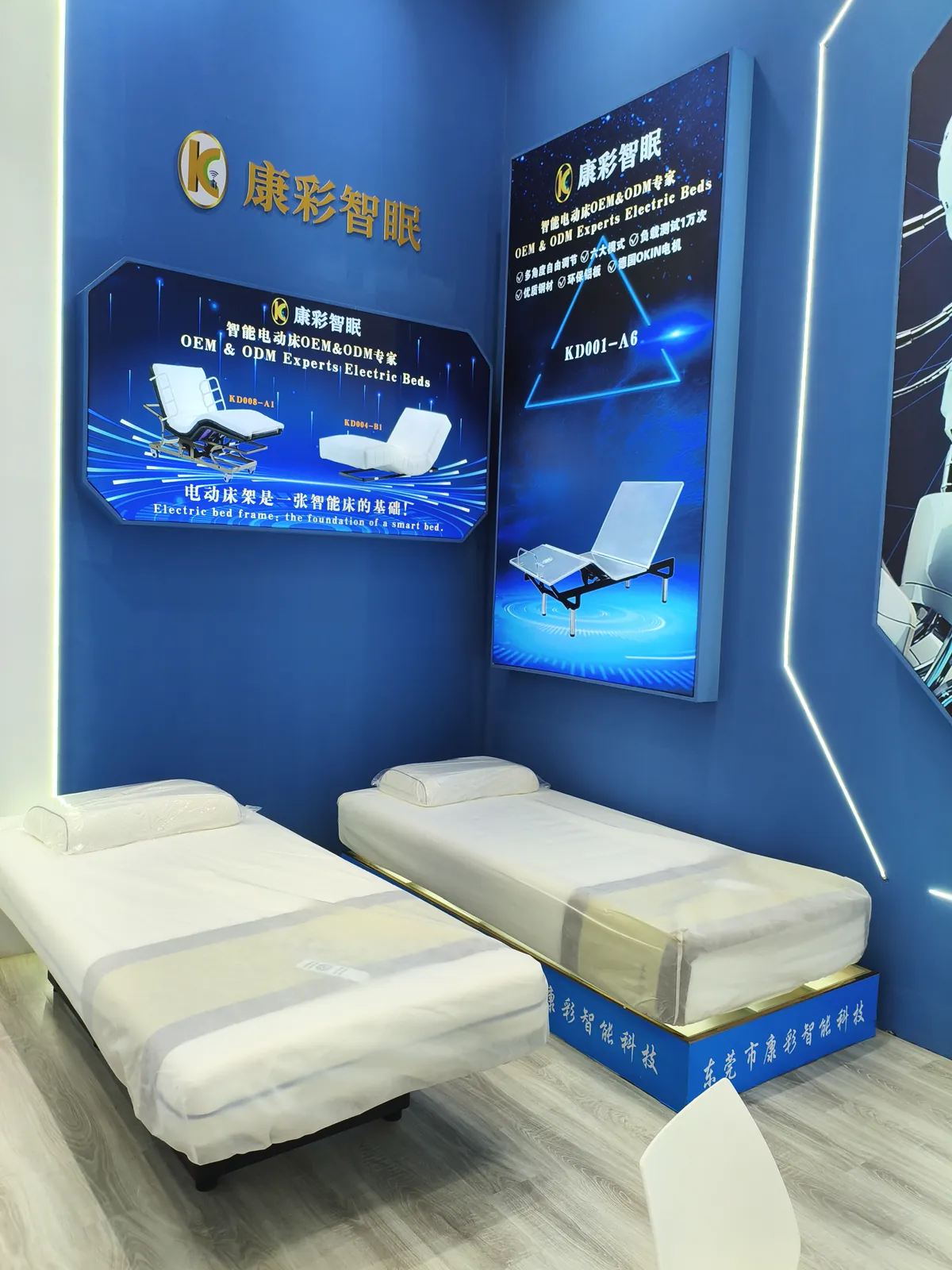
Paired display formats at the KCAI exhibition stand. Buyers should confirm the intended configuration in a model-specific brief.
If this format is relevant, state the target market's size terminology, whether each side must operate independently, the expected control arrangement and how the units should be packed and labeled. These decisions belong in the RFQ and approved sample rather than in an assumption made from the exhibit.
What OEM buyers should verify after the exhibition
A productive booth meeting ends with a defined follow-up. Procurement teams can use the checklist below to convert visual interest into a comparable technical and commercial response.
- Identify the product format. Refer to a model board or photograph, but describe the required functions separately.
- State the target market and size basis. Do not assume that the same name describes the same dimensions in every market.
- List required and optional features. Ask the supplier to separate included items, alternatives and open decisions.
- Request a current specification and drawing set. Record the document date or revision so later changes can be traced.
- Define the sample objective. Explain whether the sample is for appearance, function, packaging, internal review or a combination of these.
- Ask for project-specific packaging data. Carton dimensions, weights and loading assumptions should come from the confirmed configuration.
- Map documents to the product. Record which model or component each report covers and whether further verification is required.
- Issue a controlled RFQ. Give every potential supplier the same inputs so quotations can be compared on the same basis.
The adjustable bed OEM RFQ checklist provides a practical structure for that follow-up. Buyers planning custom development can also review KCAI's OEM and ODM process before discussing samples, branding and production readiness.
Exhibition presence is evidence—but not the entire supplier decision
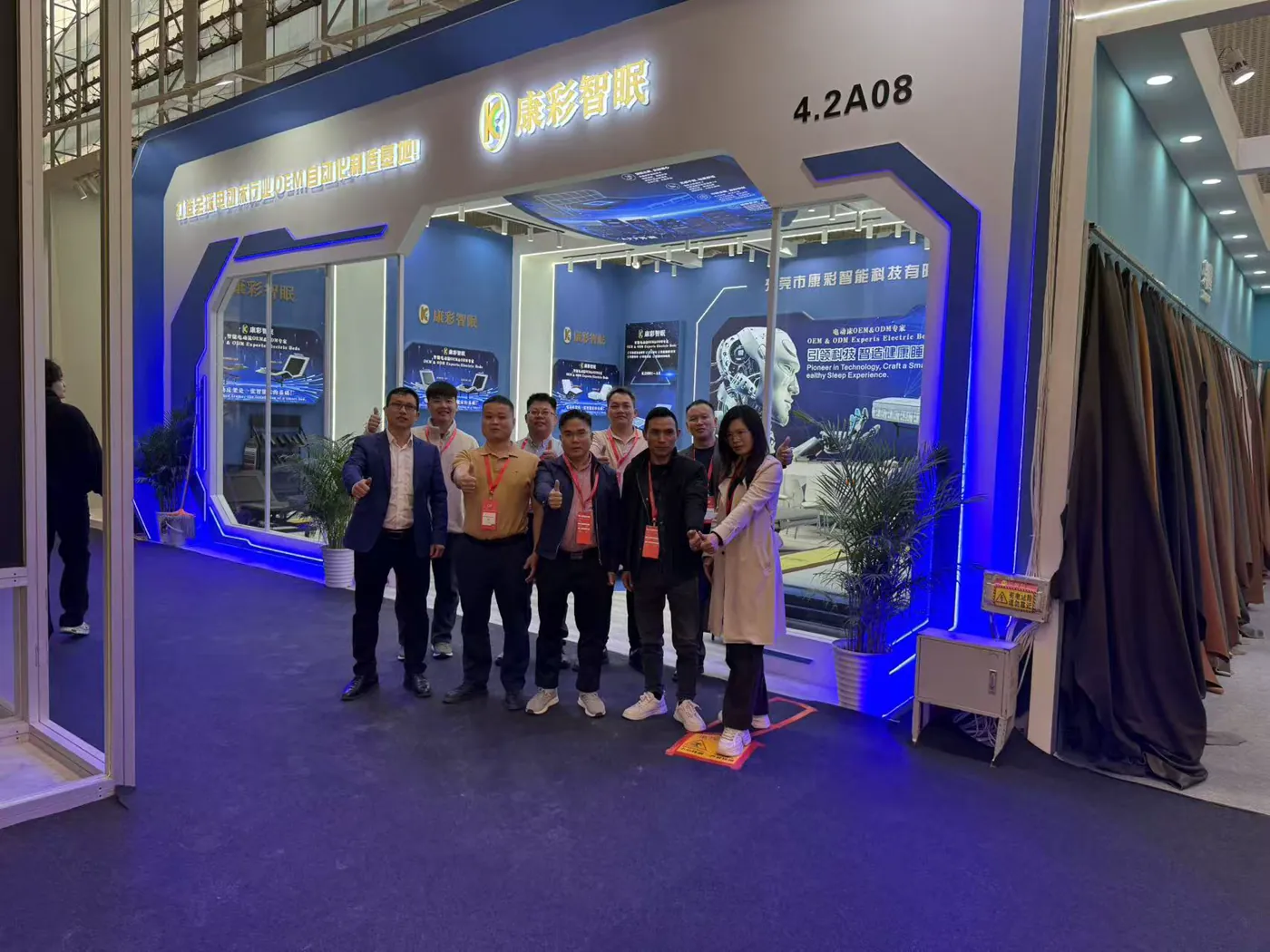
The KCAI team at Booth 4.2A08. Original photograph supplied by KCAI.
Original exhibition photographs help establish that a company and its displayed products were physically present. They also give buyers a useful reference when reopening a conversation after the event. That first-party evidence is more informative than a generic stock image, but it is only one part of supplier qualification.
Before an order, the buyer should still review the company identity, development process, applicable manufacturing evidence, model-specific documentation, approved sample, quality plan and commercial terms. Where on-site review is not practical, a structured video audit can help organize the discussion, but important evidence should remain traceable to documents and named product revisions.
Turn a Canton Fair meeting into a clear project brief
If you visited Booth 4.2A08—or if these product formats match a current sourcing project—send KCAI a concise brief containing your target product, market, required functions, reference images, expected quantity basis, branding needs and packaging goals. Mark unknown items as open decisions so the response can state its assumptions clearly.
Request a quote to continue the discussion with a project-specific brief. KCAI can then clarify which current product route is relevant and what information is needed for the next evaluation step.