On this page
An adjustable bed showroom display should help a buyer answer three questions in sequence: what the product looks like in a furnished setting, how the identified sample moves and is controlled, and which configuration should enter the quotation. The most useful layout is not necessarily the one with the most beds. It is the one that makes meaningful differences visible, gives staff room to demonstrate safely and converts observations into a written specification.
This guide is for furniture retailers, bedding dealers, distributors and private-label teams planning a display or assessing a supplier's presentation. The photographs are first-party images from KCAI's 2025 Canton Fair booth. They show real products and display arrangements visible at the event. They do not establish hidden construction, performance, certification scope or current order availability.
Quick answer: organize the floor around decisions
A buyer should be able to move from visual interest to technical comparison without changing the identity of the sample being discussed. Divide the display into clear decision zones rather than arranging products only by colour.
| Display zone | Question it should answer | Evidence to make available | What must still be verified |
|---|---|---|---|
| Complete room set | Does the product fit the intended retail or hospitality style? | Identified model, visible finish and intended mattress format | Dimensions, materials, ordered options and installation conditions |
| Working demonstration | How does this sample move and how is it controlled? | Live motion, exact handset and sample revision | Function list, operating limits, testing and documentation |
| Architecture comparison | What changes between open-frame, integrated and split formats? | Side-by-side identified samples or diagrams | Compatibility, clearances and configuration-specific pricing |
| Detail inspection | Can the buyer see interfaces and service access? | Visible frame, cable route, fasteners and replaceable components where accessible | Internal design, service procedure and spare-parts commitment |
| Specification desk | What information is required for a quotation? | RFQ sheet, drawings, finish references and document request list | Supplier confirmation and controlled project revision |
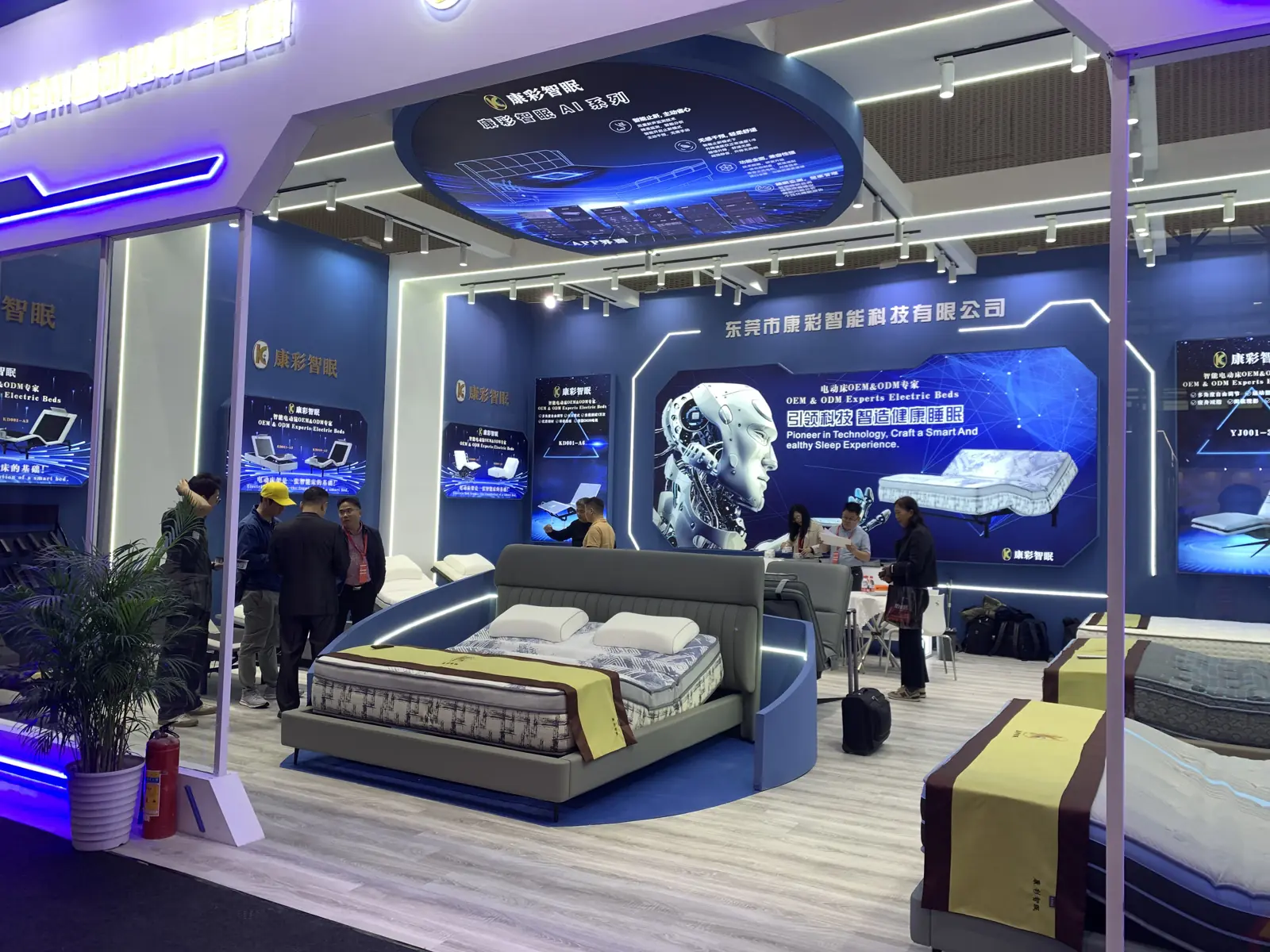
The wide booth view documents a real multi-product presentation and visible merchandising zones. It does not confirm the specifications, availability or performance of any individual model.
1. Start with the retail question, not the furniture layout
Before deciding which beds occupy the floor, define the customer and decision the display must support. A bedding retailer comparing replacement bases needs a different presentation from a furniture brand evaluating a fully upholstered private-label bed. A senior-living distributor may need easy access for demonstrations and documentation review, while an e-commerce team may focus on product architecture, packaging and assembly.
Write one sentence for each proposed sample: "This bed is displayed to explain _____." If two beds answer the same question, one may be redundant unless it represents a meaningful size, control, mattress or construction difference.
Useful display roles include:
- a complete upholstered product for room-set appeal;
- an electric adjustable bed base for platform and mattress compatibility discussions;
- a split or independently controlled format for configuration comparison;
- an open sample that makes frame and access decisions easier to see; and
- a sample reserved for supervised control and movement demonstrations.
The display role is not the sales claim. Every label should identify what is actually shown and direct the buyer to confirm model-specific details.
2. Build a three-layer merchandising sequence
The clearest showroom journey has three layers: attract, explain and specify.
Attract: Use one complete, well-proportioned room set to communicate the design direction. Avoid filling every available space with near-identical products. The buyer should be able to see the headboard, mattress position, surrounding furniture and normal approach path.
Explain: Place different product architectures where their movement, control and visible interfaces can be compared. Keep enough clearance for a supervised demonstration and make the model identity readable from the demonstration position.
Specify: Provide a seated area or digital form where the buyer can record intended market, sizes, functions, finishes and documentation needs. A productive visit ends with a requirements record, not only photographs.
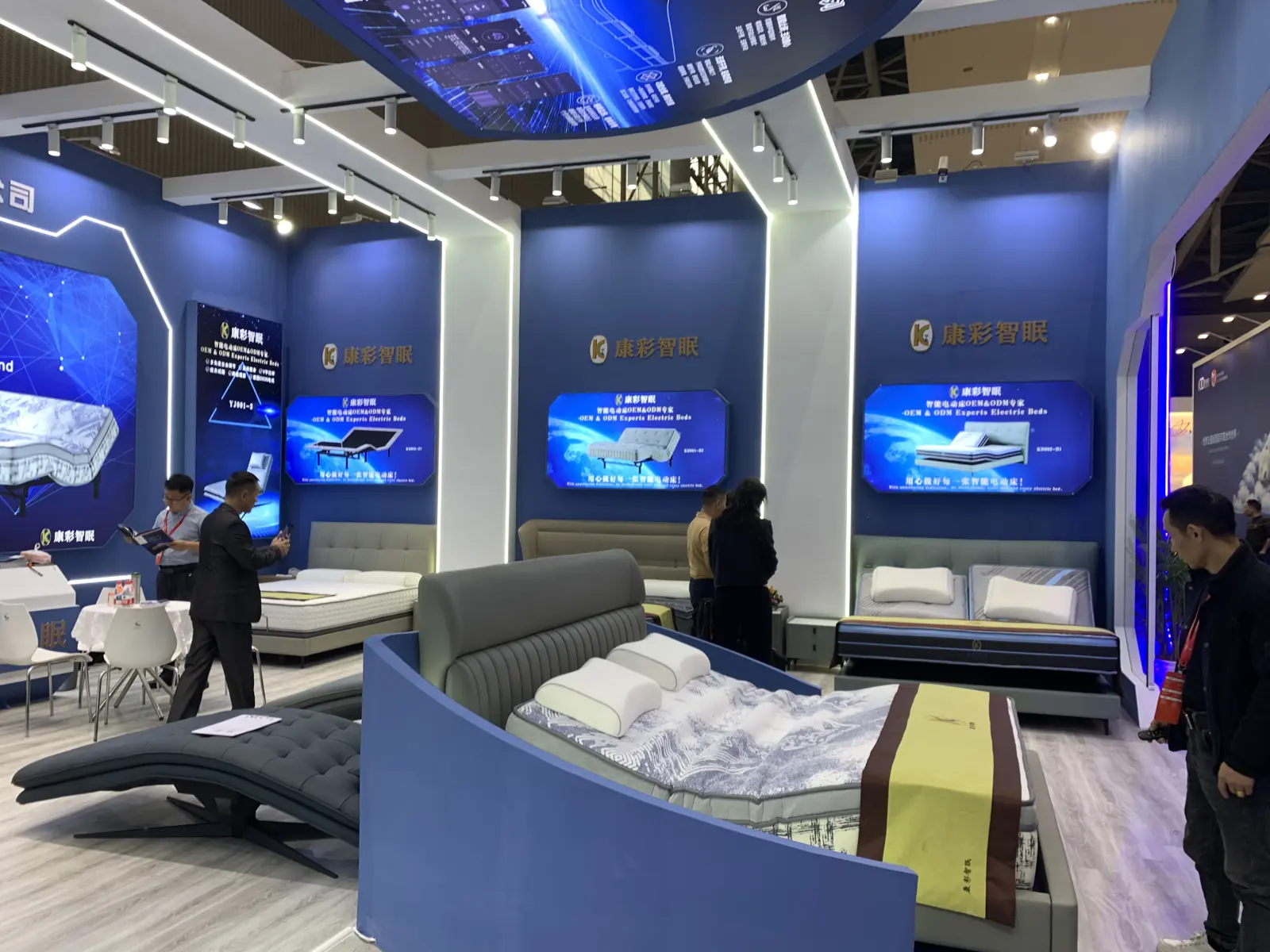
This image supports discussion of product zoning and visible format comparison. Exact size, construction and functional differences require the corresponding model specification.
3. Design a repeatable 90-second demonstration
Retail demonstrations become unreliable when each staff member improvises. Create a short approved sequence for each identified sample:
- Confirm that the visitor is evaluating the correct model and mattress format.
- Point out the handset or control method supplied with that sample.
- Check that the movement area is clear before operation.
- Demonstrate only the functions confirmed for that sample.
- Pause at positions that reveal mattress retention, headboard clearance and access.
- Return the bed to the agreed resting position.
- Record the visitor's required functions and unanswered questions.
Do not describe an adjustable bed as treating, preventing or curing a medical condition unless appropriately substantiated and legally suitable for the destination market. Retail staff can explain position adjustment and visible ergonomics without turning the demonstration into an unsupported health claim.
The adjustable bed trade-show inspection checklist provides a more detailed method for buyers evaluating a sample away from the supplier's factory.
4. Make labels useful without turning them into promises
A showroom label should help buyers identify and compare; it should not compress an unverified specification into marketing shorthand. Include:
- exact model or sample identifier;
- product architecture and intended demonstration role;
- visible finish reference where confirmed;
- functions included on the displayed sample;
- optional items clearly marked as optional or subject to confirmation;
- QR code or link to the current product page or enquiry form; and
- a revision or update date when specifications may change.
Avoid an unlabeled list of attractive features beside several products. A visitor may assume every item applies to every bed. The adjustable bed OEM RFQ checklist can be used behind the display to convert questions into a structured sourcing brief.
5. Use first-party photographs as traceable evidence
Real showroom and exhibition photographs improve buyer confidence because they show that products were physically presented. Their value increases when the caption states the date, setting, visible model and limits of the evidence.
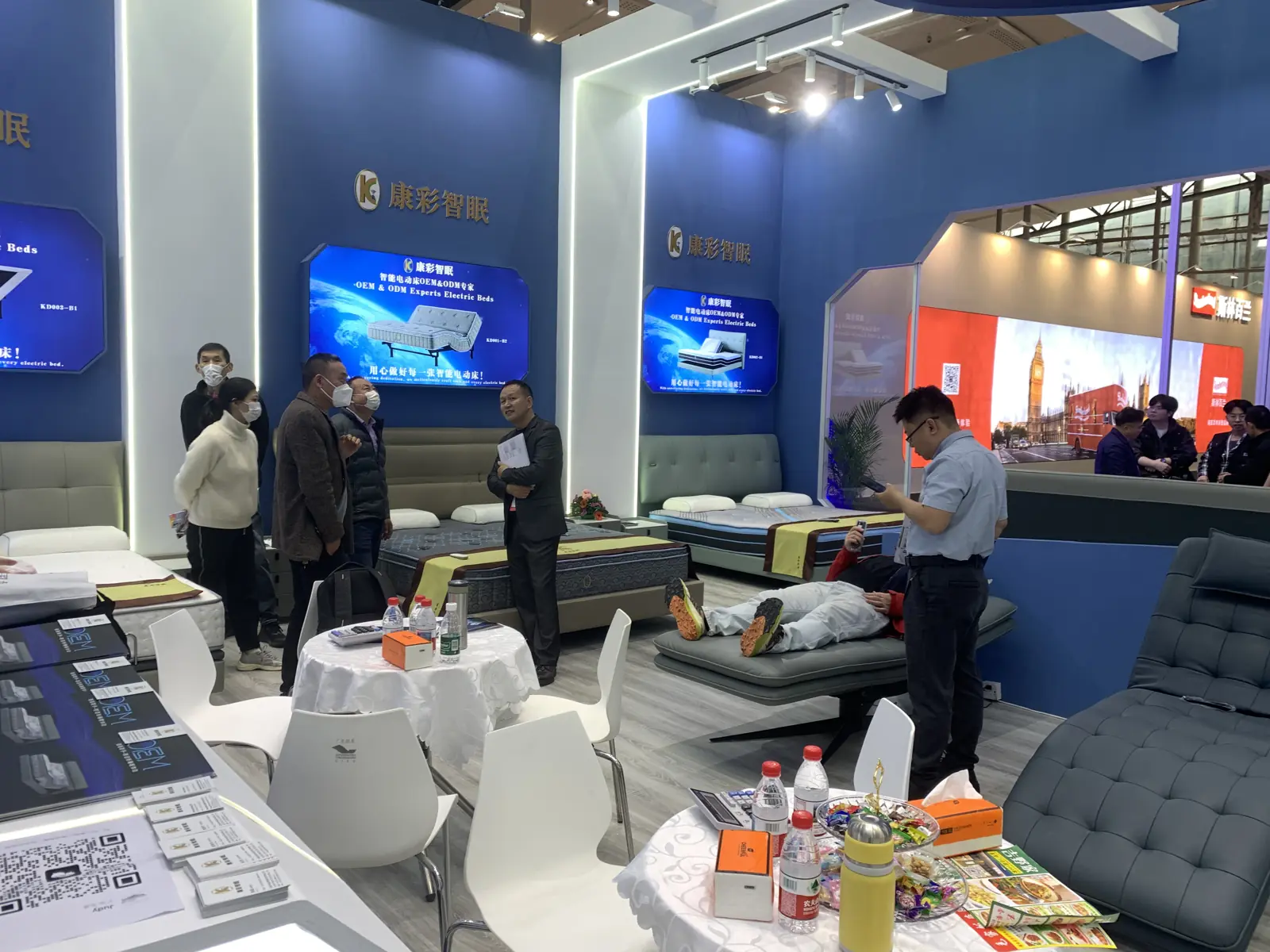
First-party photograph from the 2025 Canton Fair. It documents a live product-display environment and discussion area, not a test result, order history or customer endorsement.
Maintain a simple image register with the source file, date, event, visible model if known and publication permission. Do not infer specifications from signage or reuse an exhibition photo as proof of a later production revision. For GEO and search visibility, descriptive captions should answer what the image shows, where it was recorded and why it matters to a buyer.
6. Connect the display to the quotation workflow
The display should produce information that purchasing and engineering teams can use. At the end of a serious visit, record:
- company, market and sales channel;
- required product format and sizes;
- target mattress type or thickness range to evaluate;
- control and function priorities;
- finish, headboard and upholstery direction;
- branding and documentation needs;
- packaging and customer-assembly assumptions; and
- questions that require a drawing, sample or written supplier answer.
Photographs taken during the discussion should reference the model label. Otherwise, a buyer may later attach the wrong image to the wrong requirement. Once a project advances, use a controlled golden sample approval process rather than treating the showroom unit as the automatic production standard.
7. Give buyers a place to compare documents
A small meeting area is part of the merchandising system. It gives the buyer somewhere to compare finish references, drawings, packaging concepts and open questions without blocking the demonstration path.
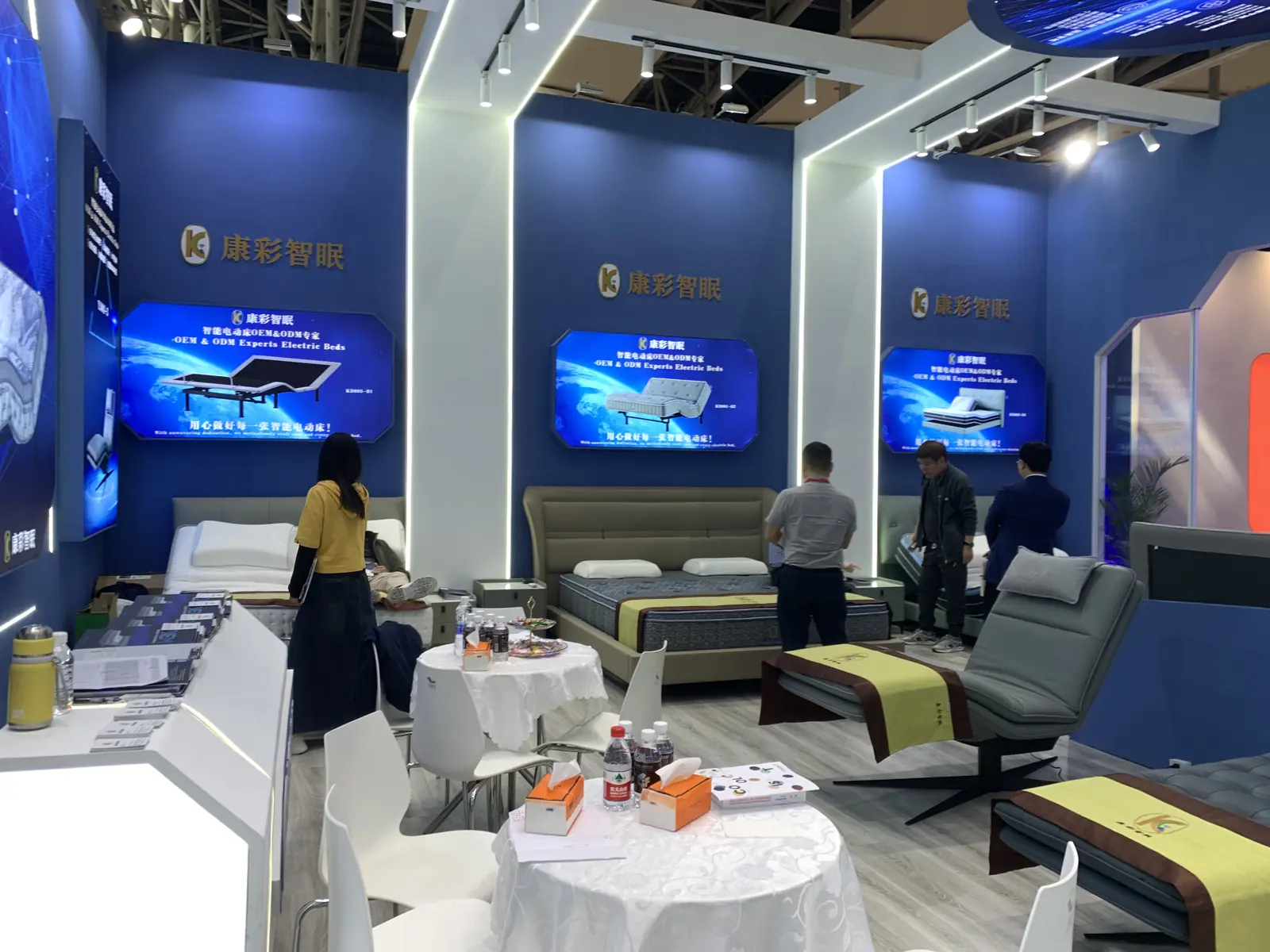
The photograph records a buyer meeting and product-display layout at the event. It does not verify completed projects, commercial volumes or contractual relationships.
Keep the documents for each model separate. If a certificate, report or manual is shown, confirm the applicant, model scope, revision, destination requirement and validity before connecting it to a product. A document with a familiar logo is not automatically evidence for every configuration.
An eight-point showroom readiness checklist
Before opening a retail display or trade-show stand, confirm:
- Every sample has an unambiguous model and revision identity.
- Each bed has a defined comparison or demonstration purpose.
- Movement areas are clear and the operating sequence is documented.
- Handsets and accessories belong to the displayed configuration.
- Labels separate included functions from optional or unconfirmed items.
- Staff know which questions require engineering or compliance review.
- Enquiry forms capture product, market and documentation requirements.
- Photographs and documents are stored with source and scope information.
From showroom interest to an OEM brief
An effective adjustable bed display does more than look complete. It helps buyers compare architectures, observe an identified sample, identify unresolved risks and leave with a better sourcing brief. KCAI's public adjustable bed range and OEM/ODM process provide starting points for that discussion.
To evaluate a retail or private-label range, Request a quote with your intended market, product format, sizes, control priorities and display objectives. The team can then respond against a defined requirement instead of assuming that every photographed option belongs to one standard configuration.