An adjustable bed upholstery specification should do more than name a fabric colour. It should identify the approved material reference, where each material is used, fabric direction, seam and piping details, wrapped edges, motion clearance, cleaning information, packaging protection and the sample revision that controls production. For an adjustable product, appearance and movement must be reviewed together. A fabric that looks acceptable on a flat showroom sample can behave differently around a moving platform, corner or hinge zone.
This guide gives furniture brands, distributors and private-label teams a practical way to brief and approve an upholstered adjustable bed without inventing material performance or relying on vague descriptions such as “premium grey fabric.”
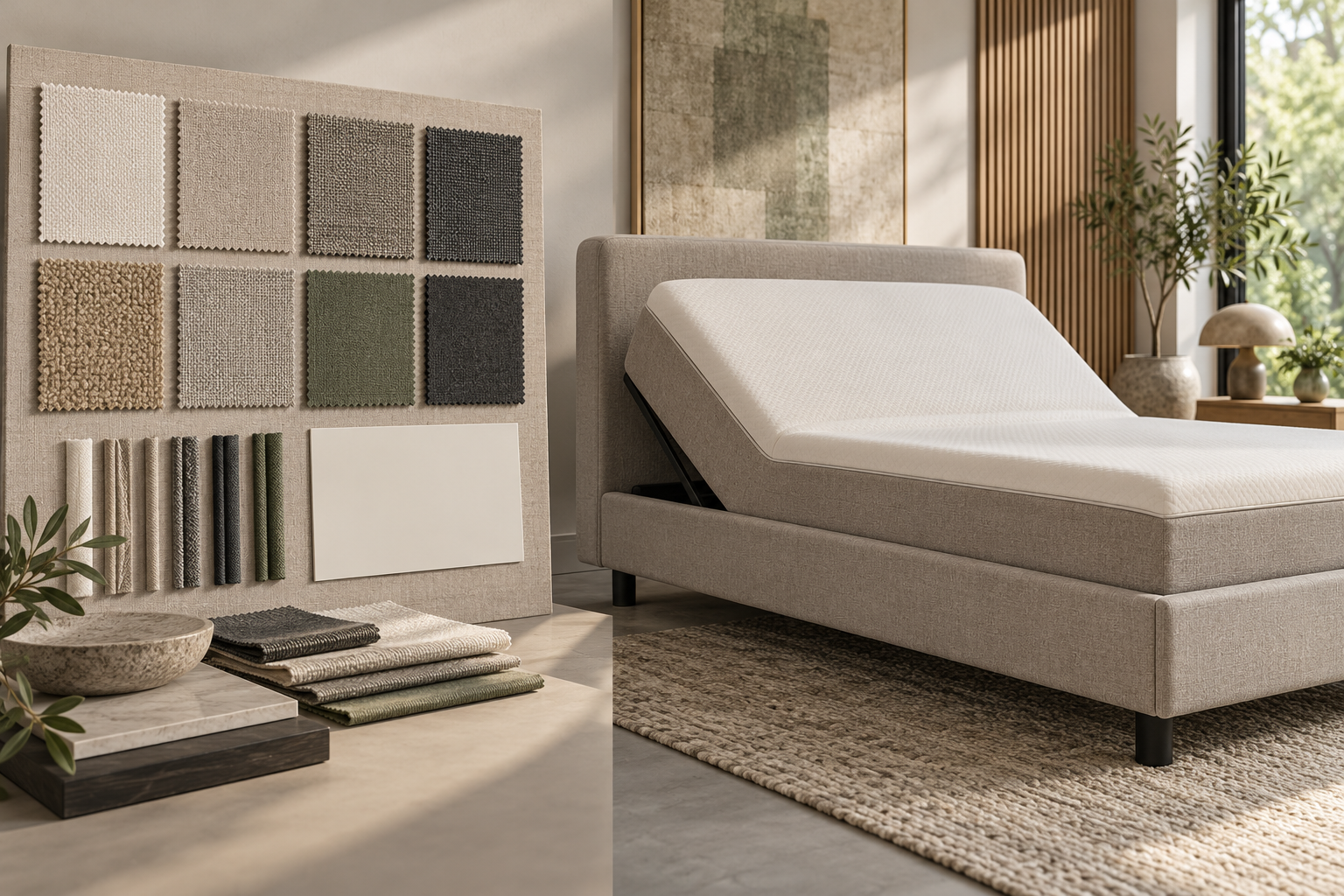
AI-generated editorial concept. It is not a photograph of a KCAI product, approved fabric range or customer project.
Turn the mood board into a production brief
A mood board communicates direction. It does not control production. Two fabrics can look similar in a web image but differ in texture, backing, stretch, colour under different light and suitability for a particular construction. The first job of the buyer's brief is therefore to convert the design idea into identifiable decisions.
Start with the commercial context:
- target market and sales channel;
- adjustable-base or complete-bed model under review;
- intended furniture style and price position;
- upholstery zones visible to the customer;
- buyer-supplied or supplier-proposed material;
- colour and trim direction;
- cleaning and care expectations;
- packaging and delivery route; and
- sample stages and approval owners.
Mark unknown items as open instead of allowing the quotation to fill them with assumptions. The adjustable bed OEM RFQ checklist provides a broader structure for recording the product configuration, controls, accessories and packaging alongside the upholstery brief.
Seven fields that make a fabric specification usable
The exact document can be short, but each line should point to a reference that both buyer and supplier can identify.
| Specification field | What the buyer should define | Evidence to retain |
|---|---|---|
| Material reference | Supplier code or buyer-approved sample identity | Labeled swatch and current data supplied for that reference |
| Colour standard | Approved colour reference and viewing conditions | Controlled physical reference or agreed standard |
| Application map | Which fabric or trim belongs on each visible zone | Marked drawing or annotated sample photos |
| Direction and pattern | Grain, nap or pattern direction on each panel | Direction arrows on the application drawing |
| Construction detail | Seam position, stitch appearance, piping, folds and wrapped edges | Detail drawing plus signed sample images |
| Motion interface | Clearance and contact points around moving sections | Joint review notes for the finished working sample |
| Packaging protection | Protection against rubbing, pressure and exposed hardware | Approved packing concept tied to the product revision |
Do not accept an unlabeled cutting as the final standard. Swatches can be separated from their email context, and a colour name such as “stone,” “oatmeal” or “charcoal” can describe many different materials. Give every approved reference a project name, code, revision and date.
1. Approve material and colour separately
Material selection answers questions about texture, construction and intended use. Colour approval answers whether the appearance matches the collection. Combining both into one vague approval makes later substitutions difficult to detect.
Ask the supplier to identify the exact proposed material and provide the current information available for it. If the project requires a particular composition, finish, restricted-substance requirement or destination-market evidence, state that requirement in writing and verify that the document applies to the exact reference. A generic certificate or a report for a different material is not confirmation for the selected fabric.
Colour should be reviewed against an agreed physical reference whenever it is commercially important. Photographs help teams discuss direction, but camera processing, display settings and ambient light can change what people see. Record who approved the colour, which reference was used and whether a later production lot requires another comparison.
2. Define seams, piping and wrapped corners
Upholstery quality is visible at transitions: a long seam, a corner, a piping join or the point where fabric wraps around a frame edge. These details should appear in the sample-approval criteria rather than being left to a generic instruction such as “neat workmanship.”
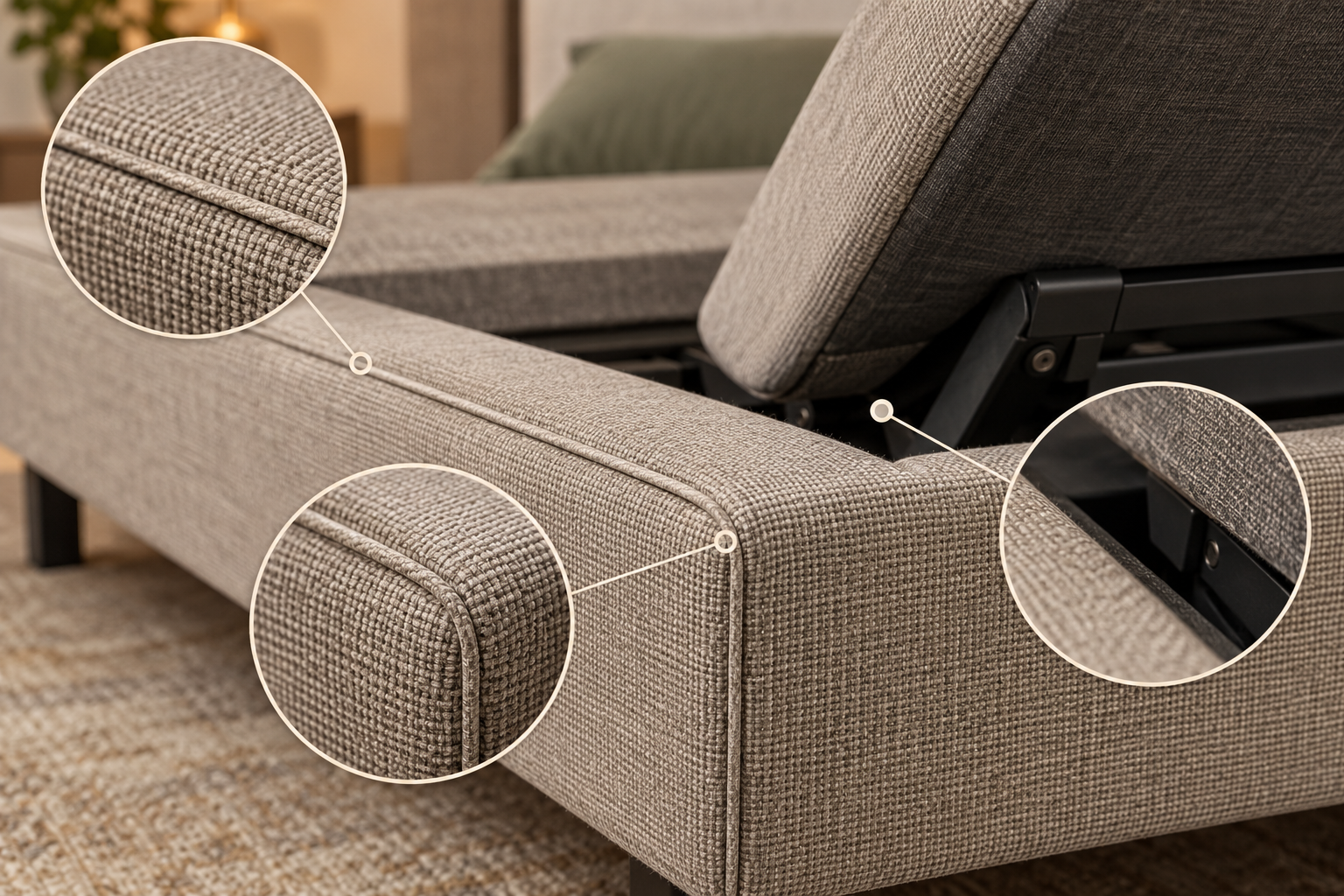
AI-generated editorial detail study. It is not a KCAI workmanship standard, product photograph or inspection record.
For each visible zone, confirm:
- seam location and direction;
- intended stitch appearance where it remains visible;
- piping or edge profile and its material reference;
- corner-fold direction and acceptable visual alignment;
- panel orientation for directional or patterned fabric;
- treatment of openings, fasteners and removable parts; and
- the approved appearance when the product is flat and articulated.
Use close-up images linked to the sample revision. A drawing establishes intent; the physical sample shows how that intent works with the selected fabric and underlying structure.
3. Check upholstery through the full motion path
An upholstered adjustable bed is not static furniture. The moving platform can change the distance between upholstered parts, expose internal edges or create new contact points as it articulates. Upholstery approval should therefore include the intended motion functions of the selected configuration.
Operate the finished sample and observe the interface around the platform, surround and mattress. Look for unresolved rubbing, pinching, excessive tension, bunching, exposed fasteners or restricted clearance. Record the configuration used, because a change to the mattress, padding, surround or platform can change the result.
This review complements the adjustable bed mattress compatibility checklist. The mattress-to-platform relationship and the platform-to-upholstery relationship are separate interfaces, but both must work in the same finished product.
Avoid turning the review into an unsupported durability claim. A successful sample demonstration confirms what was observed on that sample. If the buyer requires a formal test program, define the method, sample scope, acceptance criteria and evidence route separately.
4. Match care information to the approved material
Cleaning language should come from current information for the selected material, not from a generic website paragraph. Confirm the approved care wording, prohibited methods and responsibility for labels or manuals before artwork release.
This matters for private-label programs because the customer sees the brand owner's instructions, not the sourcing conversation behind them. If the material changes, review the care content again. Keep commercial claims narrow and supportable; do not add stain resistance, antimicrobial performance, fire performance or other attributes unless current evidence covers the exact material and intended claim.
Destination-market requirements also need product-specific review. The buyer should define the applicable market and intended use, then confirm which material or finished-product evidence is required. A supplier name or laboratory logo alone does not establish that a document covers the ordered configuration.
5. Approve packaging contact points
Upholstery can be marked before the customer ever sees the bed. Packing pressure, exposed hardware, loose components and movement inside the carton can affect visible surfaces. The packaging review should identify every contact point around the upholstered parts and show how the approved finish is protected.
Check whether accessories are isolated, whether hard edges face the fabric, whether protective material can transfer colour or texture, and whether opening the carton risks cutting the upholstery. Use confirmed packing inputs for the selected configuration; do not copy a packing plan from a visually similar model.
Build one approval kit for the project
The fastest way to lose control is to keep the fabric code in one email, the colour approval in a chat thread and the seam reference in a photograph with no date. Bring the references together before approving the golden sample.
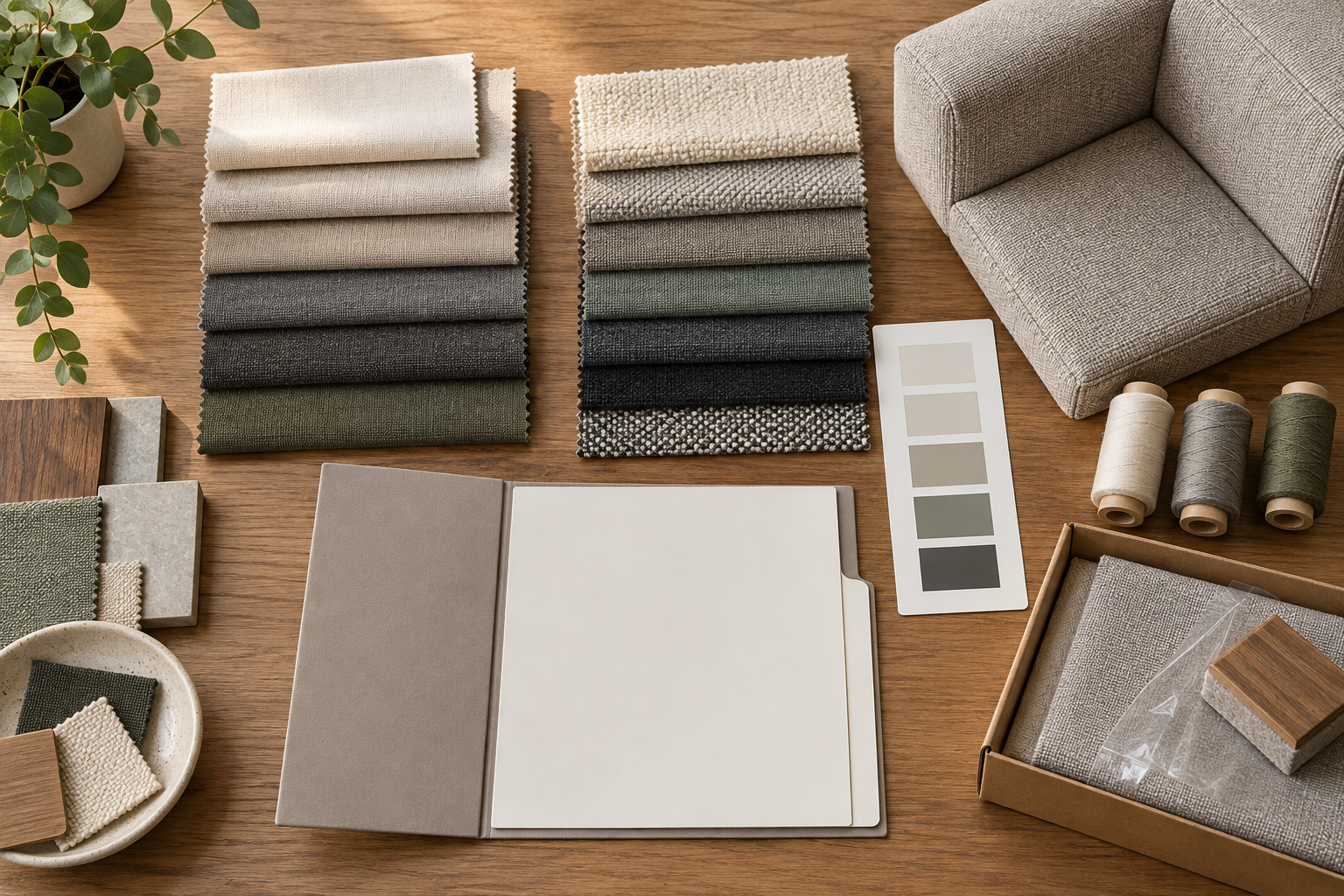
AI-generated editorial approval kit. It is not a KCAI material board, test report, packing specification or customer file.
A practical upholstery approval kit contains:
- the current product and upholstery brief;
- identified fabric, trim and thread references;
- colour approval reference;
- application map with direction notes;
- seam, piping and corner-detail images;
- motion-clearance review notes;
- packaging-contact review;
- care, label and artwork status;
- open exceptions with owners and due dates; and
- a signed revision record.
Use the golden sample approval checklist to connect this kit to the physical reference unit. If a later change affects appearance, motion clearance, packaging or customer information, issue a new revision instead of silently replacing the approved file.
Common mistakes in upholstered adjustable-bed sourcing
Approving a colour name. “Warm grey” is a direction, not a production reference.
Using a small swatch as complete product approval. A swatch does not show panel scale, fabric direction, corner folds or movement clearance.
Treating similar-looking fabrics as interchangeable. Confirm any substitution against the project requirements and approval sample.
Reviewing the bed only in the flat position. Articulation can expose contact and clearance issues that are invisible when the platform is closed.
Separating packaging from finish approval. The correct appearance is irrelevant if the surface arrives marked or damaged.
Making claims before checking scope. Test reports and compliance documents must match the relevant material, component, product configuration and intended market.
Apply the checklist to KCAI product discussions
KCAI's public range includes upholstered adjustable-bed and smart-bed directions for requirements-led projects. The KD001-A3 adjustable bed base uses an upholstered perimeter concept; the KD011-A3 adjustable bed base combines an upholstered furniture profile with a motion platform; and the KR004 smart adjustable bed is presented as a coordinated upholstered bed-and-motion-mattress direction.
These model pages establish a starting point, not a universal material promise. Fabric availability, construction, colour, movement interface, packaging, documents and commercial terms should be confirmed against the current project brief.
Request an upholstery specification review
Send the target model, market, sales channel, reference images, preferred fabric direction, colour standard, visible-detail requirements and packaging route. KCAI can then discuss an existing product direction or a private-label development path without treating unapproved options as confirmed specifications. Request a quote to begin the review.