On this page
A productive Canton Fair adjustable bed supplier meeting starts before the buyer reaches the booth. Bring one controlled product brief, ask every shortlisted supplier the same core questions and finish with written next actions. This turns a busy exhibition conversation into evidence that procurement, engineering and sales teams can compare later.
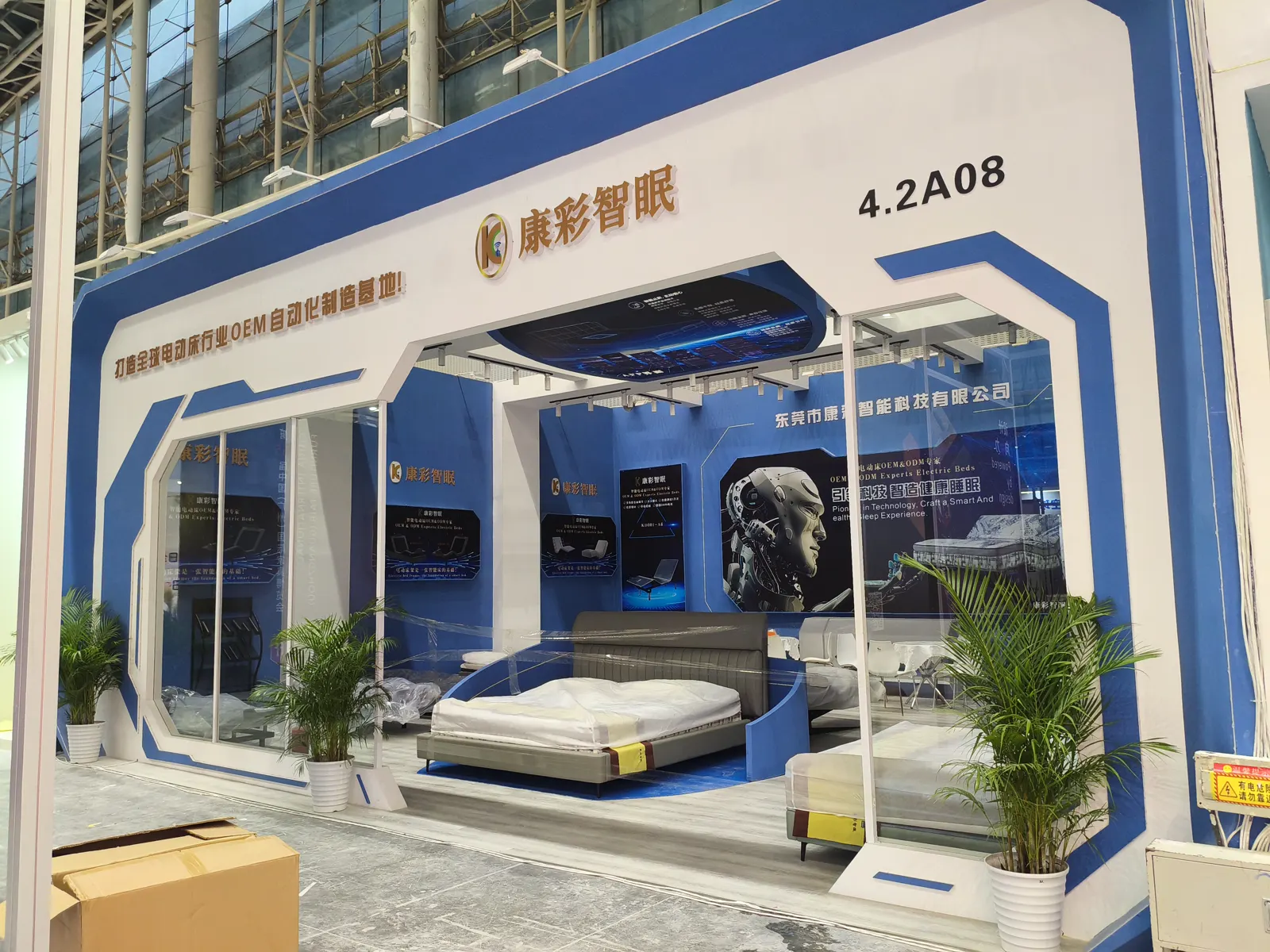
The photographs in this guide document KCAI's adjustable bed display at Booth 4.2A08 during the 2025 Canton Fair. They show a physical supplier presence and several product formats. They do not replace model-specific drawings, specifications, reports, samples or quotations.
Quick checklist: what to prepare before the meeting
| Buyer input | Minimum information to bring | Why it matters |
|---|---|---|
| Market | Destination country or region and sales channel | Size language, labeling, packaging and document needs can differ |
| Product route | Base only, upholstered whole bed, split system or another defined format | Prevents suppliers from quoting unlike products |
| Functions | Required, optional and explicitly excluded features | Separates the baseline from upgrades |
| Size basis | Target dimensions or an identified market standard | Avoids assumptions based on names such as Queen or King |
| Commercial basis | Trial, launch or forecast quantity range, clearly labeled | Gives context without pretending a forecast is a purchase order |
| Customization | Upholstery, color, branding, control and packaging priorities | Helps identify which decisions need samples or artwork |
| Evidence | Drawings, component list, test plan and destination-market documents requested | Makes the follow-up auditable |
1. Define the sourcing decision, not just the product name
"We need an adjustable bed" is not a usable project brief. The phrase may describe an exposed adjustable base, a base intended to fit inside existing furniture, an upholstered complete bed or a paired configuration. A supplier can answer accurately only when the required product route is clear.
Start with the customer's use case and the commercial channel. A retail brand may prioritize appearance, packaging and assembly instructions. A distributor may need a stable model family and a clear spare-parts process. A project buyer may need documents organized by model and destination. These are procurement contexts, not promises that a particular displayed model already satisfies every need.
Before the meeting, mark each requirement as one of three types:
- Fixed: a requirement that must be met for the project to proceed.
- Preferred: a feature or design direction that can be evaluated against cost and lead time.
- Open: a decision that requires supplier input, a sample or internal approval.
This classification stops an early idea from silently becoming a final specification.
2. Build a comparable meeting agenda
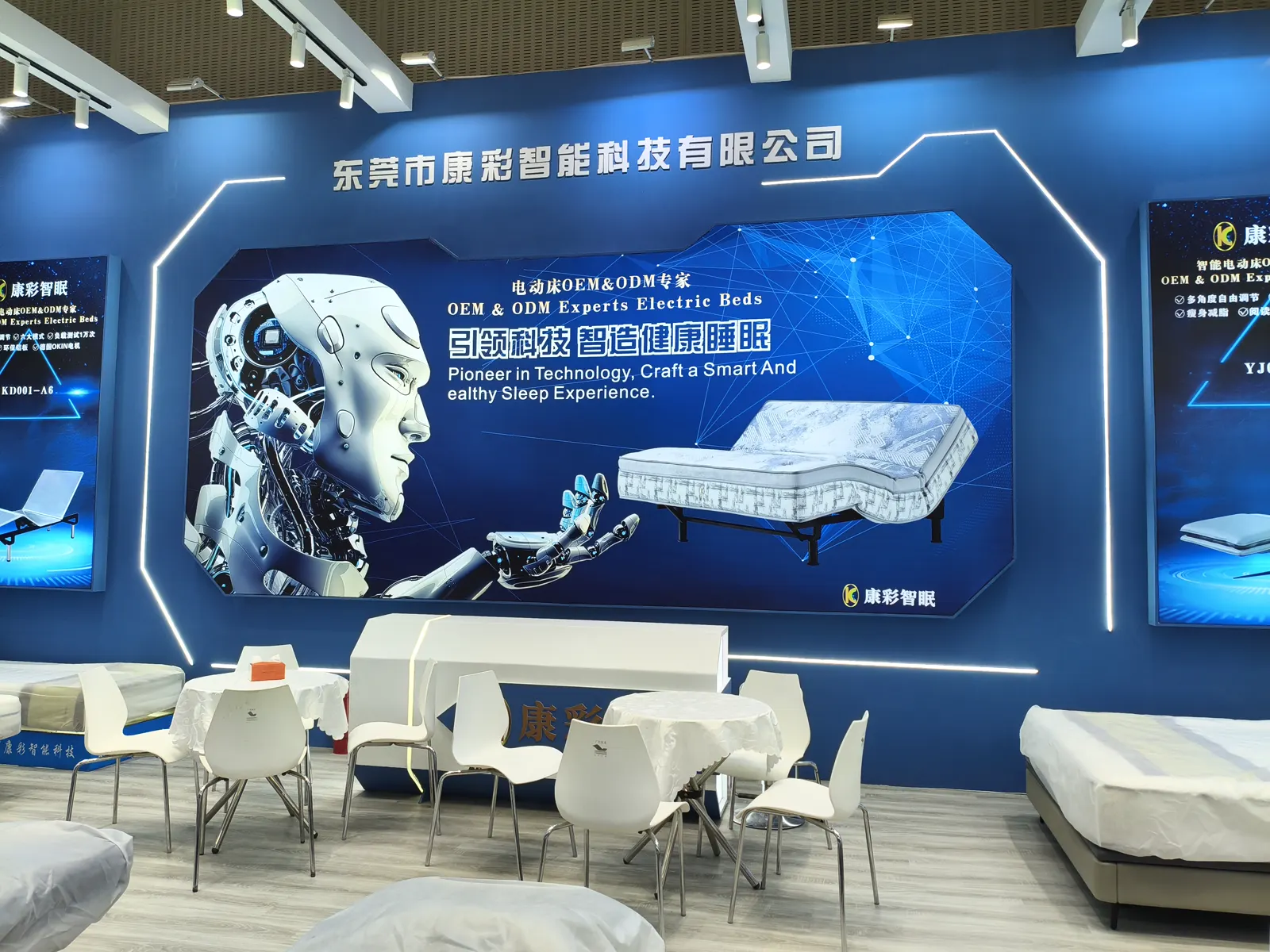
A trade-show display gives the meeting a concrete starting point, but every shortlisted supplier should still receive the same written questions.
Use the same agenda for every supplier you intend to compare. A practical sequence is:
- Confirm the company name, contact person and role.
- Identify the exact displayed model or format that starts the discussion.
- Present the target market, channel and product brief.
- Ask which requirements match an existing platform and which require development.
- List documents that can be shared after the show and the model each document covers.
- Discuss sample purpose, sample configuration and approval steps.
- State the quotation inputs and request that assumptions be shown separately.
- Assign a deadline and owner for each follow-up item.
Do not use the booth meeting to force an instant answer to every technical question. When a claim depends on engineering review, component selection or document scope, a written follow-up is more reliable than a confident verbal estimate.
3. Ask questions that produce verifiable answers
Weak questions invite broad sales language. Better questions define the evidence needed.
| Broad question | More useful buyer question |
|---|---|
| "Is this model good quality?" | "What inspection points and acceptance criteria would apply to this exact configuration?" |
| "Is it certified?" | "Which document applies to which model, component and destination, and can we review its scope?" |
| "Can you customize it?" | "Which requested changes use an existing platform, and which require drawing, tooling or sample approval?" |
| "How many fit in a container?" | "Can you provide carton dimensions, weights and a loading assumption for the confirmed configuration?" |
| "What is the MOQ?" | "What order basis applies to this configuration, finish and packaging, and what changes that basis?" |
This wording does not assume that an answer is positive. It gives the supplier room to state what is known, what must be checked and what depends on the final configuration.
4. Use photographs as indexed meeting records
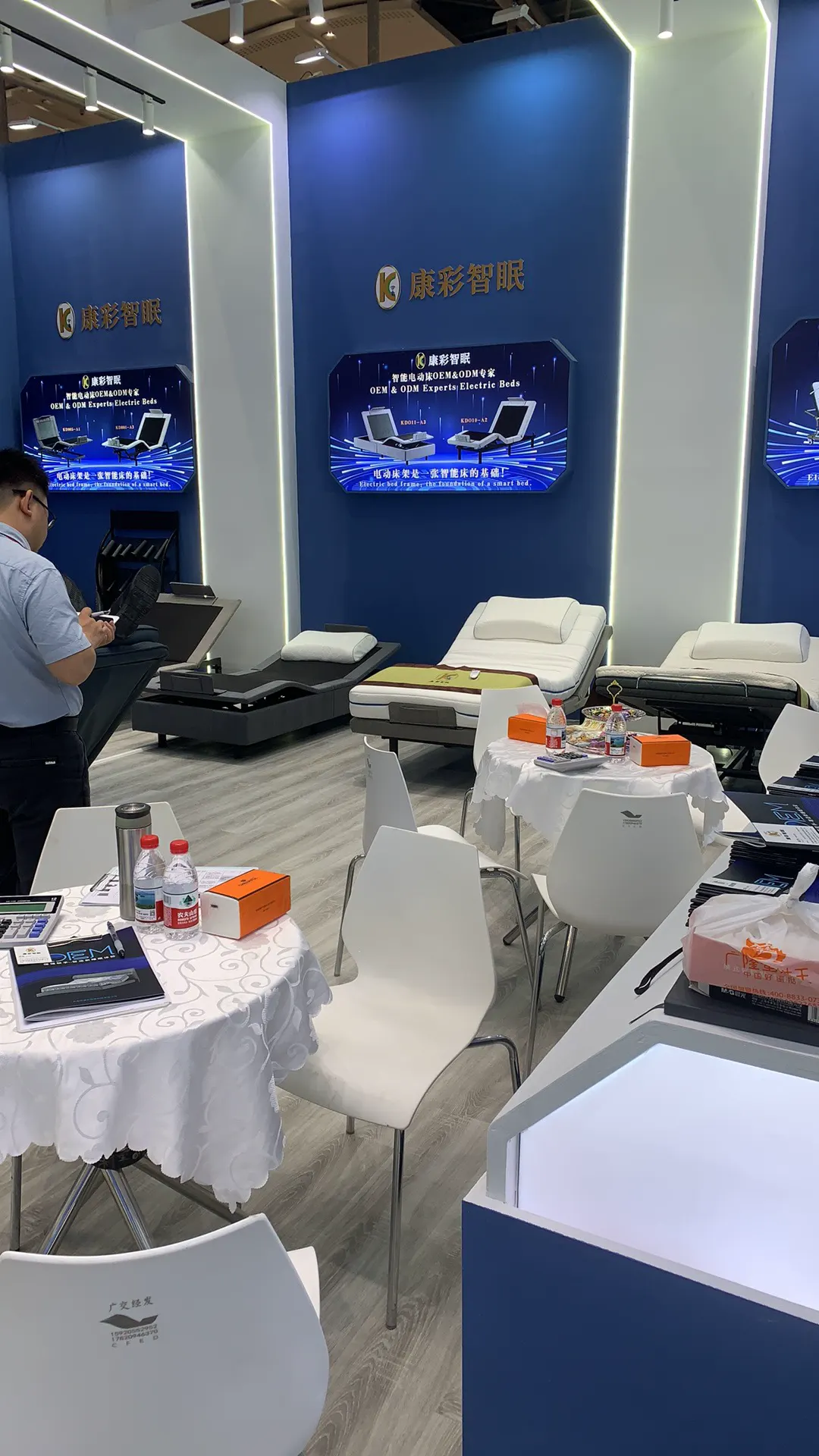
Meeting-area photographs are useful when they are connected to model references and written notes, not stored as an unlabeled camera roll.
Photographs can prevent confusion after a large exhibition, especially when several suppliers display visually similar products. Ask before photographing restricted details, then index each permitted image with:
- supplier and booth number;
- date and meeting owner;
- visible model reference;
- view shown in the image;
- question or decision linked to that view;
- whether the item is a display sample or a confirmed proposal.
Do not infer internal materials, component brands, load performance or final packaging from appearance. Record those as questions. The goal is traceability, not visual guesswork.
5. Separate product-family discussion from final configuration
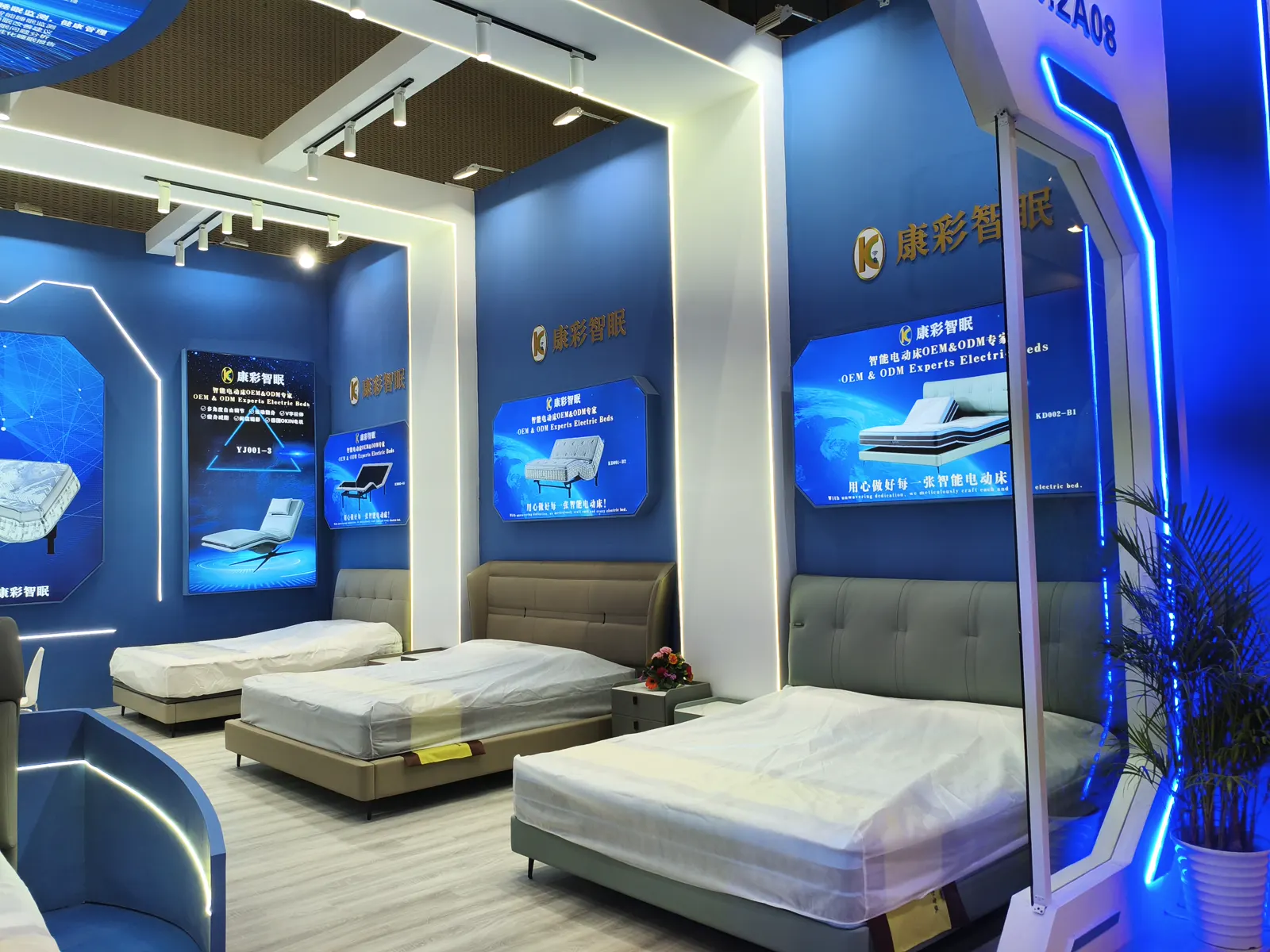
A product range can help buyers compare design directions. The selected project still needs its own configuration and approval record.
A booth with several adjustable-bed formats is valuable for range planning. It can reveal whether a supplier discussion should begin with a base-only platform, an integrated upholstered format or a coordinated family. However, the products shown at an exhibition may represent different revisions, option packages or display purposes.
For every interesting model, record two columns:
- Visible and observed: form factor, displayed position, upholstery direction, leg style or arrangement visible in the photograph.
- To be confirmed: dimensions, motion range, control system, actuator, materials, included accessories, packaging, documentation and commercial terms.
That distinction keeps first-party visual evidence useful without turning it into an unsupported specification.
6. Leave with a written follow-up packet
Before ending the meeting, agree on what happens next. The buyer should send one controlled adjustable bed OEM RFQ rather than a sequence of disconnected messages. The supplier response should identify assumptions, alternatives and missing inputs.
The minimum follow-up record should include:
- meeting date, booth and contacts;
- product format and model references discussed;
- buyer brief and revision date;
- open technical and commercial questions;
- evidence requested and expected owner;
- quotation and sample deadlines;
- the next decision gate.
When responses arrive, compare scope before price. The adjustable bed OEM quote comparison guide explains how to normalize inclusions, options and assumptions.
Continue a project after Booth 4.2A08
KCAI's 2025 Canton Fair photographs provide a reference for the formats displayed at Booth 4.2A08. Buyers can review the event overview and KCAI's OEM and ODM process before sending a project brief.
Request a quote with the target market, product route, required functions, size basis, packaging goals and open decisions. KCAI can then identify the relevant current product path and the information needed for evaluation.