Buyer Guide
Adjustable Bed Base ODM: What It Includes and How It Differs From OEM
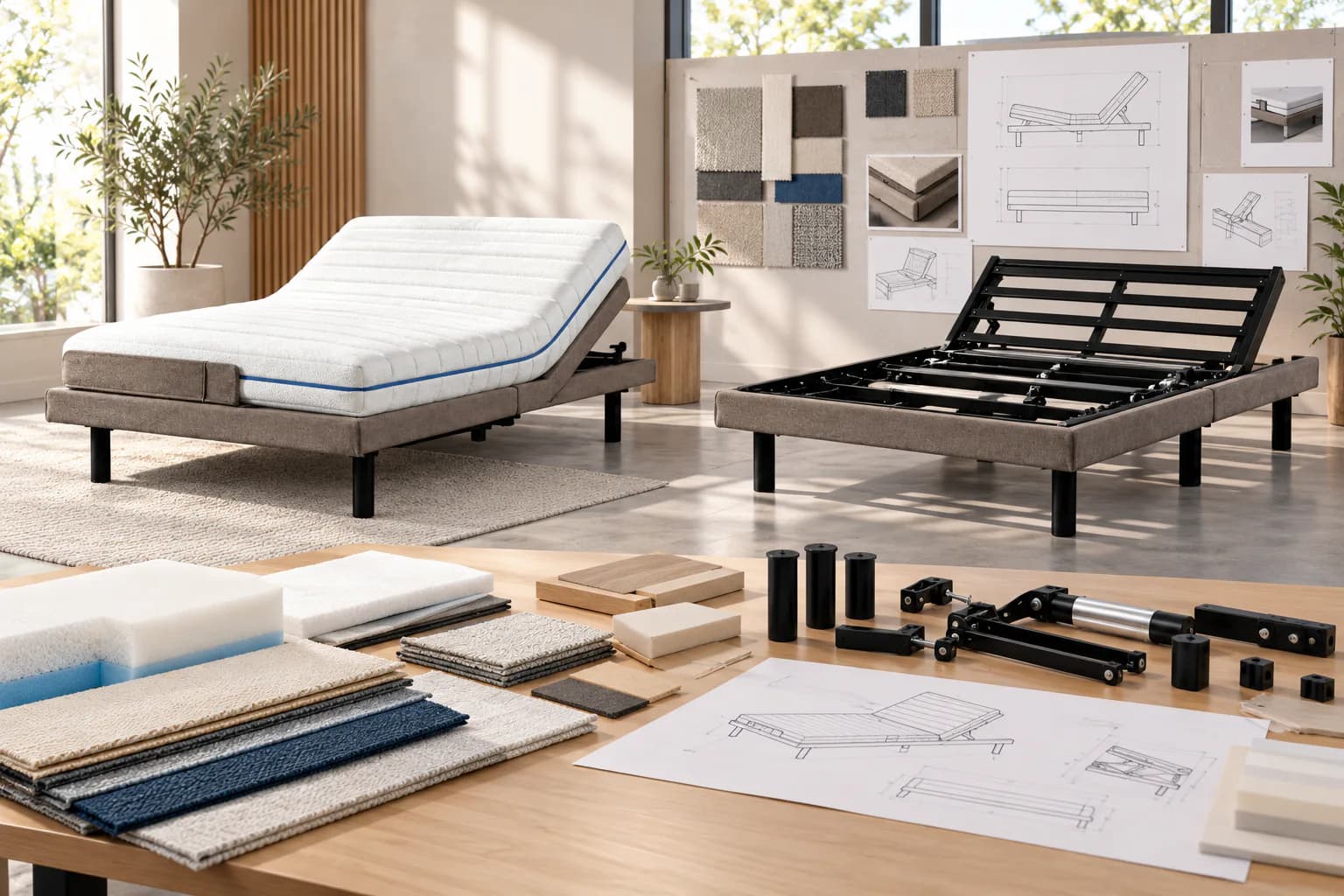
An adjustable bed base ODM project starts from a supplier’s existing base platform and adapts selected features, such as upholstery, controls, packaging and branding, for a buyer’s brand. In an OEM project, the buyer supplies the drawings or specification and the factory builds to them. Many projects mix both.
When comparing adjustable bed base ODM vs OEM, start with the product input your team already controls. Do you want to select and adapt an existing supplier platform, or do you have a buyer-owned specification that a supplier should manufacture to?
Suppliers do not always use “ODM” and “OEM” in the same way. Compare the actual design input, engineering tasks, approval evidence and ownership terms in the project scope.
Last updated:
The practical difference: what starts the project?
The labels are shorthand, not a complete project definition. A mixed scope is possible, but it should say which parts remain supplier platform and which are buyer-specific.
| Decision | Platform-led route (often called ODM) | Buyer-specification route (often called OEM) | Private label (a branding choice, not a route) |
|---|---|---|---|
| Starting point | A named supplier platform and revision | Buyer drawings or a controlled product specification | Either an existing platform or a buyer-defined product, with the buyer’s brand applied |
| Buyer’s early work | Decide whether the platform fits the product and market | Define requirements, tolerances and acceptance criteria | Decide which brand elements, packaging and documents change |
| Supplier engineering | Explain the platform and identify possible adaptations | Review feasibility and perform only the work in the agreed scope | Depends on whether the base is a platform or a buyer specification |
| Approval evidence | Platform sheet, option list, change list and sample revision | Drawing/spec revision, feasibility response, verification plan and sample | Label, artwork and packaging approvals on top of the route’s evidence |
| Main commercial risk | A selected platform cannot support a required change | Development starts before inputs and validation scope are clear | Assuming branding alone settles design, documents or ownership |
| Ownership discussion | Separate pre-existing supplier platform from new project work | Define rights in buyer inputs and supplier-created work | Agree brand-asset use separately from rights in the base design |
What an ODM adjustable bed base project usually involves
The stages below are a typical sequence, not a promise of scope or timing. Confirm each stage, its owner and its evidence in the written project scope.
- Brief: the buyer states the target market, mattress or furniture interface, must-have functions, branding and carton requirements, expected order volume and launch window.
- Platform and revision: the supplier names the exact base platform and revision to evaluate against the brief, with its documented options.
- Adaptation list: each requested change is listed with an owner, an approval point and its possible effect on evidence, price and schedule.
- Sample approval: the buyer reviews a sample of the quoted revision, including controls, accessories and packaging, and records any open deviations.
- Pilot and production release: the approved revision, change authority and inspection points are fixed before volume production.
- Documents and after-sales: market documents, user instructions and the service-parts list are matched to the approved revision.
What buyers commonly ask to adapt in an ODM base
These are common discussion points, not a list of confirmed KCAI options. Availability depends on the platform revision, so request the option list for the exact model.
- Upholstery and fabric
- Control type: wired, wireless or app-based
- Motor and actuator configuration
- Size range and mattress or furniture interface
- Branding: labels, remote and packaging artwork
- Carton format and packing method
- Accessories and the power-supply format for the target market
What to prepare before requesting an ODM quote
Send the same brief to every supplier so responses can be compared on scope instead of labels. The OEM RFQ checklist shows how to structure it.
- Target market and sales channel
- Mattress sizes or the furniture interface the base must fit
- Must-have functions and optional functions, listed separately
- Branding, label and packaging requirements
- Expected order quantity and launch window
- Market documents your customers or regulators require
- Who in your team approves samples and changes
Scenario A: an online mattress brand needs a private-label base
Hypothetical buyer: a North American online mattress brand has an established mattress line and wants to evaluate an adjustable base for private label. It has a target market and brand requirements, but no proprietary base drawings.
A platform-led route, often called ODM, is a reasonable first route to evaluate. The brand can compare existing models before funding a new design. That route fits only if the identified model meets the mattress interface, control, packaging and market requirements.
The buyer supplies fit requirements for its mattress range, must-have functions, market/document needs, branding and carton requirements, order assumptions and launch window. The supplier identifies the exact platform revision and supported changes; the brand owns the market brief, compatibility criteria and approval decision. A catalogue selection alone does not establish fit.
Choose this path if a current, documented platform meets the must-haves with changes the brand can approve. If a critical interface or function cannot be evidenced for the proposed revision, pause and assess a buyer-specification route.
Scenario B: a furniture brand controls the bed design
Hypothetical buyer: a European furniture brand has a controlled bedroom collection, defined installation interfaces and its own drawings. It needs the adjustable mechanism to fit a specified furniture design and approval process.
A buyer-specification route, often called OEM, is the relevant route to evaluate when the drawings and acceptance criteria are mature enough for a feasibility review and quote. The brand supplies controlled drawings, interface requirements, market/document needs, sample criteria and change authority.
The brand controls its design inputs and approves departures. The supplier assesses manufacturability and performs only the engineering tasks agreed for the project. Both parties define who produces drawings, validates changes and owns or may use project-created work.
Choose this path if differentiation depends on the controlled design and both parties can define engineering and validation responsibilities before development. If the requirements are exploratory, first compare a platform against the brief.
A mixed route: platform first, buyer-specific changes second
A project can start from a supplier platform and add selected changes. Separate the existing platform from new project work; list each adaptation, its owner and approval point, and its possible impact on evidence, price and schedule. Do not assume that a prior document covers a changed configuration.
Compare the routes against your team's readiness
| If your team has… | Begin by evaluating… | Before committing… |
|---|---|---|
| A market brief but no base design | Supplier platform route | Name the revision and check the required interface and documented options |
| Complete drawings and acceptance criteria | Buyer-specification route | Set feasibility, engineering scope and approval authority |
| A platform plus selected differentiating changes | Defined mixed scope | List each change, its impact and its evidence needs |
| Unresolved requirements or unclear IP expectations | Neither route yet | Assign owners to the missing design inputs and ownership questions |
Make the route comparison useful to procurement
Give suppliers the same starting brief. Ask each response to name the proposed route, model and revision; included scope and exclusions; engineering tasks for each party; applicable evidence; sample approval point; rights in existing and new work; commercial terms; and unresolved assumptions. This keeps the comparison focused on responsibilities instead of labels.
The current KCAI site lists the KD001-A3 upholstered adjustable bed frame and KD010-A2 disassemblable electric bed frame as product references. Their presence does not establish that a buyer-specific configuration, market document, price or customization is available. Use the linked service pages as discussion entry points, then submit your project brief through Request a Quote.
Frequently asked questions
What is an ODM adjustable bed base?+
An ODM adjustable bed base is developed with substantial supplier design input. It may start from an existing supplier platform or involve additional development. The buyer and supplier should define the model or design starting point, requested changes, approval responsibilities and rights in writing.
What can be customized in an ODM adjustable bed base?+
Buyers commonly ask about upholstery, control type, motor configuration, size range, branding, packaging and accessories. Which options are available depends on the platform revision, so request the option list for the exact model.
What should I prepare before requesting an ODM quote?+
Prepare your target market, the mattress or furniture interface, must-have functions, branding and carton requirements, expected order volume, launch window and any documents your market requires.
How long does an ODM adjustable bed project take?+
Timing depends on the platform, the number of adaptations, sample approval and market documents. Ask each supplier to state the starting point for any quoted timeline and what it excludes.
Is ODM or OEM better for an adjustable bed base?+
Neither route is automatically better. An ODM platform may suit a buyer whose requirements fit an existing model; an OEM project may suit a buyer with a controlled design and acceptance criteria. Compare the actual engineering scope, model fit, sample evidence, cost and ownership terms rather than the route label alone.
Does ODM guarantee a lower price or faster launch?+
No. An existing platform may reduce new-design work, but options, validation, market documents, availability and commercial terms still shape a project. Compare current project-specific offers.
Can a private-label product use an ODM or OEM route?+
Private label describes branding; ODM/OEM describes the project’s starting design and responsibilities. A private-label program may use an existing platform or a buyer-defined product. The scope should state which applies and what may change.
Who owns new drawings or tooling?+
The agreement should distinguish background designs from new project work and state ownership, permitted use, storage and transfer terms for each item. The route label alone does not settle those terms.
Related
Discuss Your Sourcing Route
Get a specification and quote for your adjustable bed program.