On this page
An adjustable bed can sound different once a mattress, floor surface and surrounding furniture are added. A useful sample review does more than describe a motor as “quiet”: it records the complete setup and the specific movement during which a sound occurs.
Quick answer: Compare adjustable bed noise under consistent conditions and treat the bed as a complete system. A sound may come from the actuator, contact between components, the installation or another source. A listening comparison can identify questions for the supplier; it does not replace an agreed acoustic test.
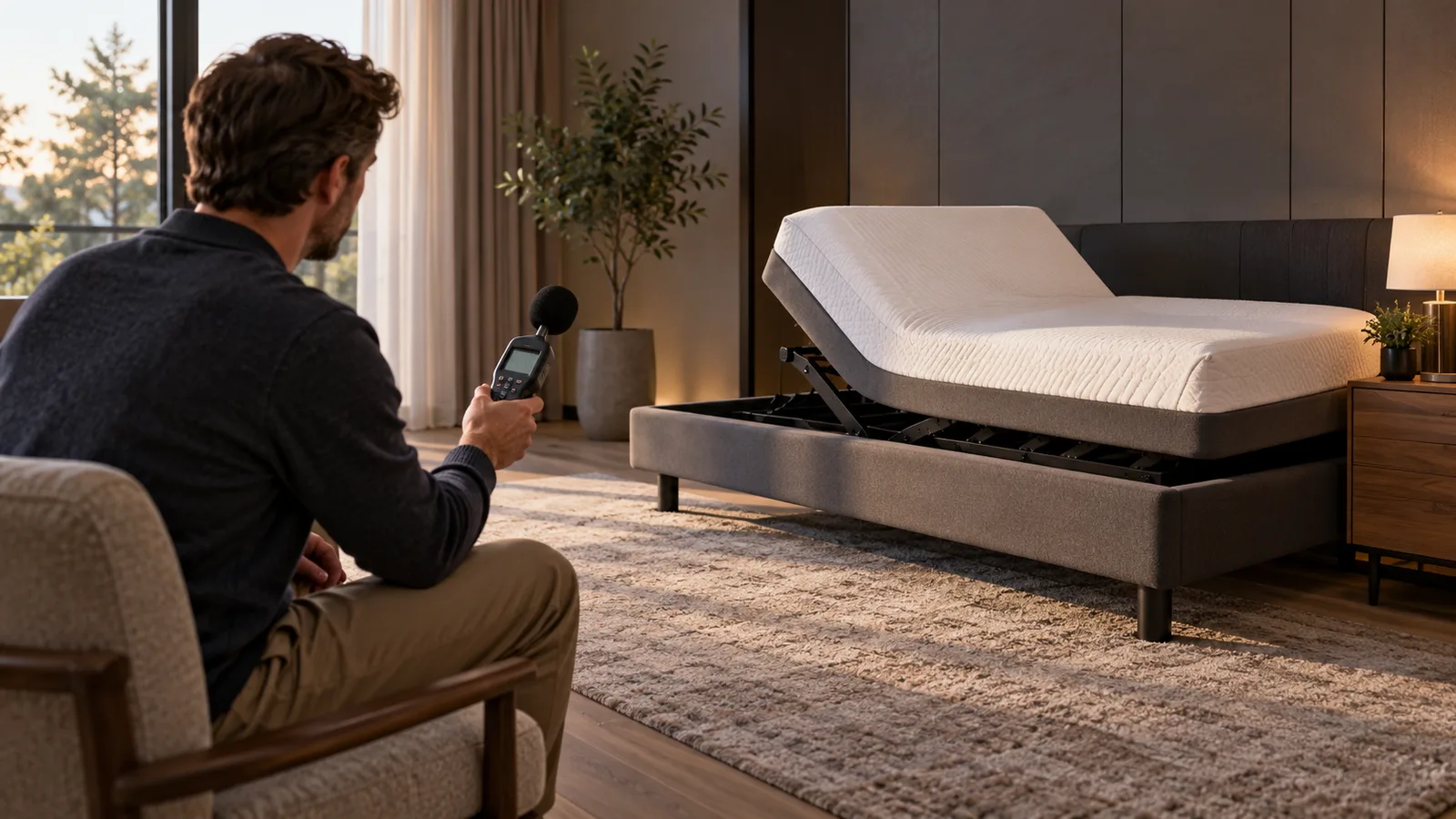
AI-generated editorial concept. This is not a photograph of a KCAI test or a representation of a measured noise level.
Why the whole bed matters
An actuator converts electrical input into movement through a drive mechanism. The actuator, mounting points, moving platform, mattress and support surface interact. A hum, click, squeak or rattle may have different causes. A sound that seems to come from the motor is not by itself evidence that the actuator has failed.
For a B2B buyer, noise evaluation helps define what is acceptable for a particular sales channel and provides a record to discuss before approving the sample. Avoid promising a return-rate improvement without actual program data.
Set up a fair sample comparison
Before comparing samples, agree on the same room, floor or support surface, mattress configuration, starting position and operating sequence. Record background conditions and any authorized load. If a measured result is required, agree in advance on the instrument, calibration, microphone placement, measurement method and acceptance criteria with the responsible engineering team.
Do not present a phone recording, a listening impression or an isolated motor datasheet as a certified whole-bed measurement. Keep observers clear of moving parts and follow the manufacturer's operating instructions.
| Condition to record | Sample A | Sample B |
|---|---|---|
| Model, size and revision | ______ | ______ |
| Mattress and support surface | ______ | ______ |
| Room and background conditions | ______ | ______ |
| Agreed load and procedure | ______ | ______ |
| Movement and starting position | ______ | ______ |
| Sound description and timing | ______ | ______ |
| File reference and reviewer | ______ | ______ |
| Agreed next action | ______ | ______ |
Use the agreed procedure to decide whether either sample is ready for approval. This worksheet is a comparison aid, not a universal acoustic standard or a pass/fail threshold.
Describe the sound rather than diagnose the part
| Observation | Useful follow-up for the supplier |
|---|---|
| Continuous hum during motion | Does it occur on each movement section and under the same setup? |
| Intermittent click or rattle | At which point in the motion does it occur? |
| Squeak or rubbing sound | Does the recording show nearby furniture or mattress contact? |
| Sound changes with the installed setup | What changed between the two documented conditions? |
Stop the test if the bed binds, sounds abnormal or appears damaged. Do not hold, brace or reach beneath the mechanism during motion. Internal inspection and repairs belong to authorized personnel.
Questions for the supplier
Request the exact actuator and control configuration for the sample, available data sheets, the measurement setup behind any noise claim, and the procedure for investigating an unacceptable result. Ask how a component or mounting change would affect the approved sample and documentation.
Keep the original and revised sample records together. A component-level number does not establish a sound level for every completed bed, floor and mattress combination.
Turn the result into an OEM requirement
Add the intended configuration and agreed evaluation method to your golden sample approval record. Review the pre-shipment quality checklist when planning production checks. Review the actuator engineering guide for component-level questions, then send KCAI your sample brief. The KD010-A2 product page is a starting point for a model discussion; noise performance must be verified for the actual configuration.