On this page
Quick answer: An adjustable-bed remote is a component of a defined control system, not a universal accessory. A buyer needs the exact handset, control box, power components and software or pairing method to work together on the approved bed revision. Optional legs and other hardware also need a model-specific fit check. Order spares from that documented combination rather than from a visual match or a catalogue family name.
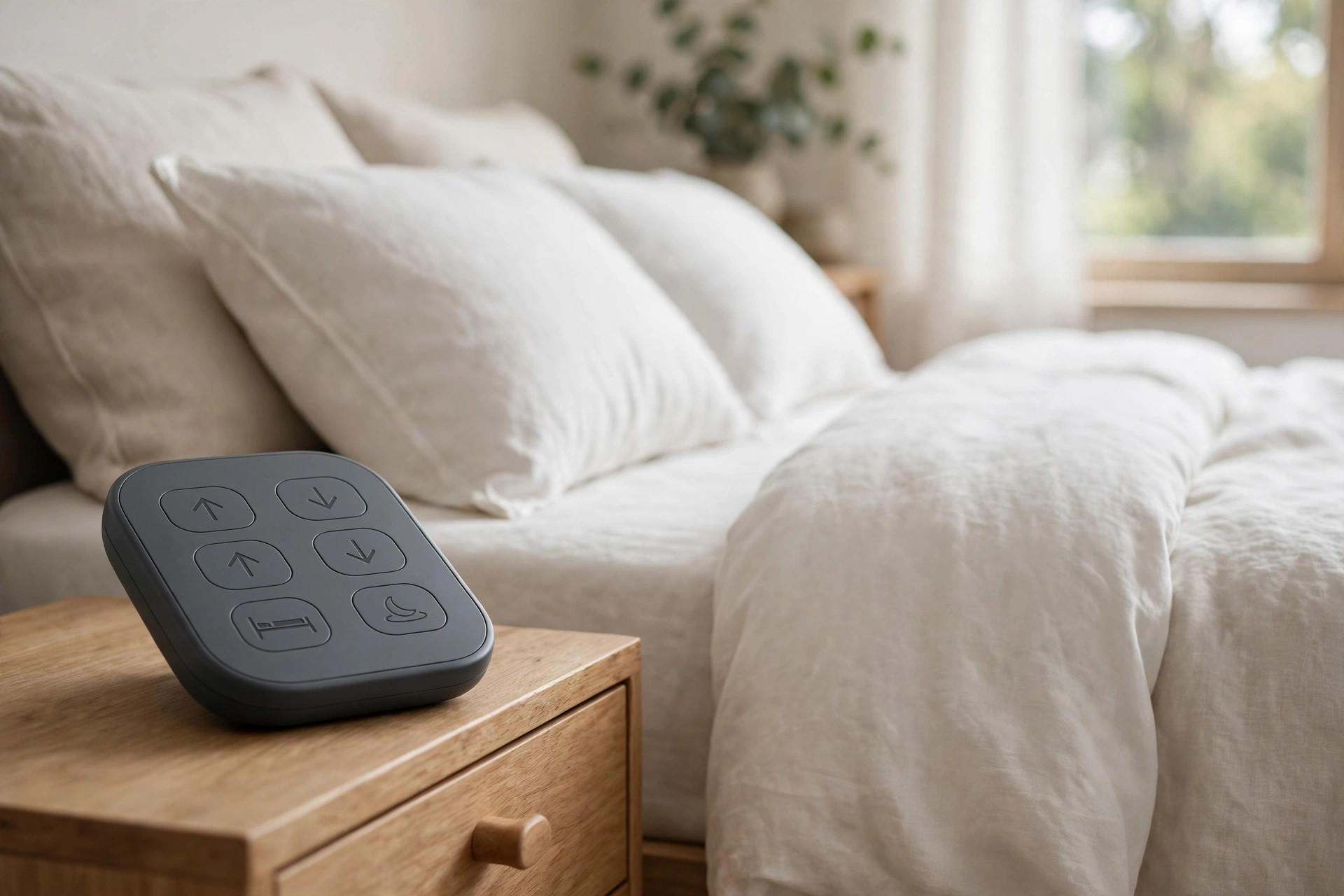
The cover is a conceptual AI illustration, not a photograph of a supplied KCAI remote or a compatibility test.
For a mattress brand or distributor, the commercial risk often appears after the first shipment: a customer asks for a replacement handset and the service team cannot identify which version belongs to the installed base. A small component then becomes a full-unit return. The solution is a controlled component record that follows the product from sample approval into purchase orders and service.
Begin with the system boundary
A remote sends a command, but the delivered behavior depends on the control box, actuator connections, power supply, configuration and any enabled software. Two handsets that look alike may use different pairing methods or commands. A leg that fits a similar frame may change the finished height or load path of a different installation.
Use the remote specification guide when defining button behavior. This article concentrates on which physical and replacement parts belong together, and how the buyer can prove that the supplied package matches the approved sample.
| Interface or accessory | Buyer decision | Evidence to collect before approval | Service consequence if undocumented |
|---|---|---|---|
| Wired handset | Cable exit, reach and strain relief for the installed bed | Handset and control-box part numbers, cable routing drawing, sample check | Replacement may fit the connector but behave differently |
| Wireless handset | Pairing, power source and replacement sequence | Approved pairing instructions, component revisions, working sample | Service team may ship a non-pairing handset |
| App or voice option | Supported functions, account ownership and update responsibility | Named software version, supported devices and tested configuration | Feature may change or become unavailable during the product life |
| Optional legs | Mounting interface, height and included hardware | Approved leg part, assembly instructions and installed sample | Wrong part may change fit or stability |
These are configuration categories, not claims that a particular KCAI model includes every option.
A compatibility record buyers can actually use
Create one row for every approved sellable bed configuration. Keep the commercial SKU and factory model separate; a retailer's finish or size code does not identify its internal control parts.
| Record field | Buyer entry |
|---|---|
| Retail SKU, factory model and revision | |
| Handset part number and revision | |
| Control-box part number and revision | |
| Power supply and connector identity | |
| Actuator connection map | |
| Pairing procedure and software version, if applicable | |
| Approved leg or hardware accessory part number | |
| Sample ID, test date and approver | |
| Replacement-part number and substitution rule |
Attach photographs of the actual component labels and the approved packing list. If the factory proposes a replacement part, require a written compatibility decision against the installed versions, not just the current production sample. The broader control-system compatibility checklist covers the system-level approval record.
Test the supplied package and the replacement path
On a production-intent sample, identify each component and operate every function stated in the approved instructions. For a wireless system, follow the actual pairing and reset sequence, then repeat it with the proposed spare handset. For a wired system, check connector identity, cable routing and strain relief. If an app or voice interface is proposed, use the agreed software and supported device; record what happens after a power interruption or account change.
Keep the outcome as a dated sample record: configuration ID, component revisions, test steps, observed result, deviations and approval. Do not invent a universal range, pairing success rate, service life or pass threshold. The brand should set acceptance criteria for its intended market and have the supplier confirm the test setup.
Legs need a separate physical check. Assemble the proposed set with its approved hardware, measure finished height and inspect stability and access in the intended furniture surround. Compare the packed parts with the manual. A photograph of a loose leg beside a bed is not an installation approval.
Plan spares before the first shipment
The service desk should be able to answer three questions from the customer's product identity: which part was shipped, which replacement is approved now, and how it is installed or paired safely. Record any part substitution and the affected serial or lot range. Agree commercial availability and response responsibility in the purchase order rather than assuming stock exists.
The spare-parts inventory planning guide explains how to turn that compatibility map into a stocking plan. Start with actual installed configurations and field demand; do not assume that a remote from one bed model covers another.
Request a model-specific package
If you are comparing KCAI adjustable-bed configurations, send the intended bed model, target market, control functions, accessory needs and service horizon through the RFQ form. Ask for the current component list, sample, available replacement parts and applicable instructions for that exact proposal. The resulting quotation and approved sample, rather than this general guide, define what can be supplied.