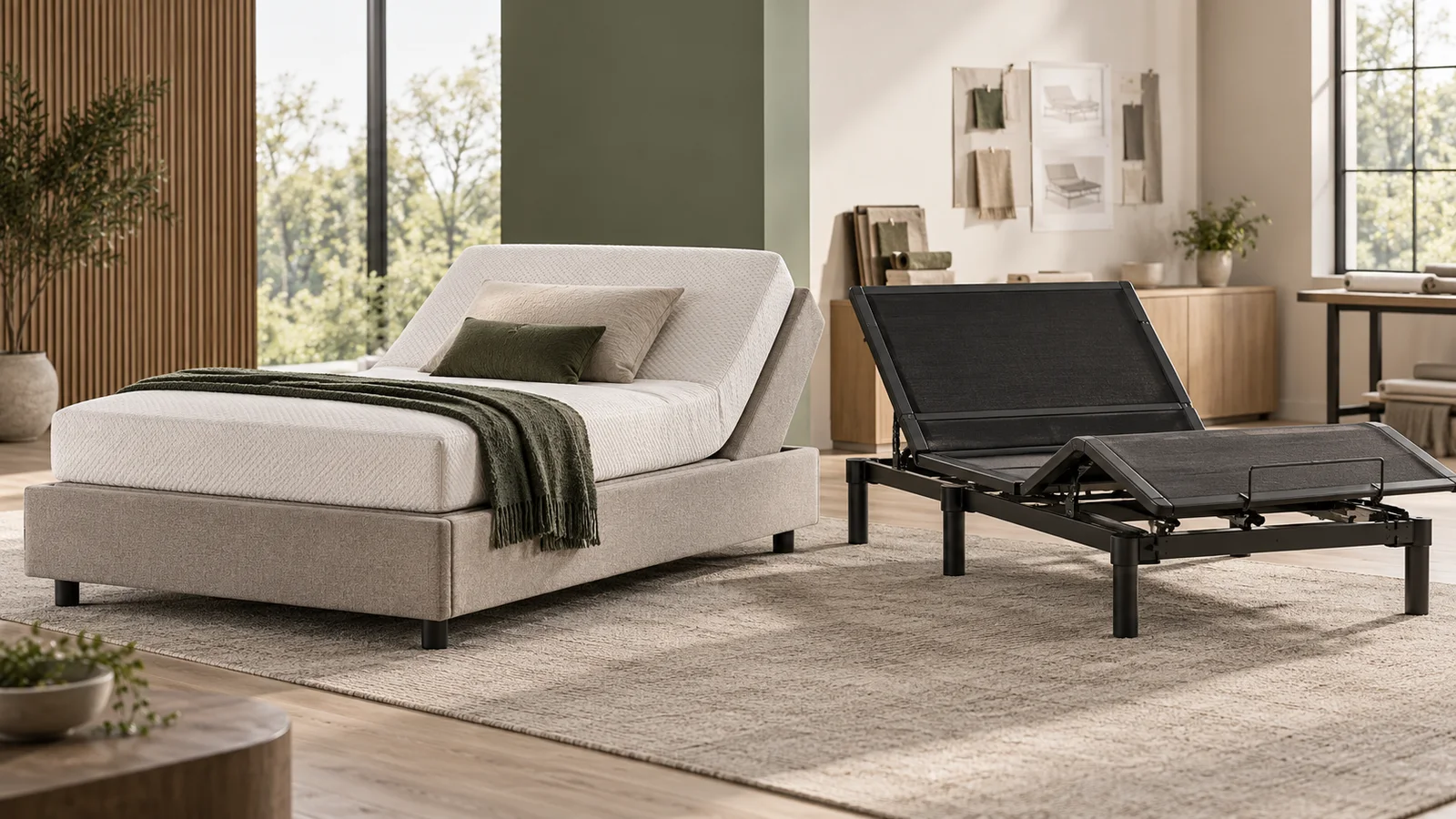
An upholstered adjustable bed base combines a moving platform with a finished fabric exterior, while an open-frame adjustable bed base leaves more of the structural platform visible for use or integration. Upholstered formats put greater emphasis on furniture appearance and finish control. Open-frame formats put greater emphasis on the platform, interfaces and installation context.
For a private-label buyer, the choice should follow the assortment strategy. Select upholstered when the product must arrive as a coordinated piece of bedroom furniture. Select open frame when the platform will be installed inside another surround, paired with multiple furniture styles or managed as a distinct functional base.
Key takeaways
- Upholstered and open-frame bases solve different merchandising and integration tasks.
- Upholstery adds fabric, seam, corner, alignment and protective-packing controls.
- Open frames still require finish, cable, clearance and installation control.
- Neither appearance proves strength, durability, noise performance or certification.
- The best comparison uses the same motion, mattress, channel and service requirements.
Upholstered vs open-frame adjustable bed bases
| Decision criterion | Upholstered base | Open-frame base |
|---|---|---|
| Customer impression | Finished furniture product | Visible functional platform or integration component |
| Design control | Fabric, seams, corners, panels and furniture proportions | Metal finish, platform geometry, legs, brackets and interfaces |
| Room integration | Exterior is part of the final look | Can be used alone or reviewed for another surround |
| Quality focus | Appearance consistency plus motion clearance | Structure visibility, finish consistency and service access |
| Packaging focus | Protect finished surfaces and prevent marking or compression | Restrain components and protect exposed edges and mechanisms |
| Service access | Trim or panels may affect access planning | Components may be more visible, but access still needs confirmation |
| Best fit | Furniture-led private-label programs | Platform-led, modular or integration-led programs |
This is a format comparison only. Exact construction, included parts and options depend on the quoted model and revision.
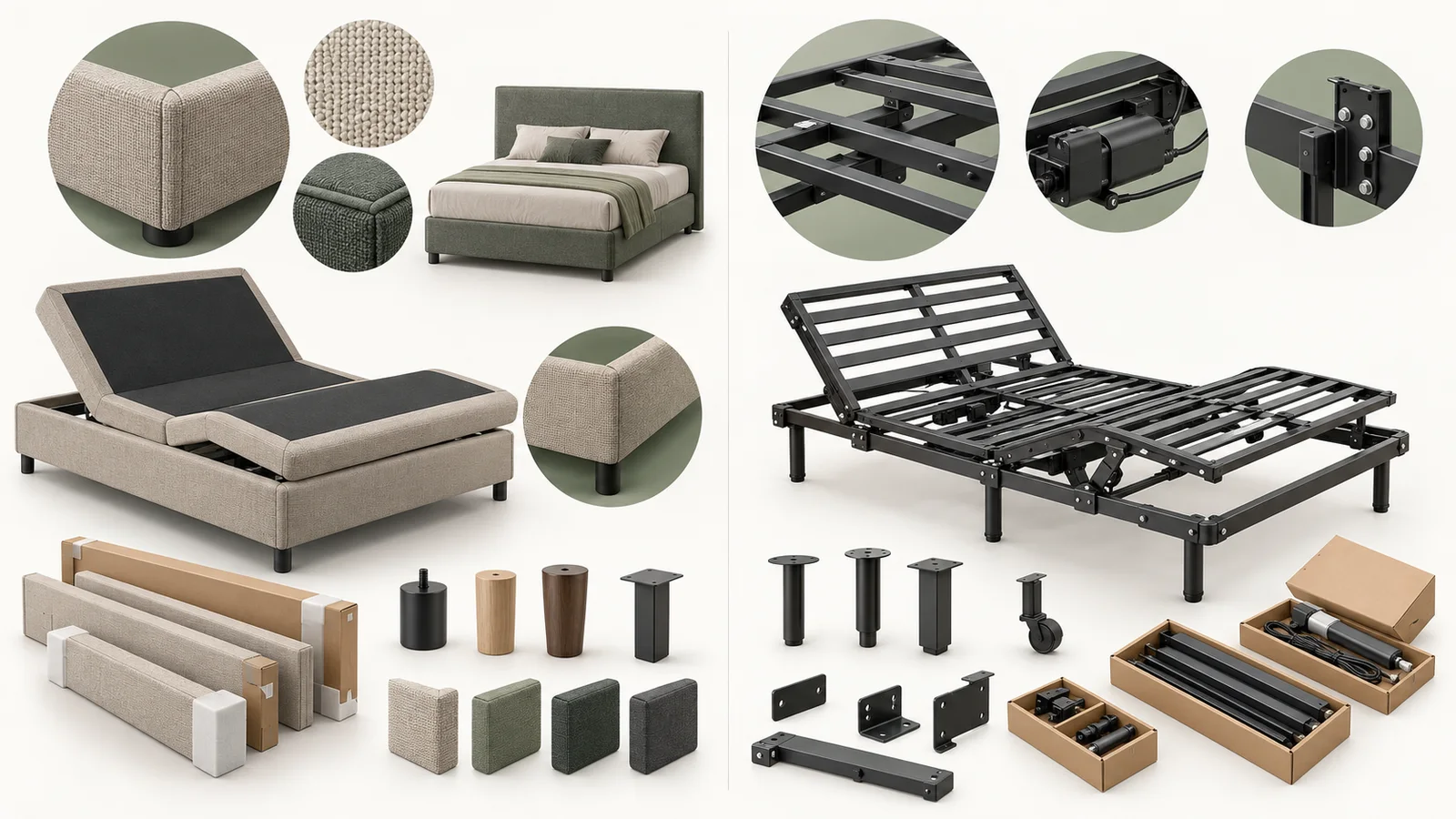
AI-generated editorial comparison. It is not an exact KCAI product, construction drawing, packing plan or proof of performance.
When an upholstered format makes sense
An upholstered base can reduce the visual gap between a powered platform and the rest of a bedroom collection. Fabric, proportion and edge treatment become part of the product identity, so a brand can coordinate the base with headboards, room furniture or an existing textile direction.
KCAI currently presents two relevant public directions:
- KD001-A3 upholstered adjustable bed base, described as an upholstered perimeter design for furniture-led OEM and private-label programs; and
- KD011-A3 upholstered bed base with motion platform, combining a finished upholstered profile with a motion-platform direction.
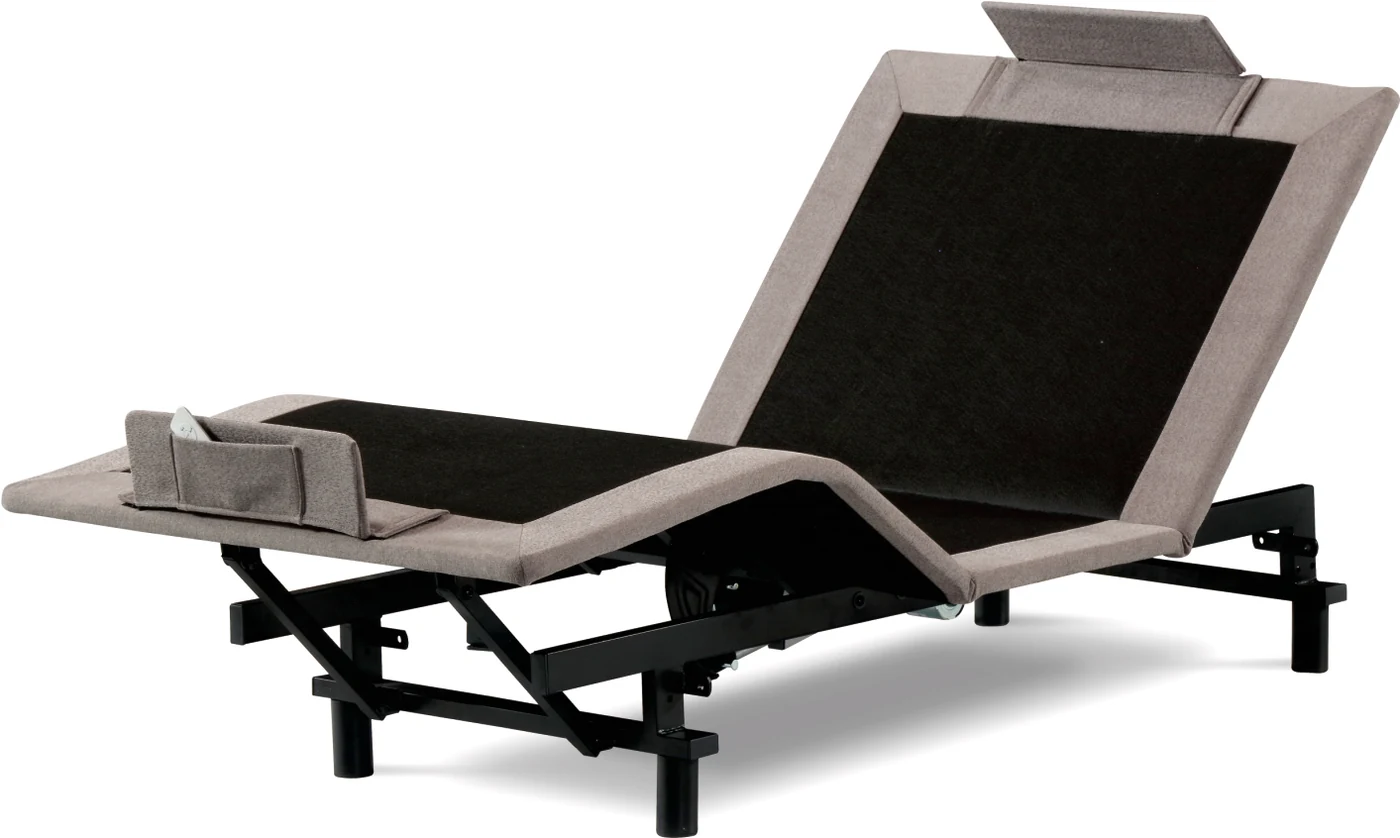
Current KD001-A3 catalogue product view. Confirm upholstery, controls, dimensions, packing and the complete quoted configuration in current project documents.
The buyer should not select upholstery from a screen image alone. Ask for an approved swatch or controlled material reference, then connect it to the finished sample. Color, texture and hand feel can change under different lighting, and a fabric name may cover several supplier references.
When an open-frame format makes sense
An open frame can suit a platform-led assortment or a project that will integrate the motion system with another furniture structure. The visible platform makes it easier to discuss legs, brackets, access and surrounding clearance as separate interfaces. It does not remove the need for an appearance standard: exposed welds, coating, fasteners and cable routes remain customer-visible quality details.
The KD005-A1 five-zone electric bed frame and KD010-A2 disassemblable electric bed frame are two public open-frame directions with different sourcing questions. KD005-A1 is identified as a five-zone platform concept; KD010-A2 is identified as a disassemblable format for packing, shipping and final-assembly review. Final functions and specifications must be confirmed per project.
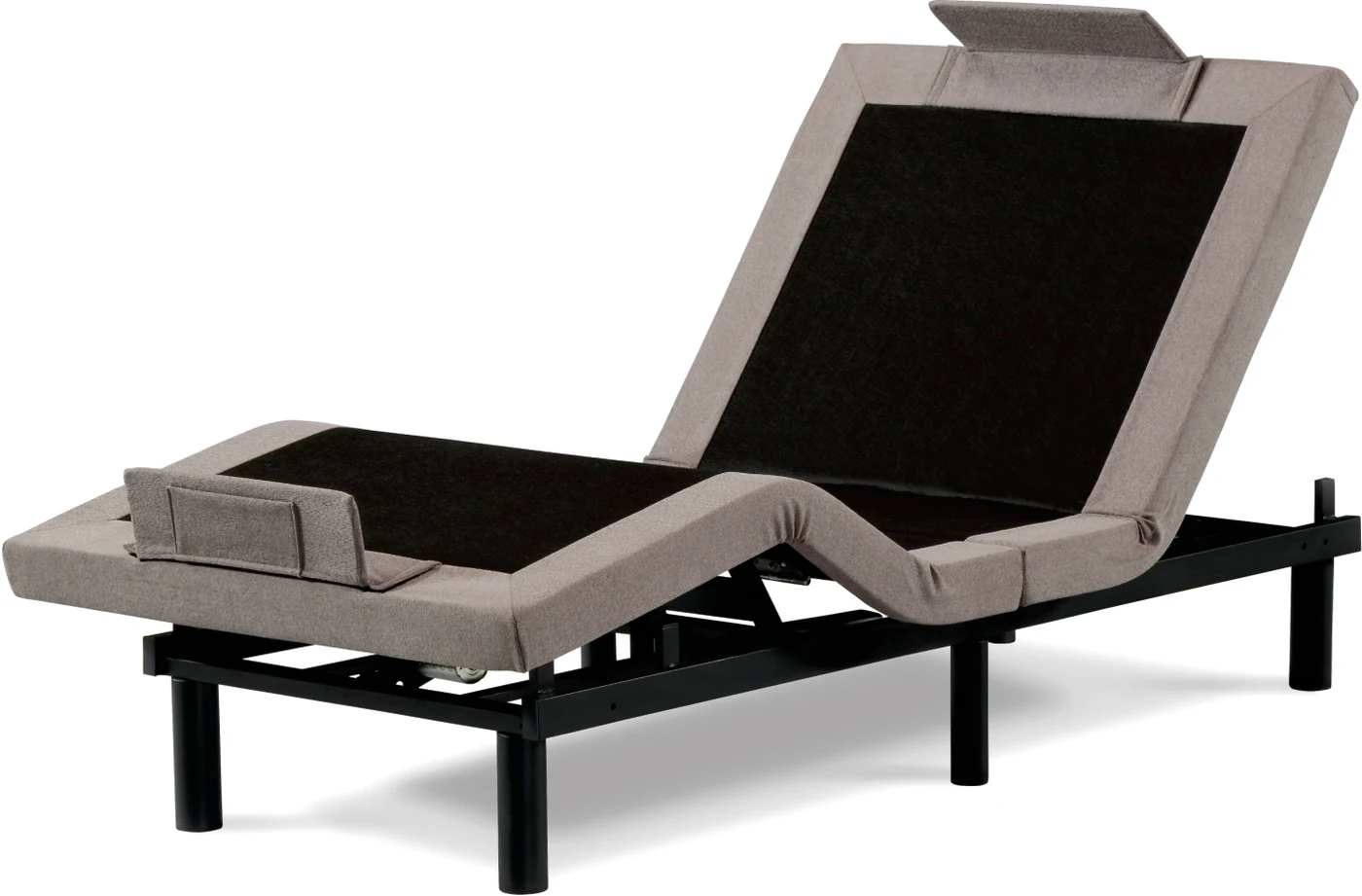
Current KD010-A2 catalogue product view. Confirm the platform revision, included parts, packing dimensions and assembly method with the quotation.
Upholstery turns appearance into a controlled specification
A useful upholstery specification is more than a color name. It should identify:
- Material reference. Record the approved supplier reference, color and sample identity.
- Application map. Show which surfaces receive which material and where directional texture must align.
- Seam and edge expectations. Define the approved appearance at corners, transitions and visible joins.
- Panel alignment. Identify acceptable alignment and symmetry on the complete product.
- Motion clearance. Check that trim and fabric remain clear of moving interfaces through required positions.
- Protection method. Approve how finished surfaces are wrapped, separated and restrained inside the pack.
- Change control. Reopen affected checks if fabric, foam, panel construction or packing changes.
The adjustable-bed upholstery specification guide expands this into a supplier-ready approval record.
Open frame does not mean specification-free
An open platform can look simple because the mechanism is visible. That visibility makes inconsistent finishing or routing easier to notice. The buyer should document the coating or surface-finish reference, visible weld and fastener expectations, cable routing, connector identification, leg and bracket scope, mattress retention and clearance to any surrounding furniture.
Do not infer performance from tube size in an image. Strength, stability and durability depend on the complete construction, connections, movement system and final assembly. Require evidence that applies to the actual quoted revision and intended configuration.
Compare packaging by risk, not by appearance
Upholstered and open-frame products can fail in transit for different reasons.
For an upholstered base, review surface abrasion, edge compression, staining risk, moisture protection and contact between finished panels and hardware. For an open frame, review exposed edges, concentrated mass, movement restraint, loose accessories and contact between coated components.
For both formats, request the current sealed-carton dimensions, gross weight, carton count, internal layout, parts manifest and any relevant transport-validation documents. Do not assume an upholstered base always needs more space or an open frame always packs more efficiently; compare the approved pack designs.
Service access belongs in the product brief
An attractive exterior should not make routine identification impossible. For an upholstered format, confirm how authorized service personnel reach connectors or components without damaging visible panels. For an open frame, confirm that visible access is also safe and that replacement instructions identify the correct revision.
The public parts and service plan should stay modest. It can explain the diagnostic route and available documentation without promising universal interchangeability or field replacement for every component.
Write one neutral RFQ for both options
To receive comparable proposals, send both suppliers the same brief:
- target market and sales channel;
- intended furniture style and product identity;
- required movement and control behavior;
- mattress and retention plan;
- surrounding-furniture and room interfaces;
- finish or upholstery direction;
- packaging and destination-assembly model;
- documents and evidence required for approval; and
- service and replacement-part expectations.
Use the adjustable-bed OEM RFQ checklist to separate confirmed requirements from optional ideas. Then ask each supplier to list exceptions and open items.
Discuss the right base architecture
KCAI can review upholstered and open-frame directions within a requirements-led OEM/ODM program. Share the target channel, appearance brief, mattress plan, room or furniture interface, controls, packaging route and evidence requirements through the request-a-quote form.
The correct deliverable is not a generic promise that one format is “premium” or “stronger.” It is a controlled proposal that identifies the exact product, finish, interfaces, pack, sample plan and unresolved assumptions.