Adjustable bed mattress compatibility is not a universal label. It is a relationship between a specific mattress construction and a specific moving platform. A B2B buyer should verify dimensions, flexibility, edge behavior, retention, clearance and movement on the intended base, then record the approved mattress-and-base combination by revision. A mattress that bends on one platform may shift, bunch or interfere on another. The safest sourcing decision is therefore to approve the complete sleep system—not two products in isolation.
This checklist is for mattress brands, furniture importers, distributors and product teams evaluating a mattress for an electric adjustable bed base. It focuses on the evidence a buyer can request and record without relying on unsupported “universal compatibility” claims.
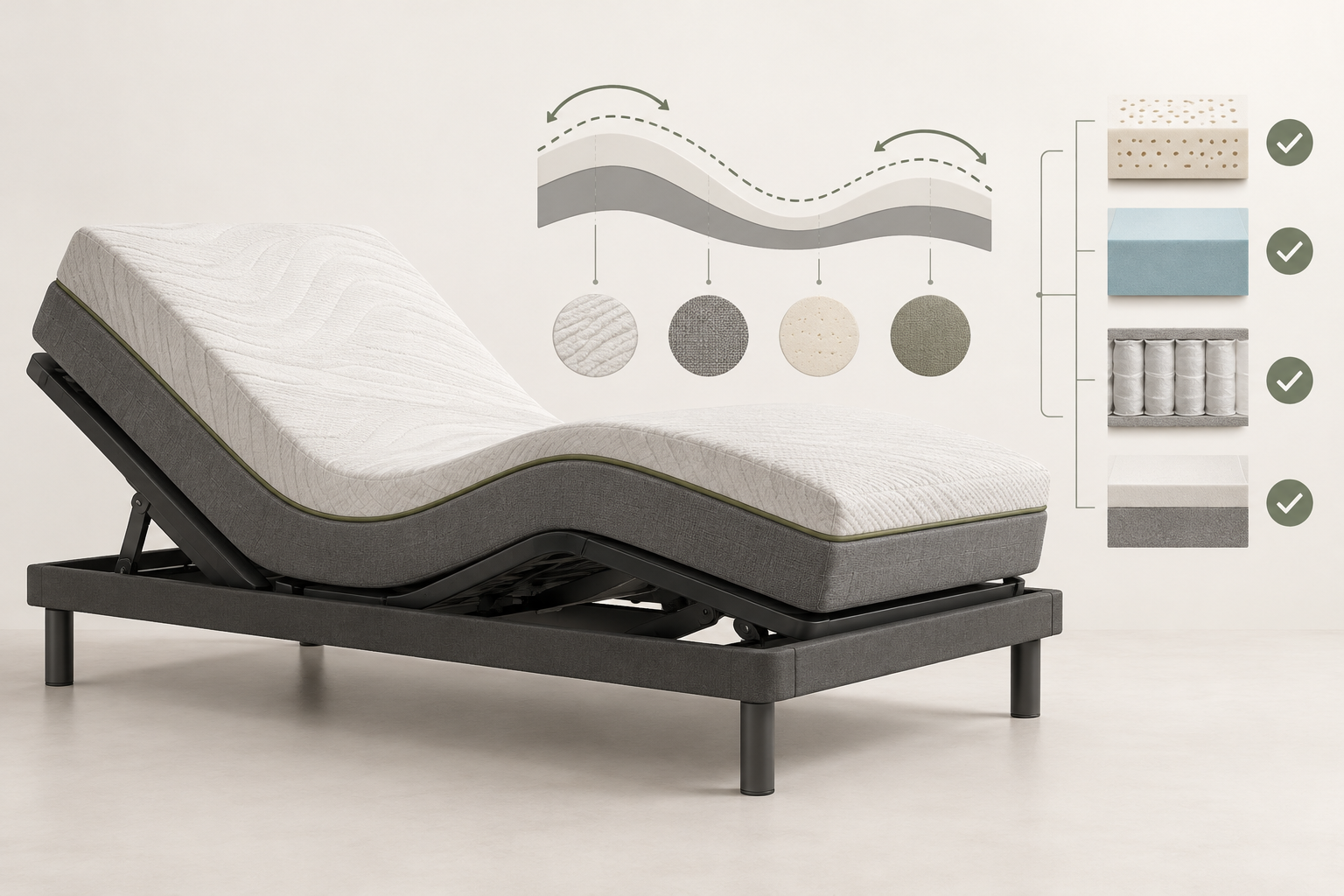
AI-generated editorial overview. It is not a photograph of a KCAI model, factory test or approved customer configuration.
Treat compatibility as a system decision
An adjustable sleep system has several interacting layers: the moving platform, the mattress, the retention method, the surrounding furniture, the control configuration and the user-facing instructions. Changing one layer can affect the others. A different mattress border, for example, can change how the edge behaves when the platform articulates. A different upholstered surround can change the clearance available around the moving sections.
That is why a supplier's general statement that a mattress is “adjustable” is only a starting point. The buyer still needs a model-specific answer to a more useful question: Does this mattress revision work with this base revision in the positions, furniture format and packaging program we intend to sell?
Write that combination into the product brief before requesting a quote. If you are still comparing suppliers, use the adjustable bed OEM RFQ checklist to separate confirmed requirements from options and open questions.
Start with the commercial product brief
Compatibility review should begin with the product that will actually enter the market—not a generic engineering sample. Give the supplier a clear brief covering:
- target size standard and destination market;
- intended mattress and adjustable-base models or development references;
- whether the products ship together or through separate supply routes;
- furniture surround, headboard or upholstery interfaces;
- control and accessory scope;
- packaging, labeling and instruction requirements;
- expected sample and approval stages; and
- any buyer-supplied mattress, cover or component.
Do not fill missing information with assumptions. If a dimension, construction detail or market document has not been confirmed, mark it as open. That makes it easier for the supplier to identify which decisions affect tooling, samples, packaging or quotation scope.
The six compatibility dimensions to verify
Use the table below as a discussion and sample-review framework. The evidence column matters: a marketing description is not the same as a controlled approval record.
| Review area | Buyer question | Useful approval evidence |
|---|---|---|
| Platform geometry | Where does the base articulate, and how does the mattress follow those sections? | Current platform drawing and joint sample observation |
| Mattress construction | Is the selected construction intended to flex repeatedly in the required motion pattern? | Construction reference tied to the sample revision |
| Size and edge fit | Do the mattress footprint and border sit correctly on the selected platform and furniture format? | Confirmed dimensions, fit photos and exception notes |
| Retention and interface | What prevents unwanted movement without obstructing articulation? | Retention-method drawing and sample review |
| Movement and recovery | Does the mattress move and return without unacceptable shifting, bunching or interference? | Dated review notes for the exact system combination |
| User-facing scope | Do controls, accessories, labels and instructions describe the approved configuration? | Revision-controlled manual, artwork and included-parts list |
The checklist does not prescribe one mattress material or mechanism. Those choices depend on the project. Its purpose is to make the supplier show how the proposed pieces work together and to make the buyer record what was actually approved.
1. Review flexibility at the mattress-platform interface
Flexibility is more than whether a mattress can be bent by hand. The mattress must follow the moving platform through the intended positions while its cover, border and internal construction remain suitable for the approved design. The platform's articulation points and the mattress construction must therefore be reviewed together.
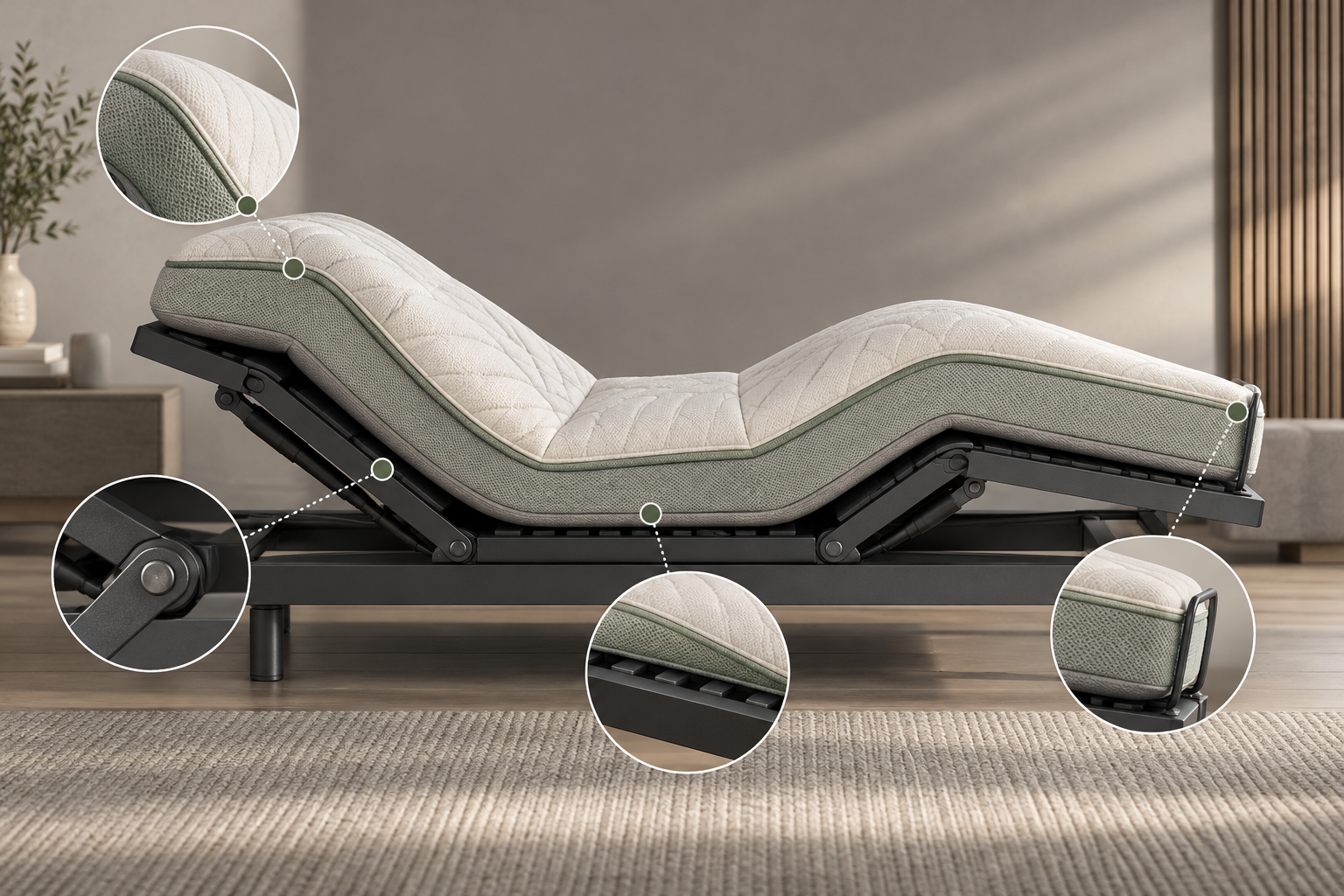
AI-generated editorial compatibility diagram. It is not a KCAI product photograph, engineering drawing or performance result.
During sample review, observe the interface rather than making a conclusion from a brochure. Look for visible gaps, local compression, edge interference, cover tension and unwanted movement. Record the positions used and the exact sample revisions. If the buyer changes the mattress construction or platform geometry later, reopen the compatibility review instead of carrying the old approval forward.
This is also where the buyer should distinguish a separate mattress-and-base program from an integrated motion-mattress program. The commercial proposition, service scope and packaging route can be different. Define which architecture you are sourcing before comparing quotations.
2. Confirm fit, retention and clearance
The mattress must fit the intended platform and remain appropriately located as the system moves. Retention may involve a retainer, surface interface, surrounding furniture or another project-specific method. The right choice depends on the configuration; it should not be inferred from a generic product photo.
Review these points on the proposed sample:
- The mattress footprint aligns with the approved platform format.
- The border and corners do not create unresolved interference during movement.
- The retention method is present, accessible and included in the documented scope.
- The mattress does not show unacceptable shifting in the positions reviewed.
- The moving platform has suitable clearance from the approved furniture surround.
- Cables, controls and accessories remain routed as intended.
Photograph each review state and link the photos to a dated revision record. Avoid phrases such as “fits all frames.” A narrow, verified compatibility statement is more useful to distributors and after-sales teams than a broad promise that cannot be controlled.
3. Evaluate movement as the customer will receive it
A bare mechanism demonstration is not a complete system approval. Review the base with the intended mattress, approved accessories and representative surrounding structure. Operate the functions included in the buyer's brief and observe the transition between positions, the flat return and the resting interface.
The objective is not to invent a performance rating. It is to identify whether the proposed configuration behaves as expected and to document any exception. If the buyer requires a particular durability, safety or market-compliance program, define the applicable standard, product scope, laboratory or evidence route separately. Do not treat an informal movement demonstration as certification or lifetime proof.
For custom programs, include this joint review in the OEM/ODM development brief. It gives engineering, sourcing and sales teams one controlled reference instead of separate assumptions about the mattress and the base.
4. Approve a complete sample pack
The most useful approval pack connects the physical samples with the documents needed to reproduce and sell the configuration. It can be concise, but it should identify:
- mattress and base sample IDs;
- product-brief and drawing revisions;
- approved visible finish and upholstery references;
- included controls, retainers, legs and accessories;
- open deviations and their owners;
- packaging concept and required carton data;
- label, manual and artwork status; and
- the rule for approving future changes.
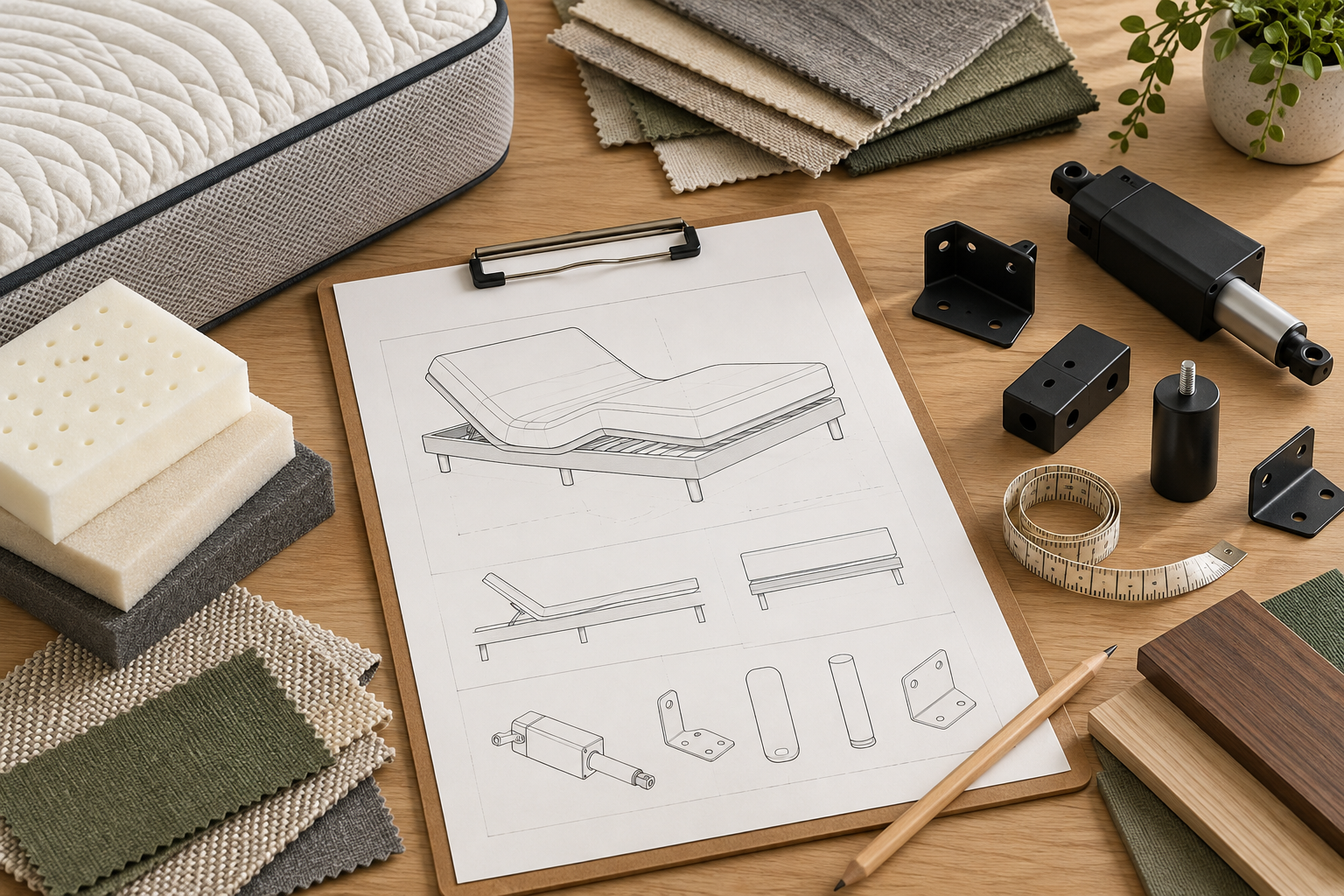
AI-generated editorial sample-review scene. It is not a KCAI drawing, component specification, factory record or customer project.
Use the golden sample approval checklist once the proposed system is mature enough for sign-off. A golden sample should identify the agreed reference; it should not hide unresolved items behind a general approval email.
A practical joint-validation workflow
Keep the process manageable with seven stages:
- Issue the brief. State the channel, market, target configuration and open decisions.
- Confirm the proposed combination. Identify the exact mattress and base references used for evaluation.
- Review documents first. Resolve obvious size, interface and scope mismatches before shipping samples.
- Inspect the joint sample. Review fit, flex, retention, clearance, movement and user-facing parts together.
- Record exceptions. Assign an owner, evidence requirement and decision date to each open point.
- Approve by revision. Tie physical samples, drawings, construction references and packaging inputs to one record.
- Control changes. Repeat the affected checks when the mattress, base, surround or included-parts scope changes.
This workflow also makes quotation comparison clearer. A lower quote may represent a different mattress construction, accessory set, retention method or packaging scope. Confirm the comparison baseline before treating price differences as supplier efficiency.
Common sourcing mistakes
Four mistakes cause avoidable uncertainty:
Approving from separate photos. Images can show appearance, but they cannot demonstrate how the selected mattress and platform interact.
Using “compatible” without naming the combination. Record model or development references and revisions so sales and service teams know what the statement covers.
Changing the mattress after base approval. A construction or border change can affect the interface. Review the new combination before carrying forward the previous approval.
Leaving packaging and instructions until the end. If the mattress and base ship separately, customers and installers need the correct included-parts, assembly and compatibility information for that route.
How KCAI can support the specification discussion
KCAI's public product range includes electric adjustable bed bases and motion-mattress programs. The KD004-B1 adjustable mattress is one current public model for project discussion. Its exact layer construction, platform pairing and commercial configuration should be confirmed for the buyer's project rather than inferred from a category label.
For an efficient first review, send the target market, size standard, intended channel, reference mattress construction, preferred base format, furniture-surround requirement, packaging route and any buyer-supplied drawings. KCAI can then discuss whether an existing direction or an OEM/ODM development path is the appropriate starting point.
Request a compatibility review
Bring the proposed mattress and base references, not only a target price. A clear interface brief helps both sides identify open questions before samples and quotations drift apart. Request a quote to discuss an adjustable sleep-system program with the KCAI team.