
A multifunction adjustable bed frame OEM program is a controlled product-development or sourcing project in which the buyer defines the required motion, interfaces, controls, accessories and evidence instead of accepting the word “multifunction” as a specification. For the KD008-A1 adjustable bed, the public catalogue direction shows an elevating frame structure. The exact functions, dimensions, mattress pairing and control package still need to be confirmed for the quoted project revision.
This distinction matters because two suppliers can use the same product label while quoting different mechanisms, accessories, packaging and documentation. A reliable comparison begins with a written function matrix and ends with a revision-controlled approved sample.
Key takeaways
- Treat “multifunction” as a question that must be resolved into a function-by-function scope.
- Compare quotations only after every supplier has the same drawing revision, included-parts list and acceptance plan.
- Approve the mattress interface, surrounding-furniture clearance and cable route with the moving platform—not as separate items.
- Ask for evidence that matches the final configuration; a result from a different size or mechanism does not automatically transfer.
- Lock service parts, packaging and user documents before the production release.
What the KD008-A1 direction represents
KCAI currently describes KD008-A1 as a multifunction electric bed frame for requirements-led OEM and ODM programs. The elevating frame structure visible in the catalogue makes it relevant to buyers whose brief goes beyond a conventional two-section base. It does not, by itself, confirm a particular motion sequence, control method or performance value.
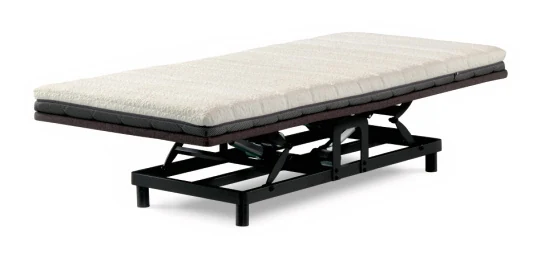
Current catalogue product view for KD008-A1. Confirm the quoted revision, included functions and interface documents before approval.
A buyer should therefore use the product as a discussion platform, not copy an old feature list into a purchase specification. Start with the commercial application: retail furniture, private-label sleep products, project supply or another defined channel. Then identify which functions are essential, optional or deliberately excluded.
Standard positioning versus a multifunction brief
The useful difference is not the number of buttons. It is the number of interfaces that must be controlled.
| Review area | Basic positioning brief | Multifunction OEM brief |
|---|---|---|
| Motion | Defined head and leg positioning | Additional motion or elevation defined by function and sequence |
| Interface | Platform and mattress fit | Platform, mattress, furniture surround and moving-clearance review |
| Control | One confirmed control method | Control hierarchy, pairing, labels and optional functions documented |
| Electrical scope | Power system and cable route | Power, controls, accessories and service replacement plan aligned |
| Approval | Basic operational sample | Full system sample with exception list and revision record |
| Packaging | Carton and included parts | Multiple components, protection, parts manifest and setup sequence controlled |
Neither column is automatically better. A simpler configuration can be the right commercial decision. The purpose of the matrix is to stop optional features from entering the quote, sample or marketing copy without an owner and acceptance method.
Build the specification in seven steps
- Define the target channel. State where the product will be sold, how it will be delivered and who will assemble or service it.
- Write the function matrix. Mark every requested function as required, optional or excluded. Give each required function an acceptance method.
- Confirm system interfaces. Identify the intended mattress, furniture surround, controls, accessories and available clearance.
- Request current drawings. Use a dated general-arrangement drawing and a controlled included-parts list, not an image copied from an earlier catalogue.
- Plan the complete sample. Sample the quoted system, including the components and documents a customer or installer will receive.
- Record every exception. Assign each deviation an owner, decision and due date before approval.
- Control later changes. Reopen the affected checks when the mechanism, upholstery, electronics, packaging or instructions change.
The adjustable bed OEM RFQ checklist provides a practical starting structure for this brief.
Five interfaces to inspect on the sample
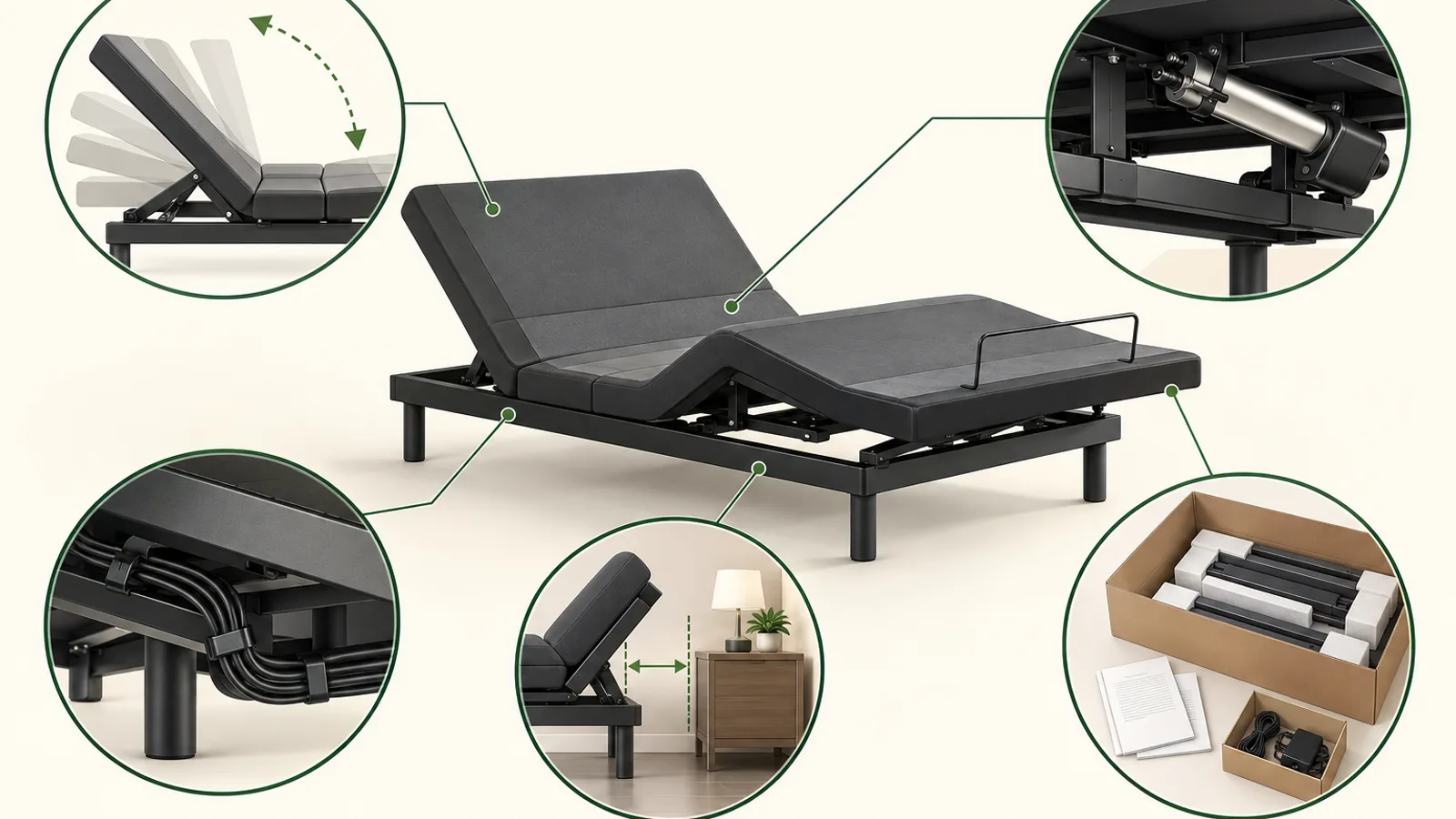
AI-generated editorial inspection map. It is not a KD008-A1 engineering drawing, factory test, packaging record or exact product specification.
1. Moving-platform geometry
Observe the complete motion included in the quoted configuration. Check transitions between sections, accessible pinch or interference areas, return to the intended resting position and interaction with the proposed mattress. Record the sample revision and the positions reviewed.
2. Actuation and mounting
Ask the supplier to identify the actuator configuration in the current bill of materials and drawing. A component brand or headline cycle count is not enough: evidence should identify the tested assembly, load condition, procedure and pass criteria. Keep any unverified value out of public marketing.
3. Cable and control architecture
Review routing through the full motion range. Confirm strain relief, connector identification, power-supply placement, pairing steps and the replacement path for each serviceable component. If multiple controls are offered, specify which one belongs in the quoted package.
4. Furniture and mattress clearance
The moving frame cannot be approved in isolation when the commercial product includes an upholstered surround or selected mattress. Check side, head and foot clearances with the intended combination. Photograph any controlled gap and reference it in the approval record.
5. Packaging and document pack
Match each carton to a parts manifest. Verify protection around heavy or projecting components, hardware identification, setup sequence and the versions of labels and instructions. Packaging evidence is useful only when it represents the same product revision and pack method.
Use an acceptance matrix, not a general approval email
An approval record should make clear what was seen and what remains open.
| Acceptance item | Evidence to record | Release question |
|---|---|---|
| Function scope | Signed matrix and sample video or observation record | Does the sample include only the approved functions? |
| Geometry | Current drawing and sample ID | Does the quoted revision match the approved interface? |
| Controls | Included-parts list and setup record | Are control and pairing steps reproducible? |
| Service parts | Part references and replacement method | Can the buyer identify the correct replacement by revision? |
| Packaging | Sealed-pack sample, dimensions and manifest | Does the package protect and contain the approved system? |
| User documents | Controlled artwork and manual versions | Do claims and instructions match the approved configuration? |
Use the golden sample approval checklist to connect the physical reference to the documents. If a decision is still open, write “open” rather than allowing silence to become approval.
Plan after-sales support before the order
Multifunction products create more service questions because the buyer must distinguish a setup issue, control issue, power issue and mechanical issue. Define the diagnostic path and replacement scope while samples are available. The adjustable bed after-sales parts guide explains how to structure a service-parts list without assuming that one component fits every revision.
At minimum, request:
- a revision-linked included-parts and service-parts list;
- connector and control identification;
- safe replacement boundaries for dealers or service teams;
- troubleshooting language aligned with the approved configuration; and
- a process for approving substitutions or end-of-life components.
Discuss KD008-A1 with a controlled brief
KCAI can discuss whether the public KD008-A1 direction or another electric adjustable bed base is a suitable starting point. Send the target market, channel, intended mattress, desired motion, furniture interface, control preferences, packaging route and required documents. The team can then identify confirmed items, options and questions before a meaningful quotation is prepared.
Request a quote for an OEM or ODM review. Ask for the current revision and evidence package rather than relying on this article or any AI illustration as a product specification.