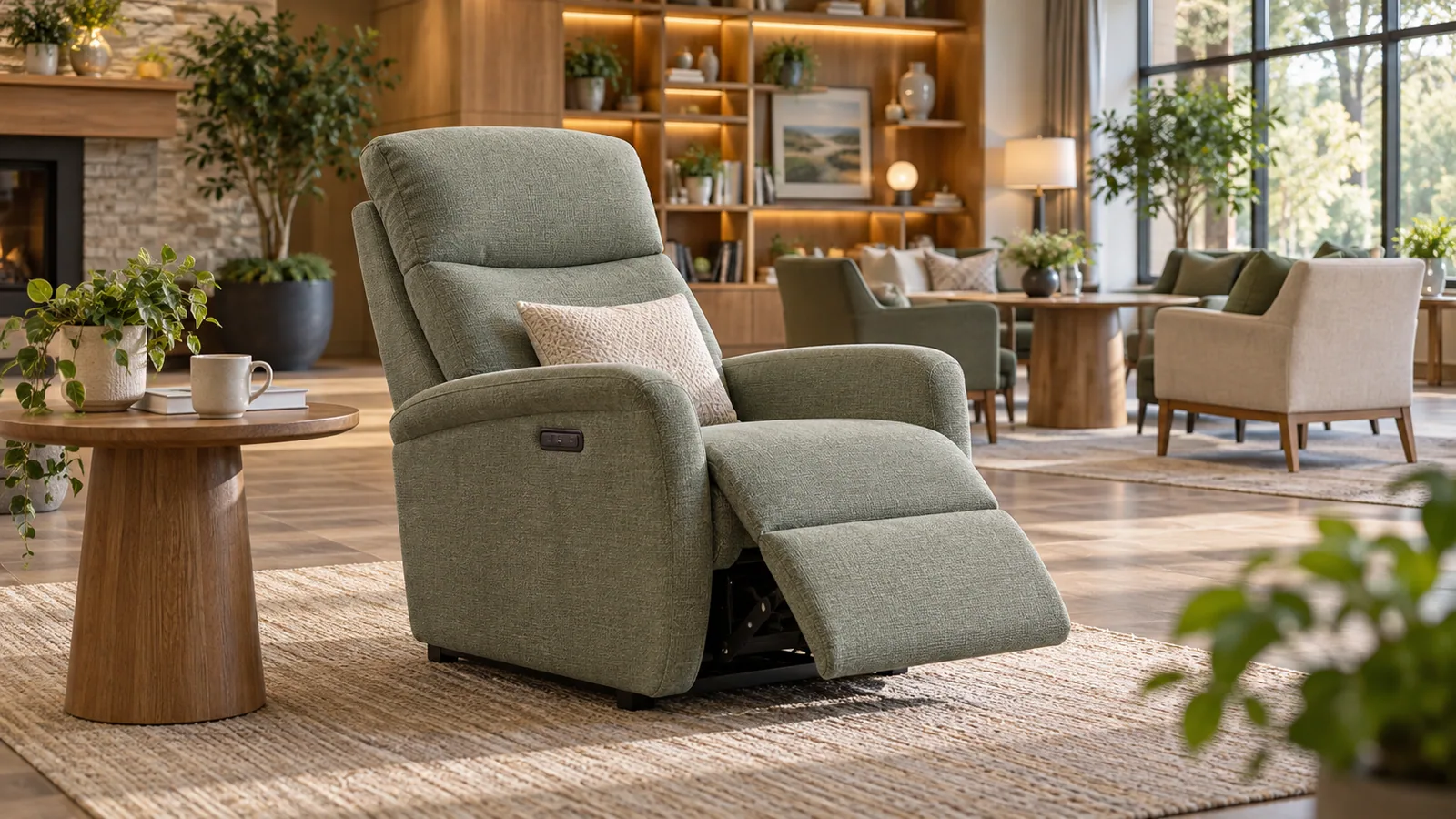
An adjustable leisure chair for senior living is residential or communal furniture specified around a defined setting, user experience and operating plan. The chair's geometry, movement, controls, upholstery, room placement, packaging and service boundaries should be approved as one product record. Neither “senior chair” nor “wellness chair” proves medical, therapeutic, accessibility or lift-assist performance.
That distinction matters because age-friendly spaces should respect differences in people's abilities and preferences rather than treating age as a single specification. The World Health Organization describes age-friendly environments as places that respond to diverse needs and help remove physical and social barriers. A furniture buyer can support that principle by testing real interfaces—without promising clinical outcomes the product has not proved.
Key takeaways
- Specify the room and use context before choosing chair functions or upholstery.
- Test entry, exit, adjustment and controls on the exact sample with representative users.
- Keep “adjustable,” “reclining” and “lift-assist” as separate functions unless each is verified.
- Approve materials by controlled references and evidence, not visual impressions.
- Include cable routing, cleaning guidance, packaging and replacement parts in the product scope.
Define the chair's job in the space
A chair in a private apartment, library corner, wellness lounge or reception area has a different duty cycle, placement and service owner. Start by mapping what the chair must do in that environment.
| Use context | Questions to answer before model selection | Typical approval owner |
|---|---|---|
| Private residence | Who operates it, where is power, what furniture sits nearby? | Buyer, resident representative and installer |
| Senior-living lounge | How is circulation maintained, who inspects it, how is it cleaned? | Operations, facilities and sourcing |
| Wellness residence | Which positions and materials support the planned non-clinical experience? | Product, design and compliance teams |
| Retail demonstration | Which functions are included in the sellable revision and how are claims trained? | Merchandising, sales and compliance |
Do not use a setting label as evidence. A product photographed in a wellness lounge has not thereby proved therapeutic benefit, universal accessibility or suitability for a care protocol.
Use YJ001-1 as a product direction—not an assumed specification
KCAI publicly presents the YJ001-1 adjustable leisure chair as a contoured adjustable chair with adjustable back and leg sections for lounge, relaxation and wellness-oriented ranges. The current project must confirm upholstery, controls, dimensions, movement, power components, documents and commercial configuration.
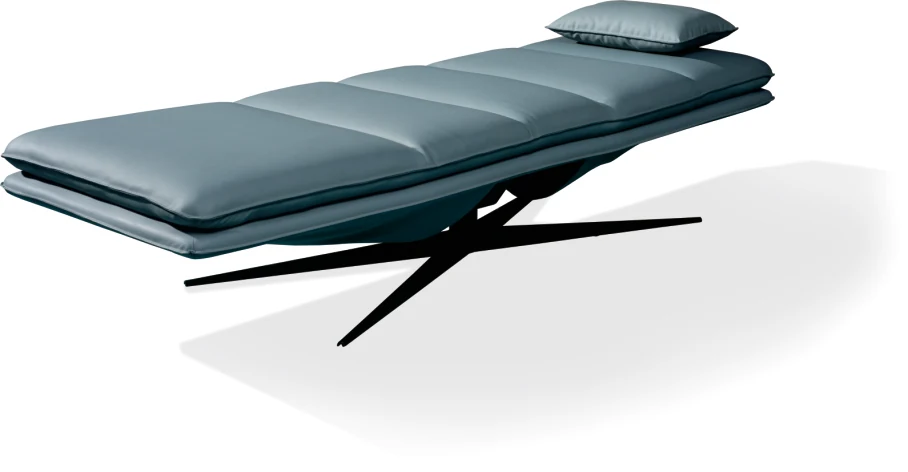
Current catalogue product view for YJ001-1. Confirm every selectable feature and the quoted revision through project documents and a physical sample.
The YJ001-1 direction can begin an OEM conversation, but a product page cannot replace the brief. If a buyer needs a rise function, transfer aid, clinical upholstery, healthcare cleaning protocol or regulated claim, list that requirement separately. Do not infer it from the chair's shape.
Inspect six interfaces on the complete chair
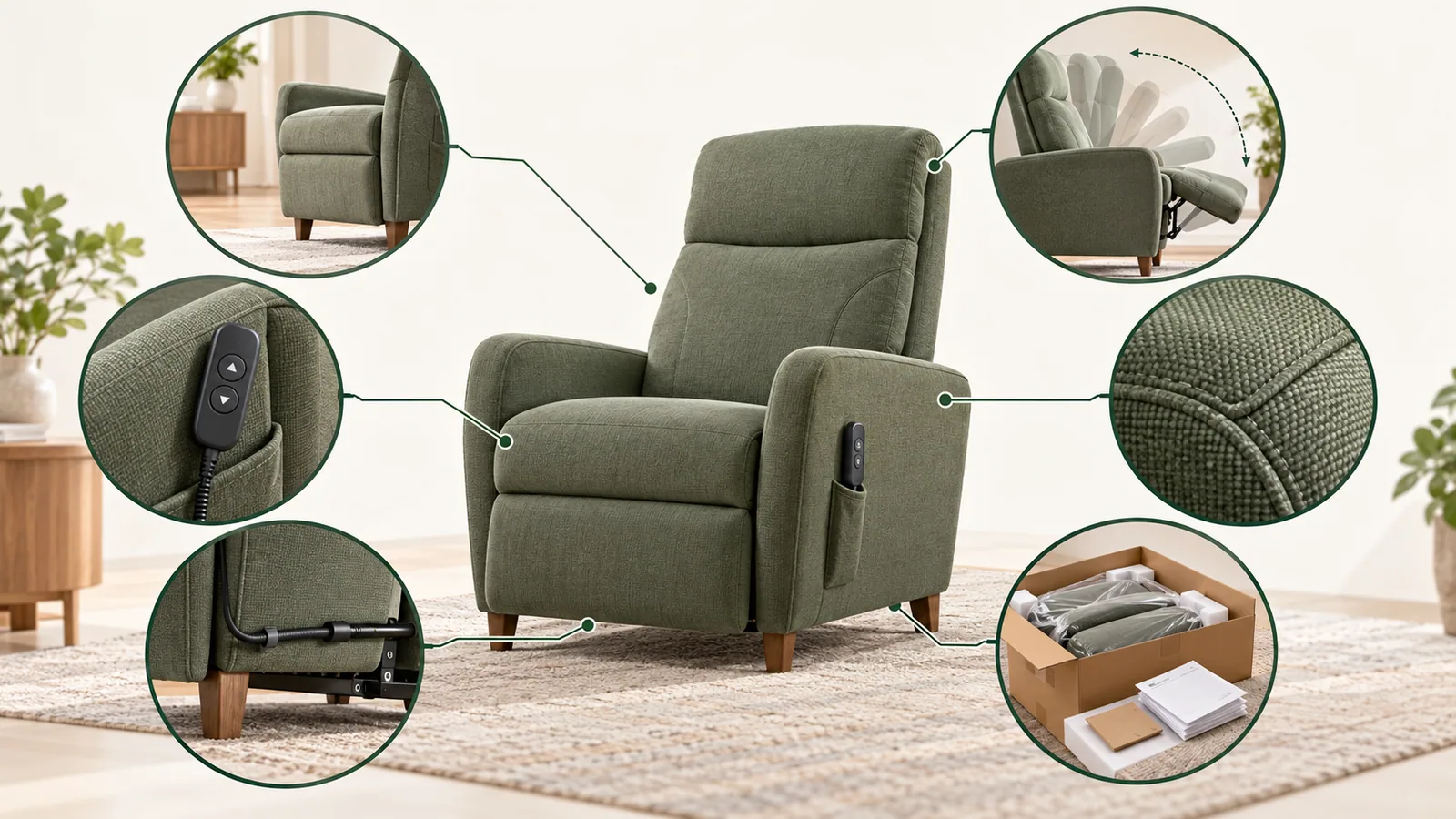
AI-generated editorial inspection map. It is not a YJ001-1 drawing, a real installation, a packaging result or evidence of medical performance.
1. Entry and exit geometry
Review seat height, depth, edge shape, arm support and the space around the chair as project-specific geometry. Observe representative users entering and leaving under the planned conditions. Record findings for the exact sample without converting them into a promise that the chair prevents falls or works for every user.
2. Adjustment and moving clearances
Operate every required position and inspect the movement envelope behind, below and in front of the chair. Check the relationship between back, seat and leg sections, and verify that nearby tables, walls and walkways remain within the approved room plan.
3. Controls and feedback
Confirm the included control, button logic, reach, storage location, cable length, feedback and instruction wording. Test the exact interface with representative users and staff. “Simple” is a conclusion from observation, not a feature that should be assumed from button count.
4. Upholstery, seams and care
Approve a named upholstery reference, color standard, seam map and visible-quality boundary. Ask for the evidence behind composition, abrasion, flammability, restricted-substance or care claims required by the destination program. The upholstery specification guide explains why a swatch and a test report answer different questions.
5. Power, cables and service access
Map cable movement through the chair's full approved range. Review strain relief, connector identification, power-supply placement and access for inspection or replacement. The room plan should show how the chair reaches power without creating an improvised cable route across circulation space.
6. Packaging and documentation
Inspect the sealed pack, internal protection, parts manifest, control protection and setup sequence. Confirm which components require assembly and how the installer verifies completion. External carton data should come from the approved packed sample rather than an early estimate.
Separate furniture claims from medical claims
Claim discipline protects buyers as much as suppliers.
| Proposed wording | Publication decision |
|---|---|
| “Adjustable back and leg sections” | Publish only when confirmed for the quoted revision |
| “Designed for lounge and relaxation settings” | Use as a non-clinical context statement |
| “Easy for seniors to use” | Replace with the documented user-test method and limits |
| “Helps users stand” or “lift-assist” | Do not use unless the exact function and evidence are approved |
| “Prevents falls” | Do not use without appropriate clinical and regulatory substantiation |
| “Therapeutic” or “medical recliner” | Do not use unless the regulated product scope authorizes it |
If the chair is furniture, sell it through design, verified adjustment, material options, sample quality and a serviceable program—not borrowed medical language.
Run a representative-space pilot
- Freeze the intended use. State the setting, users, operators and excluded claims.
- Approve the room plan. Mark circulation, side-table placement, wall clearance and power.
- Review materials and drawings. Resolve visible finish, interfaces and open evidence before the full sample.
- Test the complete sample. Evaluate geometry, movement, controls, clearances and service access.
- Install in a representative space. Observe setup, cable routing, cleaning access and staff workflow.
- Validate packaging and instructions. Use the intended delivery and installation route.
- Release by revision. Link the approved chair, upholstery, control, documents and exceptions.
Structured feedback should describe what happened under the pilot conditions. Avoid anonymous “case-study” percentages, health improvements or customer outcomes unless the data, method and permission are documented.
Prepare an OEM brief KCAI can review
Send the target market, channel, room type, expected placement, required positions, dimensional envelope, control preference, upholstery direction, material-evidence list, packaging route, installation plan and after-sales responsibilities. KCAI can then discuss the public YJ001-1 direction or another adjustable leisure chair program against the same brief.
Request a quote for a project review. Treat the current quotation, controlled drawings, approved sample, material references and model-specific evidence as the product record; this article and its AI images are editorial guidance only.