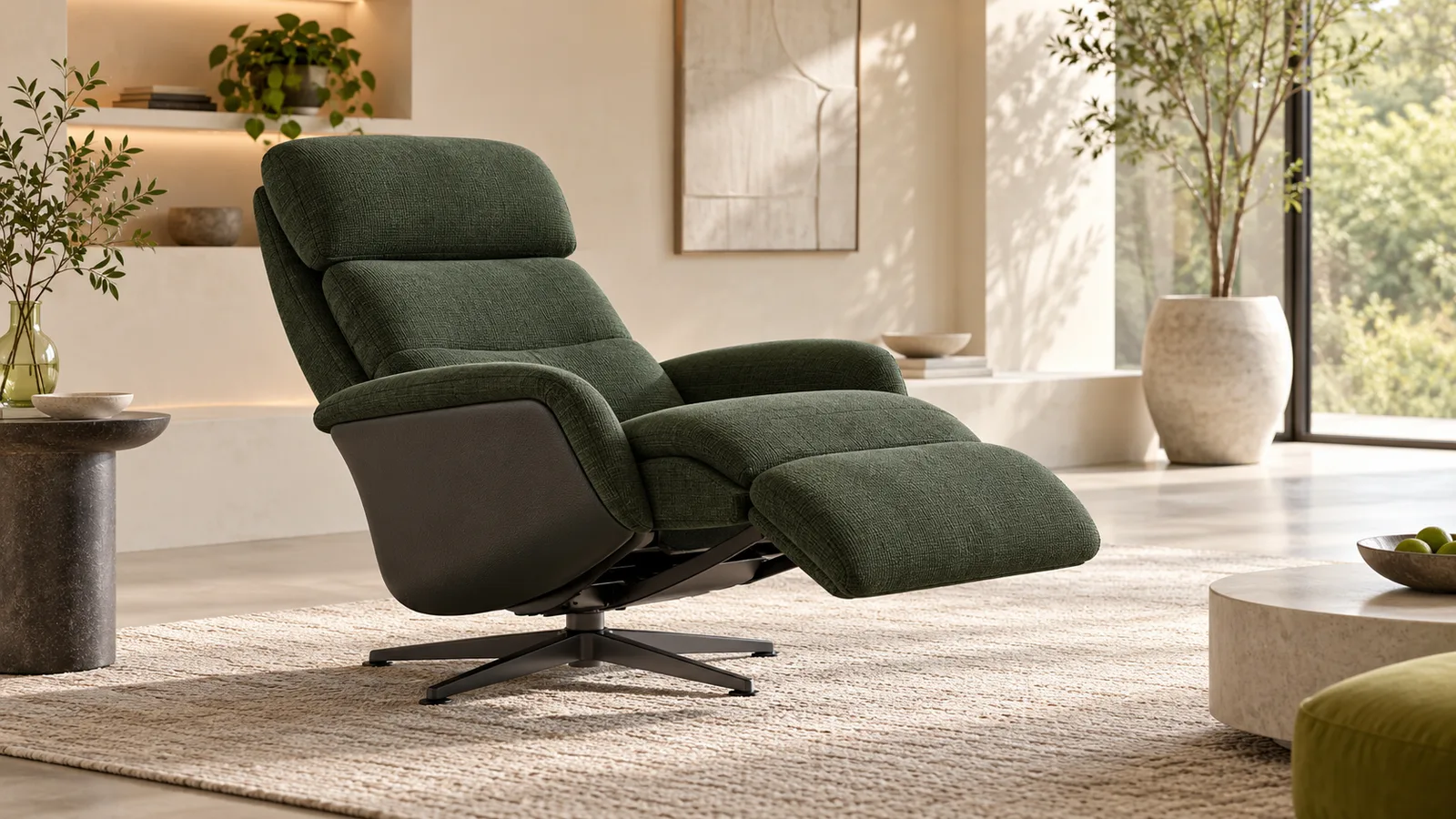
An adjustable leisure chair OEM program is a B2B product project in which the buyer controls chair geometry, adjustable sections, upholstery, controls, packaging and documentation for a defined market and channel. The YJ001-1 adjustable leisure chair is publicly presented as a contoured chair with adjustable back and leg sections. Upholstery, controls, dimensions and the final configuration should be confirmed in the current project documents.
This chair category can serve furniture retail, lounge and wellness-oriented ranges, but channel labels do not replace a specification. The useful sourcing question is not “Is this a smart recliner?” It is “Which exact configuration are we buying, how will it be approved and what will the customer receive?”
Key takeaways
- Define the target channel and use context before selecting upholstery or optional controls.
- Approve sitting geometry and motion on the complete sample, not from a rendering or fabric swatch.
- Tie fabrics, seams, cushions, visible finish and mechanism to controlled references.
- Review cable routing, service access, packaging and instructions as part of the product.
- Avoid medical, therapeutic or performance claims unless they have separate market-specific evidence.
Use the YJ001-1 as a project reference, not a universal specification
KCAI’s current catalogue image establishes the product direction and model identity. It does not confirm every selectable material, position or electrical option for every market.
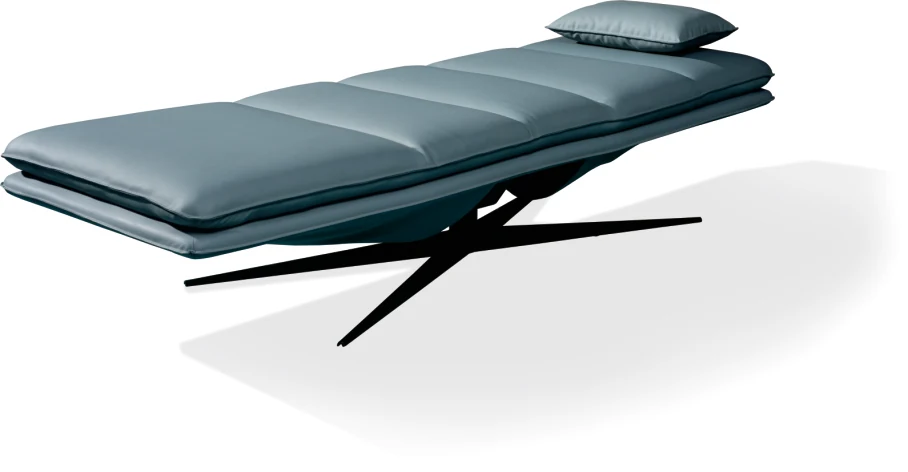
Current catalogue product view for YJ001-1. Confirm chair dimensions, upholstery, adjustment scope, control package and quoted revision before approval.
Begin the RFQ with four boundaries:
- the sales channel and expected delivery method;
- the intended user context without unsupported health claims;
- the required adjustment and control scope; and
- the buyer’s upholstery, packaging and document requirements.
These boundaries help the supplier propose a configuration that can be sampled and costed. They also keep optional features from silently entering the marketing copy.
Build a buyer specification around six decision areas
| Decision area | Buyer should define | Supplier should confirm |
|---|---|---|
| Chair geometry | Target envelope, placement and user context | Current drawing and sample revision |
| Adjustment | Required back and leg behavior | Included motion scope and acceptance method |
| Upholstery | Look, hand feel, color direction and required evidence | Available reference, seam plan and approval sample |
| Controls | Preferred user interface and placement | Included control, cable route and setup information |
| Packaging | Delivery route and handling constraints | Carton plan, parts manifest and protection method |
| Documents | Market, language and buyer workflow | Available drawings, labels, instructions and open gaps |
Keep unconfirmed values as open questions. A sourcing team can close an open question; it cannot reliably correct a purchase order built on an assumed dimension or material.
Inspect the complete sample at five interfaces
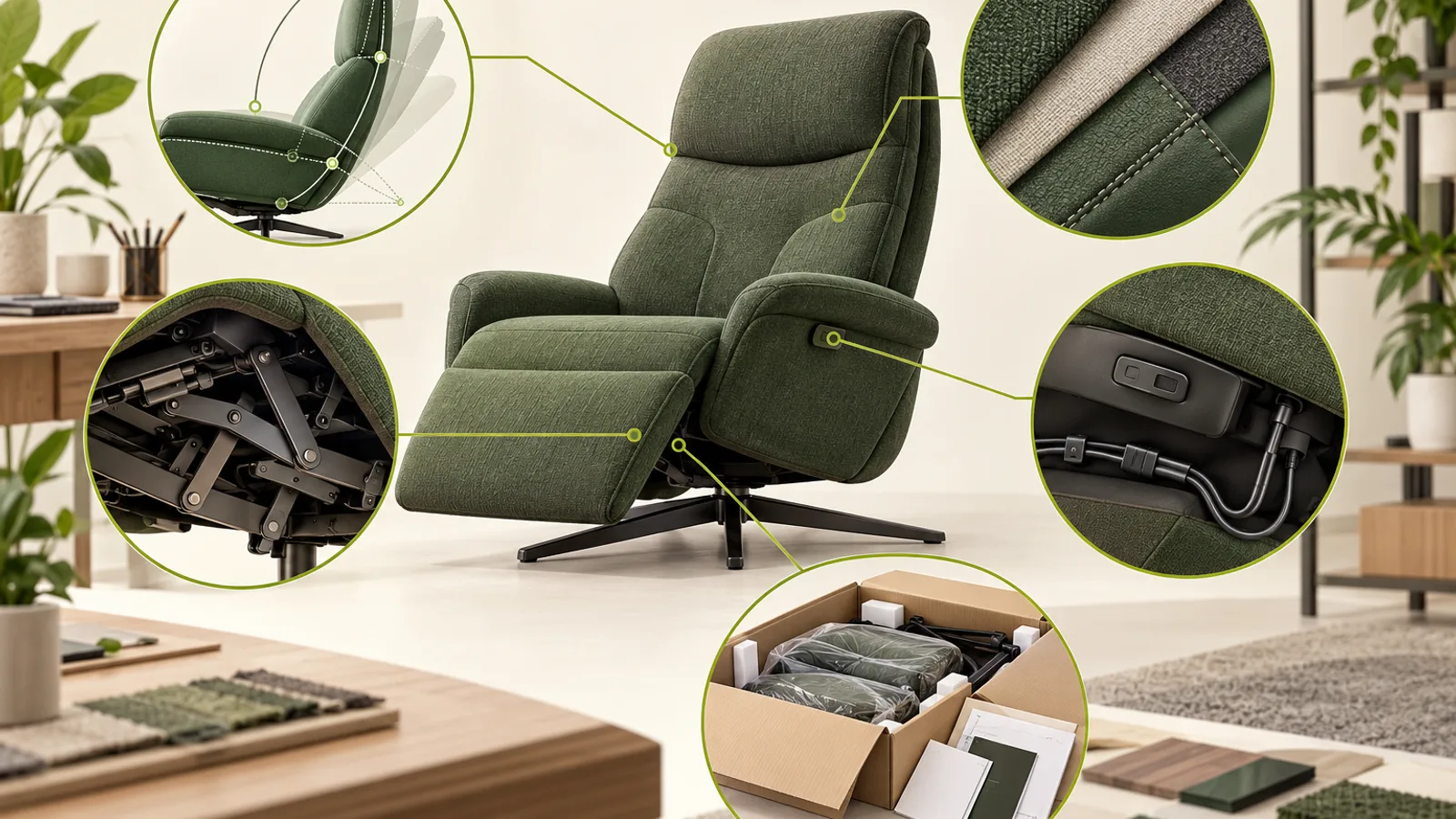
AI-generated editorial inspection map. It is not a YJ001-1 engineering drawing, material specification, factory record or packaging result.
1. Sitting and resting geometry
Review the complete chair in the intended positions. Observe how the seat, back and leg sections relate, how the user enters and leaves the chair, and whether the chair remains appropriate for its planned placement. Record observations against the exact sample; do not turn a subjective comfort comment into a universal performance claim.
2. Upholstery and seams
Approve a named fabric or upholstery reference, color standard, seam map and visible-quality boundary. Review how the material behaves around moving joints and shaped cushions. Swatches support color and texture decisions, but the complete upholstered sample controls appearance and execution.
The upholstery specification guide explains how to separate a visual selection from evidence about composition, durability, flammability or restricted substances.
3. Motion linkage and clearances
Operate the required adjustment through its intended range and inspect clearances around moving sections. Ask the supplier to identify the mechanism revision in the drawing and bill of materials. If a position, function or load value is important to the commercial offer, require a specific acceptance method and supporting evidence.
4. Controls, power and cable routing
Confirm which control belongs in the quoted set, where it is located and how cables move with the chair. Review strain relief, connector identification, power-supply placement and service access. Optional electrical features should remain out of the product page until they are approved for the sellable configuration.
5. Packaging and setup
Test the planned pack with the intended delivery route in mind. Verify component protection, upholstery protection, carton orientation, included-parts identification and setup instructions. Record external carton data from the sealed approved pack rather than planning logistics from an estimate.
Approve upholstery evidence by claim
Material language often becomes risky when one document is treated as proof of every claim. Use a claim-to-evidence table instead.
| Proposed statement | Evidence to request |
|---|---|
| Color and appearance | Approved swatch and complete upholstered sample |
| Material composition | Supplier declaration or model-specific material record |
| Abrasion or colorfastness | Relevant report identifying the tested material and method |
| Flammability performance | Applicable report tied to the material and destination requirement |
| Restricted-substance compliance | Current declaration or test evidence for the relevant scope |
| Cleaning instruction | Approved care guidance for the selected upholstery |
Do not infer one claim from evidence for another. A fabric that looks correct has not thereby proven a test result, and a report for one color or backing may not cover a changed construction.
Use a staged sample process
An efficient chair-development process separates decisions so late cosmetic changes do not hide mechanical changes.
- Confirm the written brief. Resolve product boundary, target configuration and open questions.
- Review drawings and materials. Check the dimensional direction, mechanism scope and upholstery references before building the full sample.
- Evaluate the functional sample. Review geometry, adjustment, clearance, controls and service access.
- Approve the appearance sample. Confirm upholstery, seams, visible finish and user-facing parts.
- Validate packaging and documents. Inspect the sealed pack, parts manifest, labels and setup information.
- Release by revision. Connect the approved physical sample to controlled drawings, material references and exceptions.
If a later change affects function, appearance, packaging or claims, repeat the relevant stage rather than carrying the old approval forward.
Compare commercial quotes without losing scope
Normalize quotations with a simple comparison sheet:
- quoted model or development revision;
- included adjustment and control scope;
- upholstery reference and what is still selectable;
- packaging assumptions and number of cartons;
- sample stages and change-cost rules;
- documents and evidence included;
- service parts and replacement boundaries; and
- all unresolved exceptions.
The OEM quote comparison guide can be reused for this chair category because its main rule is universal: compare evidence and scope before comparing price.
Discuss a YJ001-1 OEM program
KCAI can discuss the public YJ001-1 direction and an OEM or ODM brief. Send the target market, channel, expected placement, required adjustment, upholstery direction, controls, packaging route and market-document list. KCAI can then identify the current options and the information that still requires confirmation.
Request a quote for a project review. Treat the current quotation, controlled drawings, approved samples and model-specific evidence as the product record; this article and its AI images are editorial guidance only.