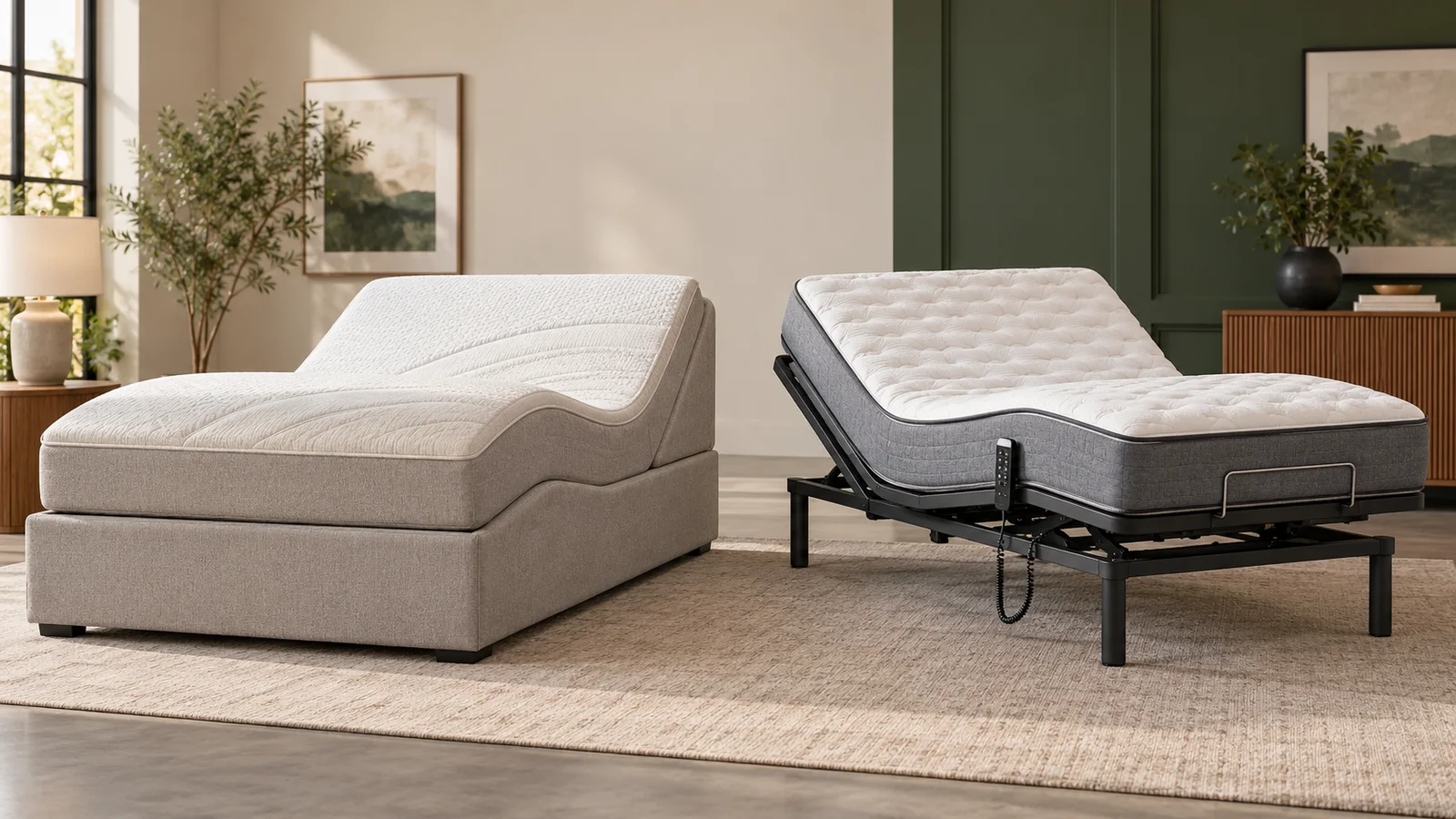
An adjustable motion mattress is a mattress-led moving system, while an adjustable bed base is a separate powered platform designed to carry a compatible mattress. The difference is not cosmetic. It changes what the customer believes they are buying, which interfaces the brand must control, how cartons and instructions are organized, and who owns diagnosis when a service issue occurs.
For B2B buyers, the right choice is the format that matches the product line and operating model. A mattress brand may prefer one coordinated motion-mattress system. A furniture or sleep-products brand may prefer a platform that can be combined with approved mattress and surround options. Neither format is automatically better.
Key takeaways
- Choose the commercial architecture before comparing unit prices.
- Treat mattress, motion system, controls, power and support as one compatibility decision.
- Define which company owns setup guidance, troubleshooting and replacement parts.
- Compare the exact number of sellable items and handling units in each quotation.
- Approve claims only after the final product revision and supporting evidence are known.
Adjustable motion mattress vs adjustable bed base at a glance
| Decision criterion | Adjustable motion mattress | Separate adjustable bed base |
|---|---|---|
| Product identity | Mattress-led moving system | Powered furniture platform plus compatible mattress |
| Range strategy | Coordinated product with a defined system boundary | Modular platform that can support approved range combinations |
| Compatibility task | Control internal construction and support interfaces together | Validate the mattress, retainer, platform and surround as a system |
| Merchandising | Motion-mattress proposition | Bed-base or furniture proposition |
| Packaging | System pack or coordinated handling units | Mattress and base may follow separate supply and packing routes |
| Service boundary | One complete system needs an identified diagnostic owner | Mattress and base responsibilities can be separated, but must be explicit |
| Best fit | Brands that want a mattress-first motion product | Brands that want a platform-led or furniture-led adjustable range |
The table defines a buying framework, not a universal configuration. The current quotation and approved sample must identify what is actually included.
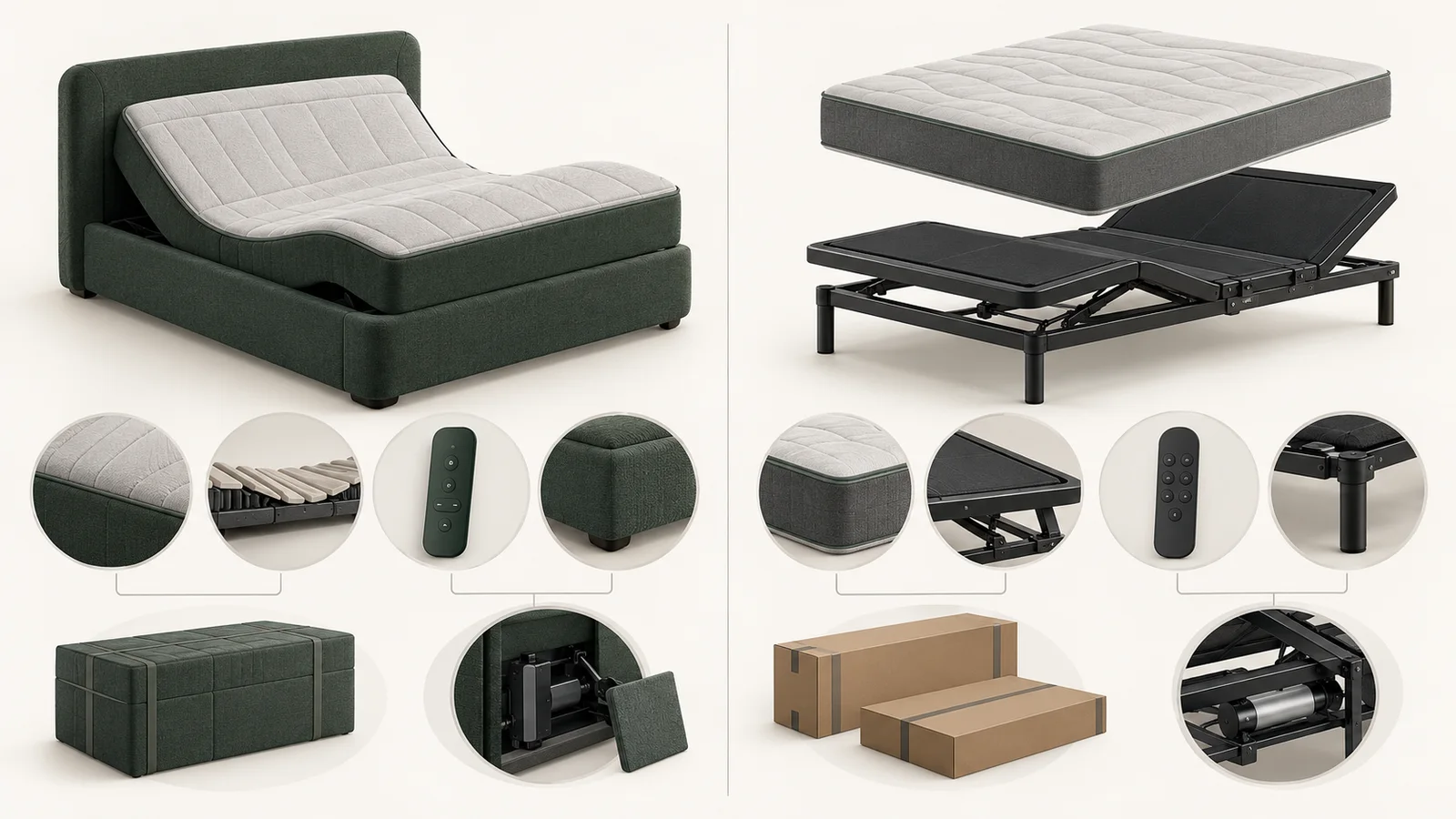
AI-generated editorial decision map. It is not a construction drawing, exact KCAI product, packing specification or proof of performance.
Choose from the shelf outward
Start with the position the product will occupy in the buyer's assortment.
A mattress-led range
If customers enter the category through comfort layers, covers and mattress choices, an integrated motion-mattress direction can keep the story centered on the mattress. The buyer still needs to define the movement system, support surface, controls and service boundary; “mattress-led” does not mean those elements disappear.
The KD004-B1 adjustable motion mattress is presented in the current catalogue with separate upper-body and leg positioning. Construction, dimensions, platform pairing, controls and commercial options remain project-specific until they are confirmed in current documents.
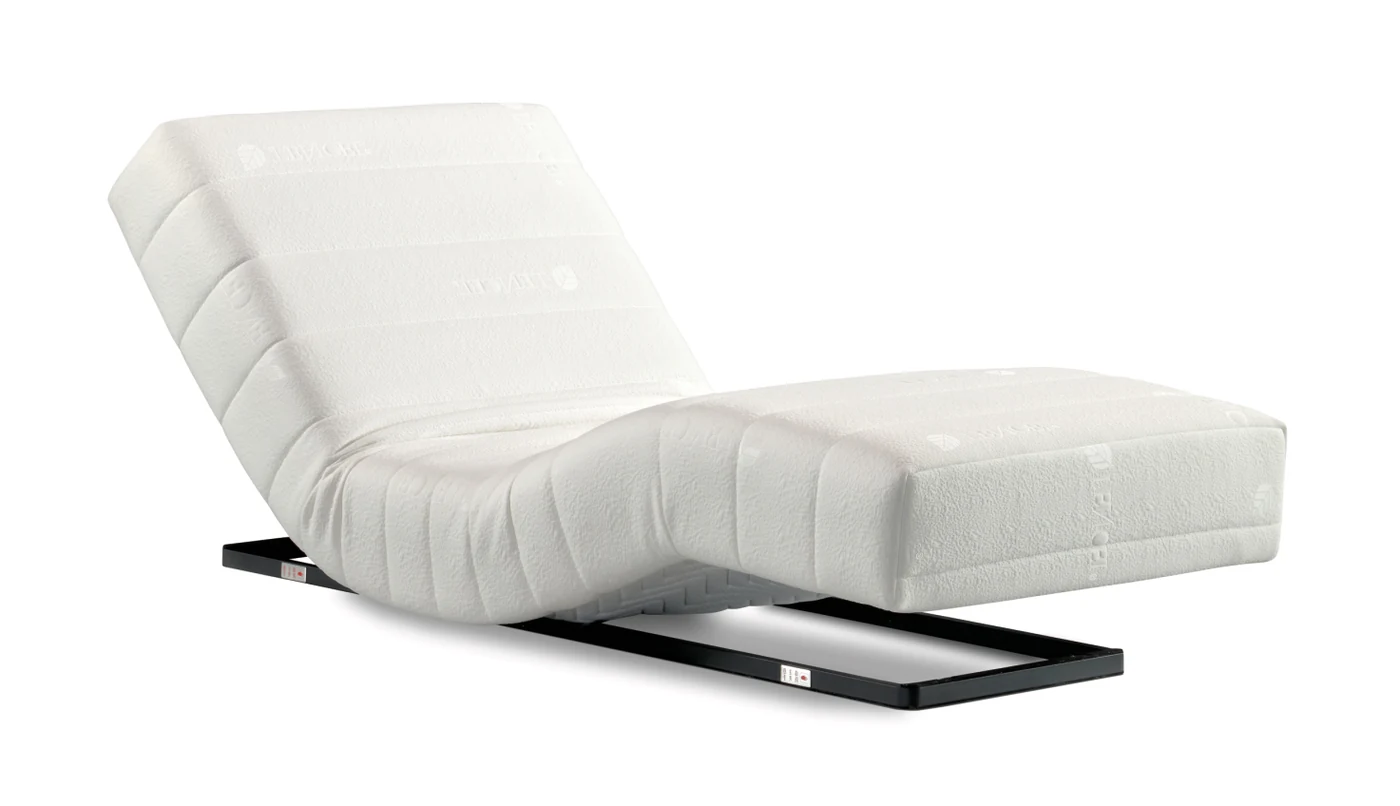
Current KD004-B1 catalogue product view. Confirm the complete construction, movement package, support interface and included parts in the project quotation.
A furniture-led or platform-led range
A separate electric adjustable bed base can let a brand build the range around an open platform, an upholstered surround or another approved furniture direction. It may also support a wider merchandising structure, because the base and mattress can be presented as distinct products.
That flexibility creates more interfaces to control. The chosen mattress must flex through the required positions, remain correctly located and avoid interference with retainers or surrounding furniture. The base also needs defined clearance, power access, cable routing and setup instructions.
Compare the complete sellable set
The phrase “complete set” can mean different things in two quotations. Before comparing prices, mark every item as included, optional, buyer-supplied or excluded.
- Identify the product boundary. List the mattress, platform, mechanism, controller, power parts, legs, retainers, brackets, fasteners and documents.
- Record the revision. Connect the quotation, drawing, sample and included-parts list to the same model or development reference.
- Define the customer setup. State which cartons arrive together, what assembly is required and which tools or instructions are supplied.
- Assign compatibility ownership. Name who approves the mattress-to-motion and furniture-to-motion interfaces.
- Assign service ownership. State who receives a complaint, diagnoses the affected layer and selects a compatible replacement.
- List unresolved assumptions. Keep unknown sizes, options, packing details and evidence needs visible until confirmed.
Use the OEM quote comparison guide to normalize these boundaries before making a commercial decision.
Compatibility is a testable interface, not a label
“Adjustable compatible” is too broad for an approval record. A buyer should evaluate the exact mattress construction on the exact moving platform through the required positions.
Review:
- mattress dimensions and location on the platform;
- flexibility through each required movement;
- bunching, shifting and edge behavior;
- retainer and surrounding-furniture clearance;
- cable and connector routes through movement;
- return to the intended resting position; and
- any change introduced after sample approval.
The mattress compatibility checklist provides a structured record for this review. A material sample or catalogue photograph cannot replace a complete working sample.
Packaging and service can decide the format
A product architecture continues after the sale. A motion mattress may place mattress and movement components inside one commercial system, while a separate base may be packed, inventoried and serviced independently from the mattress. Buyers should compare the real handling model rather than assume that fewer product names mean fewer logistics tasks.
For each option, request:
- current sealed-carton scope and the number of handling units;
- parts manifest for each carton;
- setup sequence and user-facing instructions;
- component and connector identification;
- diagnostic responsibilities;
- replacement-part selection method; and
- escalation process for an unclear failure.
Do not publish freight savings, setup times or failure rates until the relevant data exists for the approved configuration.
Keep the public claims inside the evidence
Both formats can support comfort positioning, but neither format alone proves a medical outcome, universal compatibility, load rating, service life or market certification. Public copy should describe confirmed movement and intended furniture use, then point buyers to current documents for the exact configuration.
Named handset presets also need caution. A printed label is not evidence that the product treats snoring, pain, circulation or another condition. The safe route is to explain the verified movement and avoid converting a control name into an unsupported outcome claim.
Build the RFQ around the decision
Send suppliers one brief that contains the target market, sales channel, intended product identity, required positions, mattress plan, furniture interface, control preference, packaging route, setup model, evidence needs and service expectations. Ask each supplier to identify exceptions rather than silently substitute a different architecture.
KCAI can review the public KD004-B1 direction and its adjustable-base range within an OEM or ODM discussion. Use the request-a-quote form to share your intended format and open questions. The quotation, controlled drawing, approved sample and current project documents—not an AI image or generic comparison—must define the product supplied.