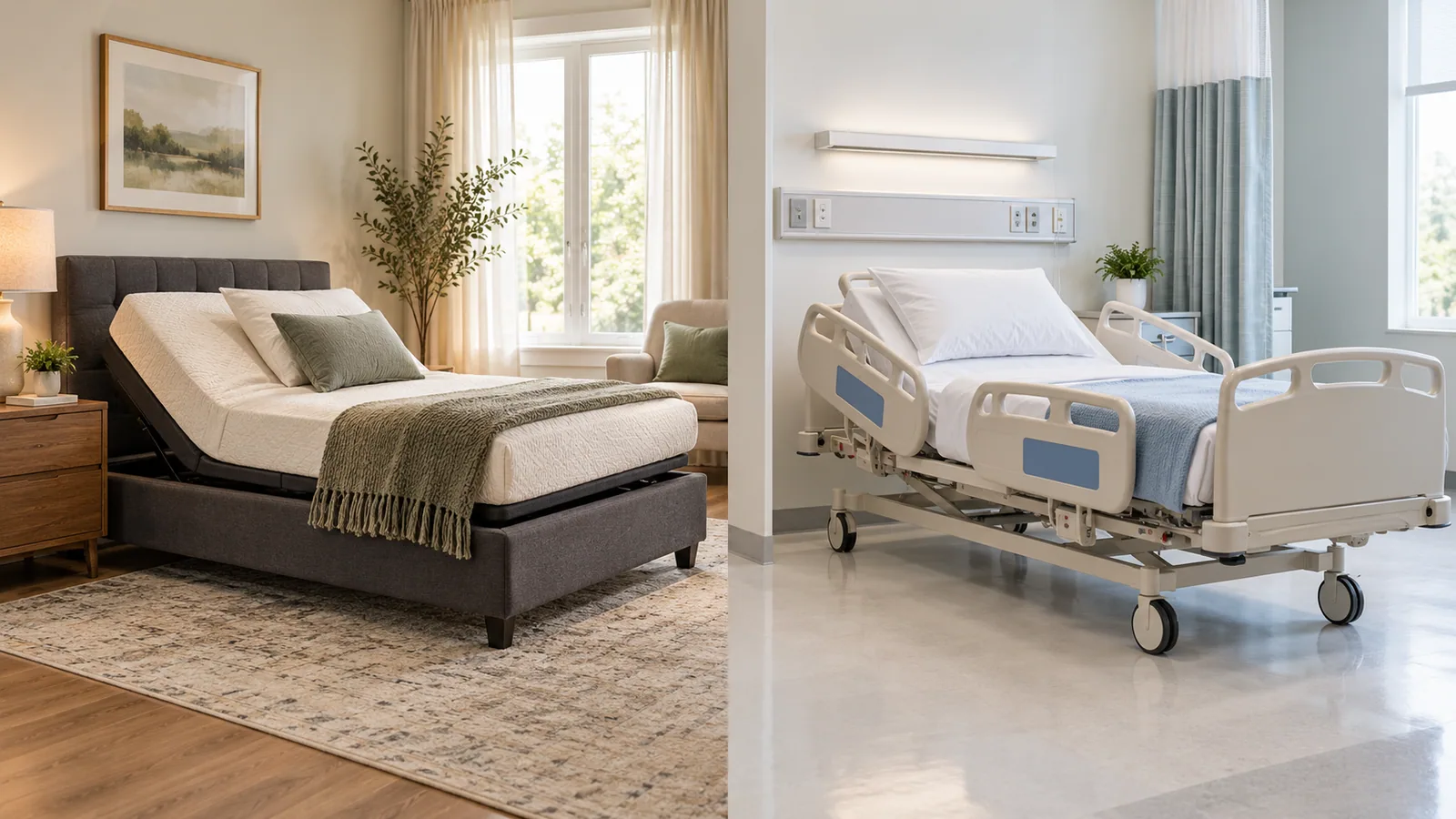
An adjustable bed and a medical bed are not interchangeable product categories. A residential adjustable bed is typically specified as furniture for comfort positioning, while a medical bed is defined by its intended medical use, regulated scope and evidence. Selling to a senior-living residence does not automatically turn furniture into a medical device—and adding a rail, handset or motor does not settle the distinction.
For a B2B buyer, the first decision is therefore not color, price or number of functions. It is the intended-use boundary. If the project includes clinical care, patient transfer, medical monitoring, restraint-related features or regulated claims, stop the furniture comparison and obtain qualified clinical and regulatory input for the destination market.
Key takeaways
- Define intended use before selecting a model or writing marketing copy.
- Treat rails, mattresses and accessories as parts of one evaluated system, not universal add-ons.
- Separate comfort-positioning language from medical, therapeutic or fall-prevention claims.
- Compare evidence, controls, service and room interfaces—not just the number of motors.
- Record every open requirement before sample approval or quotation comparison.
The practical difference starts with intended use
The US Food and Drug Administration describes a home-use medical device as a medical device intended for use outside a professional healthcare facility. Its guidance also treats hospital beds as medical devices and emphasizes that the bed frame, mattress, rails and accessories form a system. These definitions are useful reminders, not a substitute for destination-market advice: the same physical-looking product can sit in a different regulatory category because of its intended use, claims, configuration and evidence.
Buyers can review the FDA's official pages on home-use devices and hospital beds when building a US-market evidence plan. For other markets, use the relevant authority and a qualified adviser.
| Decision area | Residential adjustable furniture | Regulated medical or hospital bed |
|---|---|---|
| Primary brief | Comfort, furniture integration and consumer use | Defined medical purpose and care workflow |
| Product identity | Furniture model and approved configuration | Regulated device scope and intended use |
| Height and transfer functions | Project-specific; may not be included | Evaluated against the intended care context |
| Rails and accessories | Never assume compatibility | Assessed as part of the bed system |
| Evidence | Product specifications, electrical and material documents as applicable | Regulatory, safety and performance evidence required by the market |
| Marketing language | Comfort and positioning only | Limited to authorized, supported indications and claims |
| Service model | Furniture/electrical parts plan | Device servicing, risk and traceability obligations as applicable |
The right choice depends on the project—not the age of the person who may use the bed.
Use five gates before asking suppliers to quote
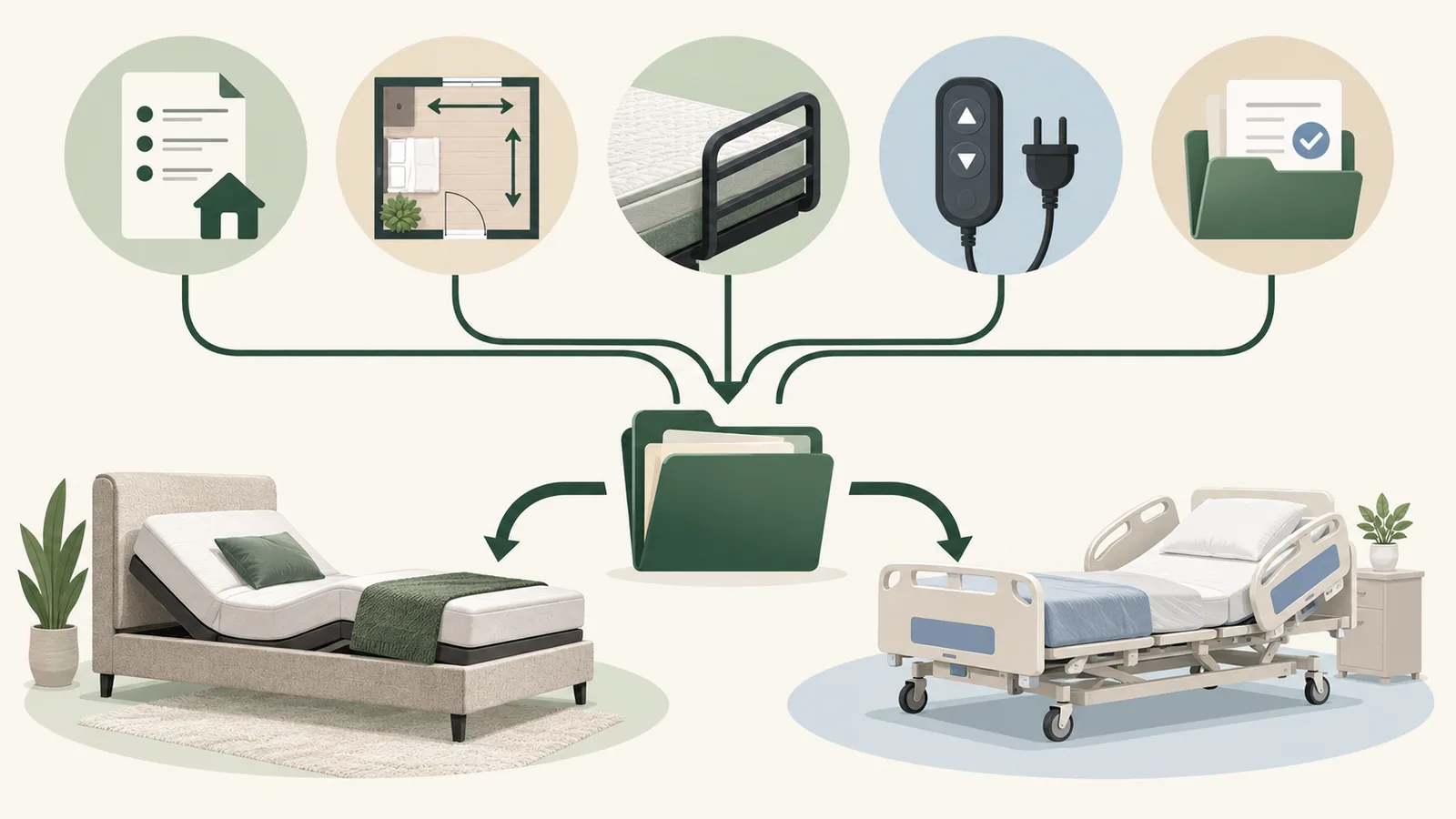
AI-generated editorial decision map. It is not a product specification, risk assessment, medical recommendation or certification record.
1. Define the use environment
State whether the product is intended for an independent-living apartment, assisted-living residence, home-care retail program, nursing environment or clinical setting. These labels alone do not determine classification, but they expose different room, staffing, cleaning, service and evidence questions.
Describe who controls the product, who installs it and who is responsible for inspection. A consumer-controlled bed in a private apartment creates a different operating context from equipment used by care staff across many residents.
2. Separate comfort functions from care functions
Head and leg positioning can be described as furniture movement when that is the verified product scope. Do not convert those movements into claims about treating pain, improving circulation, preventing pressure injury, stopping falls or supporting recovery unless the exact product and claim have the required evidence and authorization.
If the brief requires height adjustment, transfer support, rails, emergency behavior or care-specific accessories, list those requirements explicitly. Do not assume a residential adjustable base can provide them.
3. Evaluate the complete bed system
A frame cannot be approved in isolation from its mattress, surrounding furniture and accessories. Confirm mattress dimensions and flexibility, retention method, articulation clearances, edge gaps and any planned rail or bedside accessory. The mattress compatibility checklist provides a revision-controlled review method.
The FDA's hospital-bed resources highlight why rails and mattress interfaces deserve formal assessment: poorly matched components can create entrapment hazards. That does not mean every senior-living bed needs rails. It means buyers should never improvise them.
4. Verify controls, power and failure behavior
Record the intended handset or control interface, button logic, cable route, power supply, connector identification and expected behavior after power interruption. Ask which components belong to the quoted revision and how replacements are identified.
Do not label a control “senior friendly” based on a photograph. Review button differentiation, reach, feedback and instructions with representative users and the responsible care or operations team. Usability is a testable project requirement, not a demographic assumption.
5. Match every claim to evidence
Build a claim register before the product page. For each proposed statement, record the supporting drawing, report, declaration, test method, sample record or regulatory document. If the evidence does not cover the exact model, component and destination market, mark the claim as open.
Build the RFQ around decisions, not adjectives
A useful RFQ for a senior-living or home-care program should include:
- State the intended use. Describe the non-clinical or clinical boundary in plain language.
- Name the destination market. Documentation and electrical requirements are market-specific.
- Describe the room. Include floor plan, furniture surround, power location and circulation constraints.
- Define the complete system. List mattress, accessories, controls and any buyer-supplied components.
- List required evidence. Separate must-have documents from items still under review.
- Plan sample evaluation. Identify who reviews furniture fit, function, usability and claims.
- Specify service ownership. Define spare-part identification, instructions, escalation and record retention.
This structure gives suppliers enough context to identify whether an existing furniture direction, a requirements-led home-care bed discussion or a separately regulated product path is appropriate.
What KCAI can discuss—and what remains project-specific
KCAI can discuss residential adjustable-bed and home-care-oriented furniture requirements, OEM/ODM scope, packaging and model-specific documentation available for a proposed configuration. KCAI does not use this article to represent a residential adjustable bed as a medical device or to promise a clinical outcome.
Send the intended use, destination market, room plan, mattress concept, required movements, accessories, control preference, evidence checklist and service expectations through the request-a-quote form. The current quotation, controlled drawings, approved sample and model-specific documents—not an editorial image or category name—must define the supplied product.