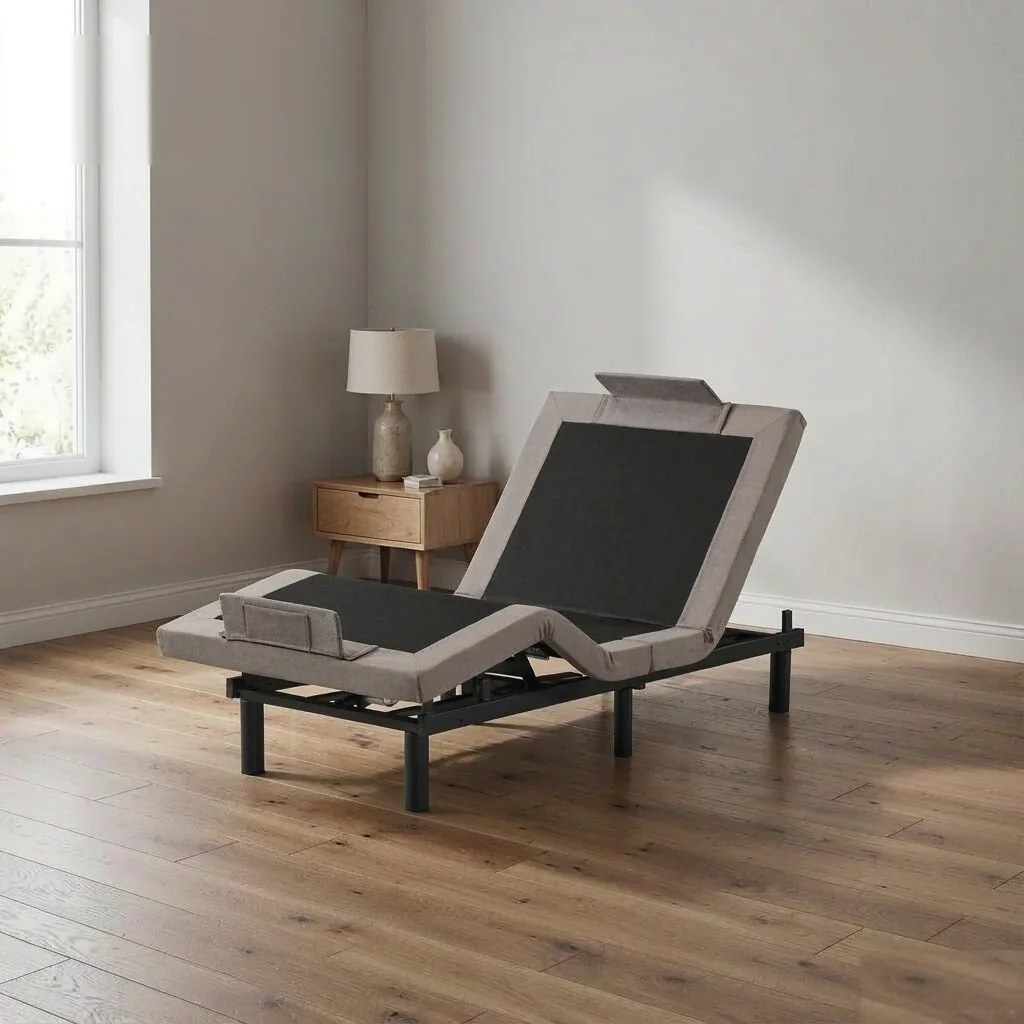
Walk into most adjustable bed showrooms and the merchandising tells one story: medical need, aging in place, hospital-adjacent comfort. It is a real market — but it leaves the category's biggest untapped segment standing outside the door. Buyers in their twenties and thirties already spend hours in bed reading, streaming, gaming, and working from a laptop. They just don't see adjustable bases as products made for them.
That is a positioning failure, not a product failure. Trade coverage has been saying it for years: the paradigm has shifted from the hospital bed to the lifestyle base. Brands and distributors that merchandise adjustable beds as design-forward lifestyle upgrades — slim profiles, app control, ambient lighting — can open a demographic their competitors are ignoring. This guide shows how.
The Younger Buyer Is the Category's Biggest Untapped Segment
Consider where younger consumers actually live. Urban renters in compact apartments treat the bedroom as a multifunctional zone: office by day, cinema by night, reading nook on weekends. Every square meter has to earn its keep, and furniture that does one thing is a harder sell than furniture that does three.
An adjustable base fits this logic perfectly — it turns a bed into a recliner, a workstation, and a media lounge without adding a single piece of furniture. Yet almost no one markets it that way to younger buyers. Search the topic and you will find the angle is remarkably thin: dedicated content barely exists, and search engines tend to conflate the query with gaming chairs. For a brand willing to claim the territory, the competition for attention is close to zero.
The economics work too. Younger buyers are comfortable researching and buying considered purchases online, respond to tech integration, and pay for design. They are not looking for the cheapest base — they are looking for the base that looks like it belongs in their apartment.
The industry itself has been moving this way for years. Trade press covering the adjustable-base category has described the shift plainly: the paradigm has changed from the hospital bed to the lifestyle base. Manufacturers now compete on app control, voice integration, ambient lighting, and furniture-grade finishes — features designed to win over design-conscious shoppers, not just care buyers. Dealers who still merchandise every base next to the lift chairs are selling last decade's story while the product has already moved on.
What Younger Buyers Actually Do in Bed
Forget the clinical use cases for a moment. The lifestyle jobs-to-be-done are straightforward, and each one maps to a selling point your sales team can demonstrate in under a minute:
- Reading and streaming. Propping up on stacked pillows means neck strain within twenty minutes and pillows that constantly need re-fluffing. A powered head incline holds a comfortable reading angle all evening. This is the single easiest demo on a showroom floor.
- Gaming and laptop work. Remote workers and gamers spend hours semi-reclined. Ergonomic positions with lumbar support beat hunching over a laptop on a flat mattress — and USB charging ports keep devices powered without cables snaking across the room.
- Couples with different habits. One partner reads while the other sleeps. Split configurations end the negotiation over sleep angles entirely — a strong upsell story for queen and king sizes.
- Small-space living. In a studio, the bed is the sofa. An adjustable base with a clean upholstered finish looks intentional in a living space in a way a bare metal frame never will.
None of these require medical language. They are comfort and convenience stories, and they are honest ones.
The Anti-Hospital-Bed Design Language
If the product looks clinical, younger buyers will walk past it no matter what the spec sheet says. The design cues that signal "lifestyle product" instead of "medical equipment":
- Slim, low-profile frames that sit cleanly inside modern bed frames and platform beds.
- Upholstered finishes in contemporary fabrics and colors, not bare steel and gray plastic.
- App and smartphone control alongside a simple backlit remote — younger buyers expect their furniture to behave like their other tech.
- Under-bed LED lighting that doubles as ambient night lighting rather than a utility feature.
- Wall-hugger mechanisms that keep the nightstand, lamp, and phone within reach as the head rises.
- Quiet motors — a base that groans when it moves kills the premium impression instantly.
KCAI builds its bases around German OKIN and Haojiang drive systems, which is exactly why the motion stays smooth and quiet — the kind of detail that matters when the customer is twenty-eight, not seventy-eight, and judging the product like a gadget.
The Youth-Oriented SKU Checklist
When you brief your product team or your OEM partner, this is the feature set that defines a youth-oriented adjustable base:
| Feature | Why it sells to younger buyers |
|---|---|
| App + voice control | Tech-native expectation; showroom wow factor |
| USB charging ports | Laptop, phone, and tablet live in the bed |
| Under-bed LED lighting | Ambient lighting, not just a nightlight |
| Wall-hugger mechanism | Nightstand stays reachable at any angle |
| Split king / split configurations | Couples with different routines |
| Quiet motors | Premium feel; late-night adjustment without noise |
| Slim low-profile frame | Fits platform beds and small bedrooms |
| Upholstered finish options | Looks like furniture, not equipment |
| One-touch presets | Reading, TV, and flat at a single tap |
| Easy setup | Renters move; assembly must be painless |
Models like KCAI's KD011-A3 and KD005-A1 cover the core adjustable-base format, while the KR004 upholstered smart bed shows how far the category has come from the bare-metal look — fabric finish, integrated controls, and smart-home compatibility in a single piece.
Position It as a Lifestyle Upgrade, Not a Medical Device
The messaging rule is simple: sell the evening, not the ailment. "Your bed becomes your favorite reading chair" beats any clinical framing. "Movie night without neck strain" beats a list of ergonomic specifications.
This also keeps your marketing safely clear of medical claims. Describe what the positions do — head incline for reading, leg elevation for lounging — and let the customer's imagination do the rest. Lifestyle photography should show real evenings: someone streaming with the head raised, a couple with different angles on a split king, a compact studio where the bed does triple duty. The hospital-white bedroom shoot is exactly what you are moving away from.
Retail staff need the same reframe. The demo script is not "this helps with X condition" — it is "try the reading preset, now try flat, now imagine this is your apartment." Thirty seconds, no jargon, and the product sells itself.
Merchandising matters as much as messaging. Stage one floor vignette as a studio apartment corner — rug, side table, lamp, laptop on the raised base — instead of lining up bare bases in a row. Bundle the base with a compatible mattress as a "complete sleep-and-lounge setup" so the younger shopper sees one purchase, not a project. And put the app control front and center in every product listing: for this demographic, a base without smart features reads as outdated the way a TV without streaming apps would.
Two Ways to Bring It to Market: OEM/ODM or Wholesale
Once the positioning is set, you have two sourcing paths with KCAI — and they suit different timelines.
Wholesale: the fast path. If you want proven SKUs on your shelves quickly, purchase KCAI's existing models wholesale. The KD011-A3, KD005-A1, and KR004 are production-ready designs with established supply chains — no development cycle, no tooling wait. For distributors testing the youth segment or brands filling a gap in next season's catalog, wholesale is the lowest-risk way to start.
OEM/ODM: the differentiated path. If you want a SKU your competitors cannot copy, partner with us on custom manufacturing: your fabrics and finishes, your control experience, app integration tuned to your brand, and smart-home compatibility across Huawei, Xiaomi, Alibaba, Tuya, and Amazon IoT platforms. KCAI has manufactured adjustable beds in Dongguan since 2004, operates a 25,000 sqm facility, and serves 100+ global customers — the engineering depth is there when you want something proprietary.
Many partners do both: wholesale proven models to enter the segment now, then develop a custom OEM line once the demand data is in. Either way, the conversation starts the same.
Younger buyers are not waiting for adjustable beds to become medical devices they need — they are waiting for someone to sell them as the lifestyle upgrade they already want. The brands that merchandise accordingly, with design-forward SKUs and honest lifestyle storytelling, get first-mover advantage in a segment with almost no dedicated competition.
Request a quote to discuss either path — OEM/ODM manufacturing or wholesale purchase of our existing models — and tell us which buyer you are building for.